


UK: Nationality Law under the Christian Lens
The 1981 Act already ended the old automatic jus soli. What follows is not a party programme. It is an account of what the statute still leaves open, of what has changed around it in the last three years, of how a restrictionist reading of St. Paul’s Letter to the Romans 13 and the Fathers tries to close those openings, and of why that reading is contested inside the tradition it claims. The argument is offered in the conviction that a Christian may hold a hard view of membership without pretending that Scripture dictates it, and may hold a generous one without pretending that the magistrate has no office.

The Goats Were Surprised Too
There is a Christian case for bounded admission, and it is a good deal better than its opponents allow. It runs in four movements. Civil authority is divinely warranted and not merely tolerated, so that the regulation of entry and residence falls within an office Scripture describes in theological terms. The love commanded of Christians is ordered rather than uniform, so that proximity and relation genuinely condition obligation. The Old Law, which is not shy about the stranger, nevertheless admits him by stages rather than at once. And the duty of the individual believer toward the man at his door is not the same thing as the duty of the magistrate toward a population, the two operating in distinct spheres with distinct instruments.
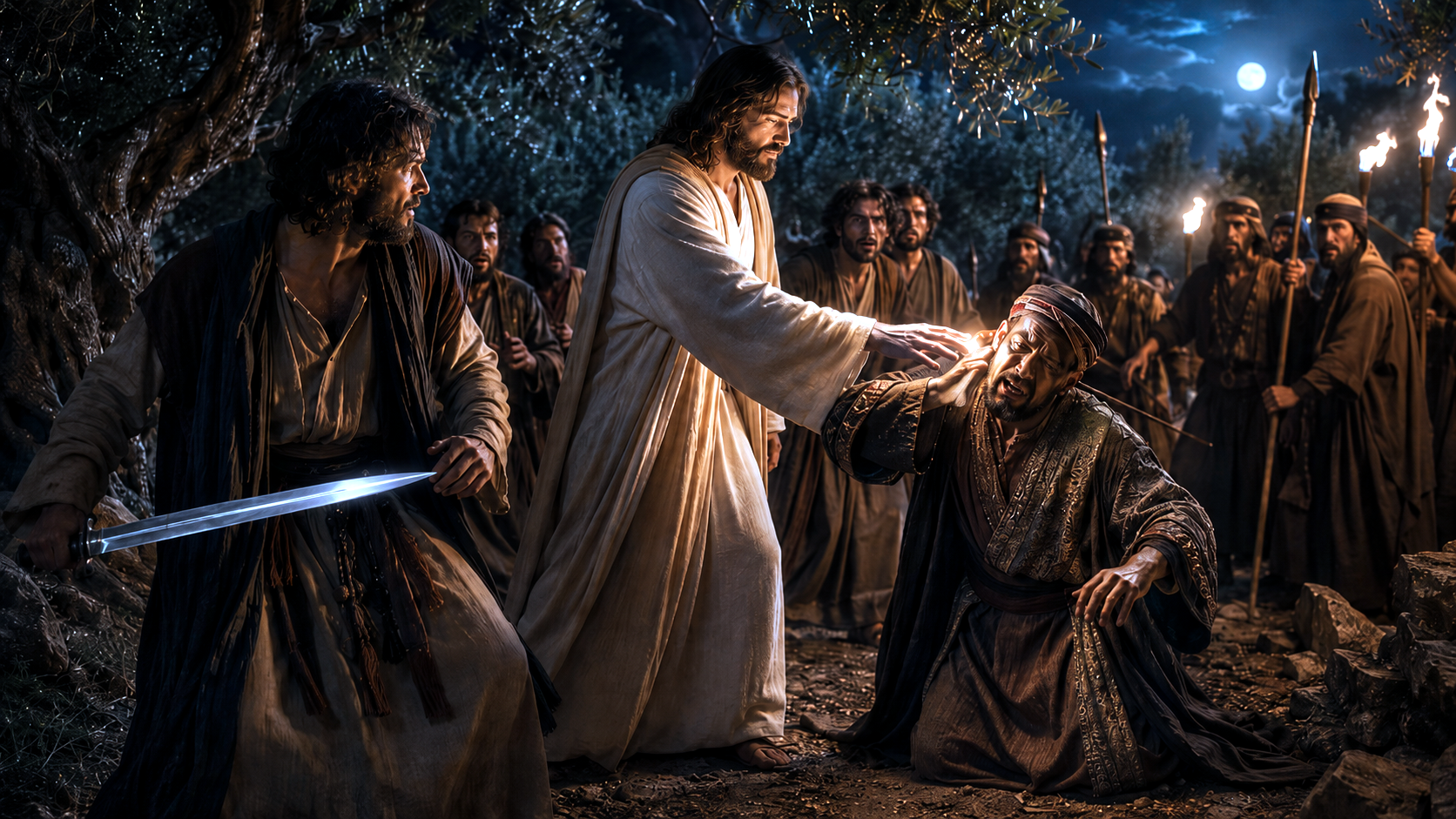
TWO SWORDS, ONE ENOUGH
Luke 22:36–38 Between the Sword of the Magistrate and the Consent of the Governed - A Coda to The Sword and the Stranger and The State and the Open Door. Conclusion to the Essay Trilogy on “Immigration, the State and Public Consent”.
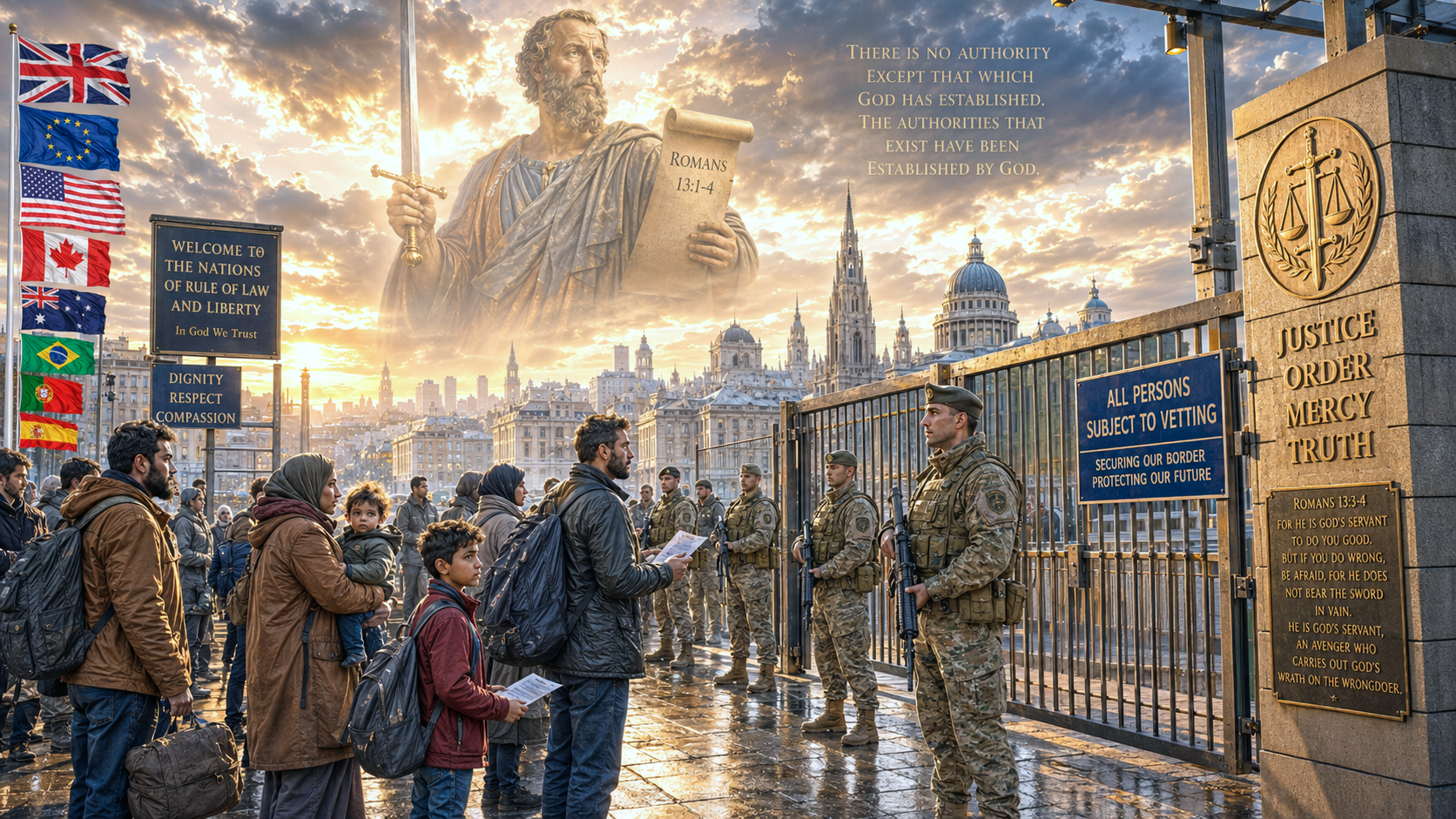
THE SWORD AND THE STRANGER
Popular argument on this question, from both directions, tends to treat the Gospels as though they were a manual of border statute waiting to be applied. They are not, and a piece that pretends otherwise earns nothing but the reader's justified suspicion. But refusing that error is not the same as refusing the question. Scripture, read across its full canon and its subsequent theological elaboration, does make two distinct and authentically weighty claims that bear on the matter of illegal immigration — one concerning the competence of civil authority, the other concerning the personal duty owed to the stranger.

Public Letter to the Christian Faithful: The Threat of Unmanaged Immigration
To all who hold the Christian faith, and to those who cherish the inheritance of Western civilisation built upon Judeo-Christian foundations:
We write in a spirit of clarity and resolve concerning the present crisis of migration into Europe, and specifically the policies pursued by Spain and other European governments. Read more…
