

Organisational Brief:
The Oratorian Model
The Oratorian Model
Introduction
St Philip Neri arrived in Rome around 1533 as a young layman seeking God’s will rather than a formal career path. He first lodged with a Florentine noble family, the Cacciaguerra, near San Girolamo della Carità, a location that became the centre of his life and ministry for decades. During these early years, he supported himself through private tutoring, teaching the family’s children and others in the neighbourhood — his only secular occupation before ordination.
Although he began formal studies in philosophy and theology at the Sapienza and at Sant’Agostino, Philip soon abandoned academic ambitions to devote himself entirely to prayer and apostolic charity. His pastoral development unfolded organically, not through institutional structures but through friendship, presence, and personal encounter. He spent long hours in prayer, especially in the catacombs of San Sebastiano, where he experienced profound spiritual consolations that shaped his joyful, expansive charity.
Philip’s evangelisation began simply: walking the streets, shops, hospitals, hospices and marketplaces of Rome, speaking to people one by one, encouraging confession, prayer, and works of mercy. His gift for spiritual friendship drew young men to him, forming the earliest nucleus of what would later become the Oratory. He also helped organise charitable initiatives, including early forms of the Confraternity of the Holy Trinity, dedicated to caring for pilgrims and the sick.
By the time of his ordination in 1551, Philip had spent thirteen years in Rome as a lay apostle — living simply, working modestly, praying deeply, and renewing the city through personal, joyful, relational pastoral care.
The CRSHJ - Canons Regular of the Sacred Heart of Jesus follow Philip Neri’s oratorian model fairly closely, but being Old Catholic Oratorians, they operate differently by comparison to Roman Catholic oratorians, for example. Below you will find details of the Old Catholic Oratorian Model, in its two main formats; In domibus propriis and In Communitas.
Our Oratorian Model
The Oratorian model of the Canons Regular of the Sacred Heart of Jesus (CRSHJ) is more shaped to the Old Catholic tradition, thus preserving the non-celibate nature of the Old Catholic priesthood, and affirming a fuller integration in secular, everyday society. See below for some examples:
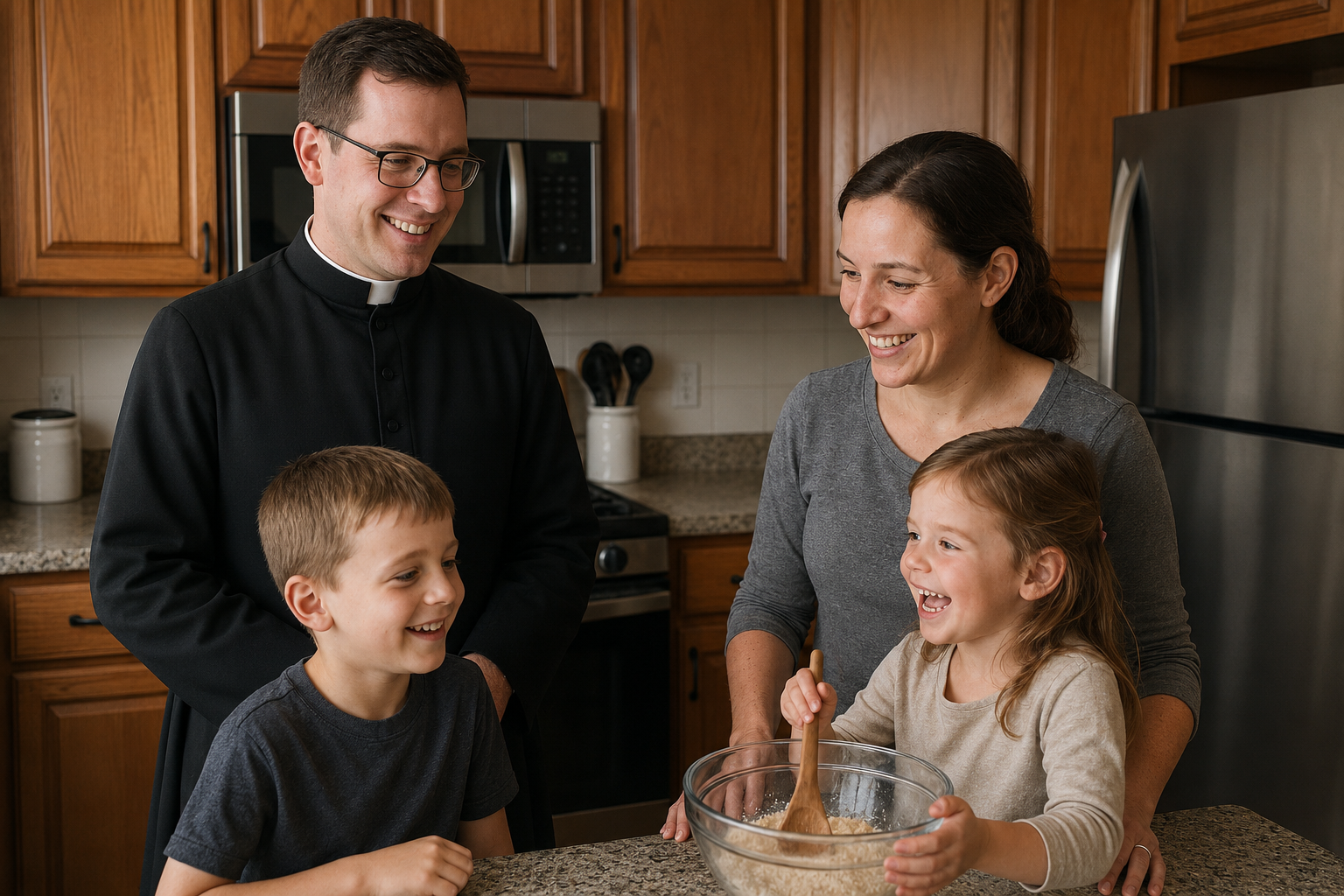
Scenario 1: A CRSHJ priest married with wife and children
In domibus propriis (I)
In this scenario, our CRSHJ priest (aka Canon Regular) is married, so there is a wife and children. He lives in his family home and is integrated in the secular community, holding a suitable job as a Secondary School teacher. His wife is a nurse practitioner at their local GP Surgery. He may in future give up his teaching job, as his wife earns enough to sustain their family. He keeps his Oratory in his Study Room.
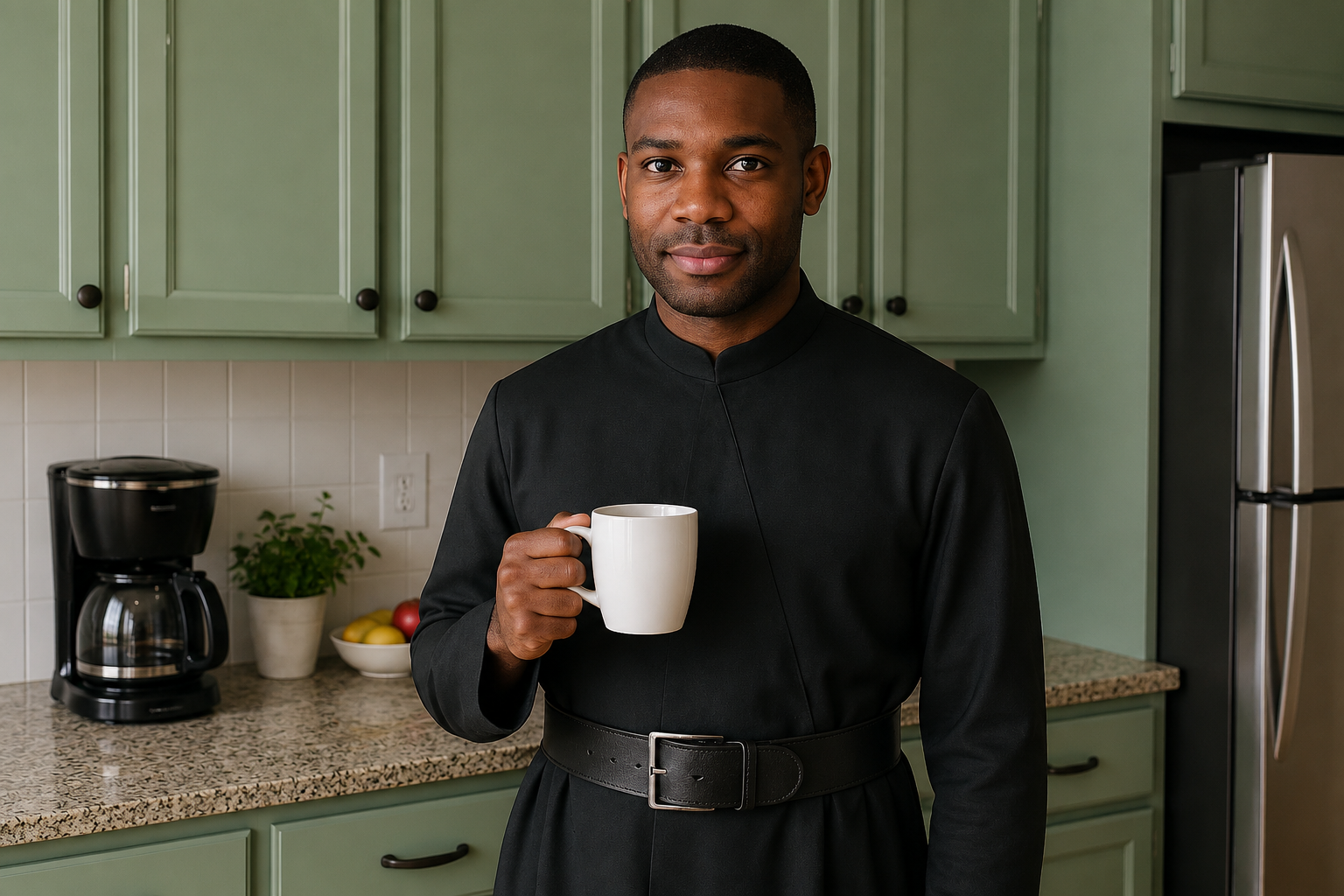
Scenario 2: A CRSHJ priest, vowed brother or lay brother, single and living independently on his own
In domibus propriis (II)
In this scenario, our Vowed Brother is single and lives alone in his 3-bedroom own home. This is a good solution also for single lay brothers or single CRSHJ priests. He holds a secular job as an IT Engineer at a telecoms company and runs his Pastoral work, visiting elderly retirement homes. He keeps his home Oratory in a spare bedroom, which he adapted as a Chapel. He is considering offering the 3rd spare bedroom to another vowed brother.
Scenario 3: A group of single CRSHJ priests, lay brothers and vowed brothers sharing a house together
In Communitas
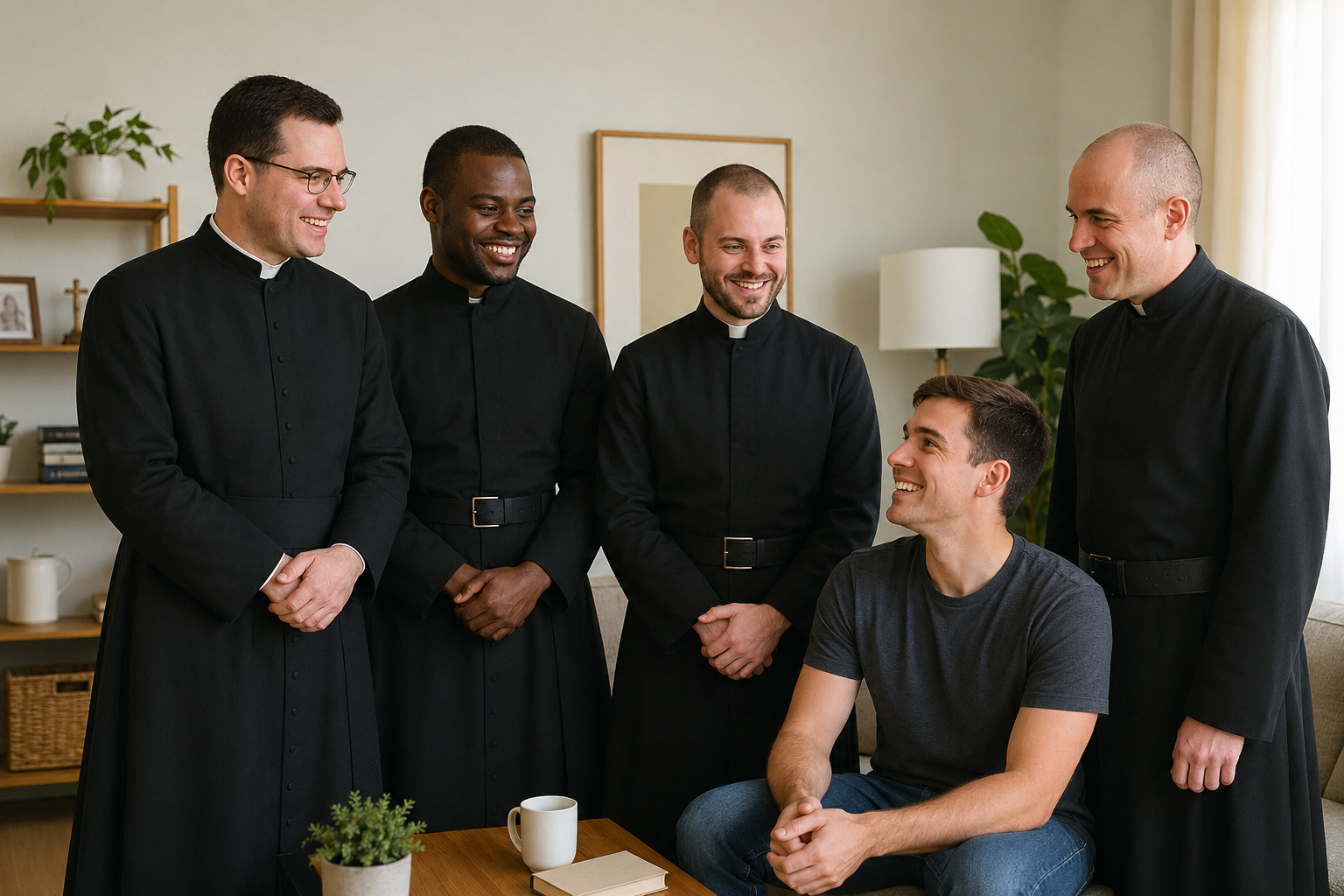
In this scenario, we have a group of singles, one is a CRSHJ priest (Canon Regular), three are vowed brothers, and one is a single lay brother, who is living with the Community. The Canon Regular and the three vowed brothers hold secular jobs, respectively as a History teacher, an electrician, a painter-decorator and a taxi driver. Their pastoral work is carried out jointly as a group sometimes, but also individually, depending on the activity they undertake. They all contribute to the upkeep of their community and share a 4-bedroom house, 2 beds per room, and keep the Oratory in the fourth bedroom, which they adapted as a Chapel. Communal areas are a lounge, a dining room, the kitchen and two bathrooms.
Scenario 4: A group of single CRSHJ priest, and vowed brothers sharing a house together (Kenya)
In Communitas
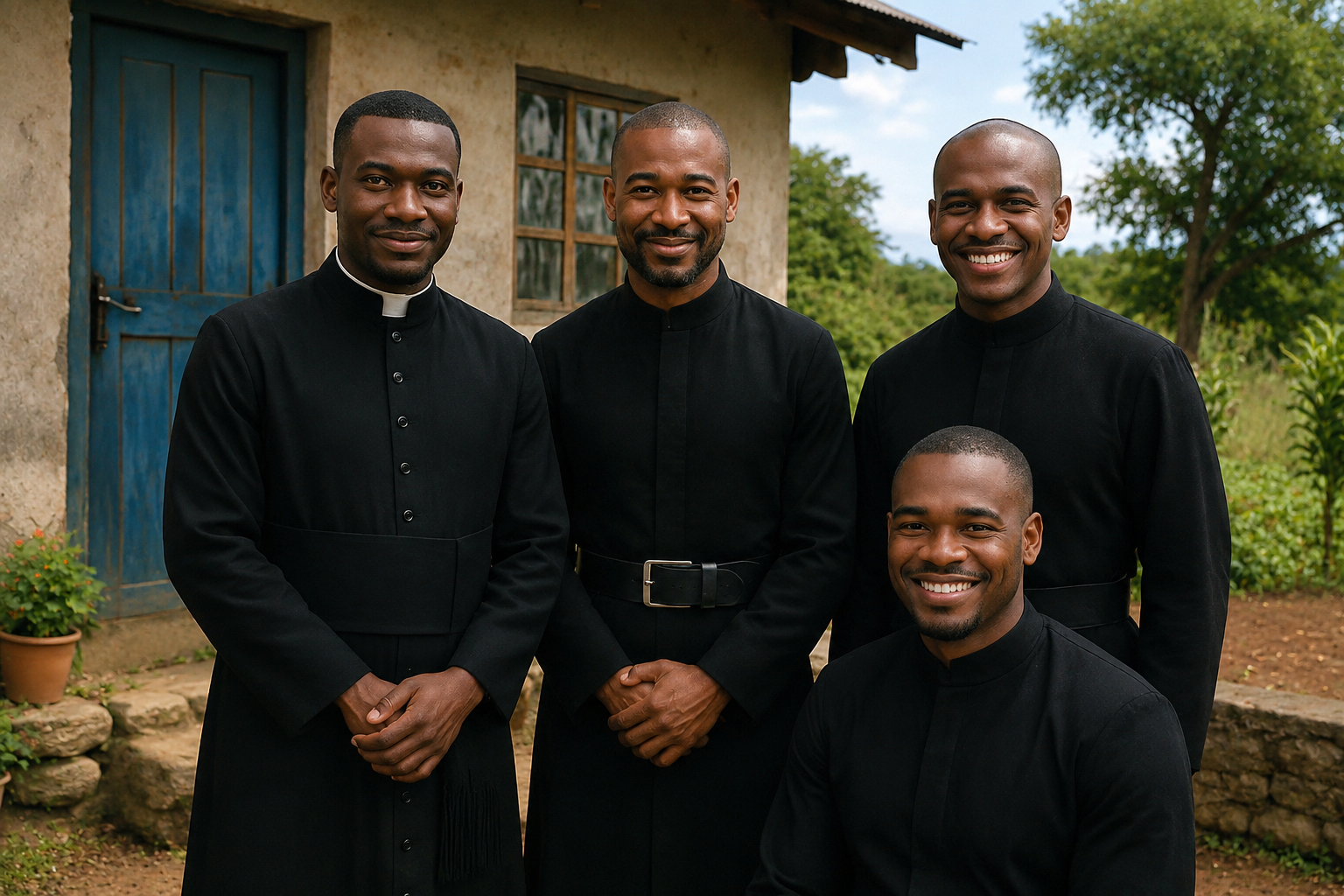
In this scenario, we have a group of singles, one is a CRSHJ priest (Canon Regular), three are vowed brothers, all participate in their local rural community economy in Kenya, in addition to their Pastoral work. They live and share a small dwelling, where they keep their oratory. One of the vowed brothers will be leaving the community in the near future to get married and form his own family dwelling (In Domibus Propriis).