
CELIBACY: A Certain Physical and Psychic Void
What Medicine Knows About Perpetual Continence, and What Rome Prefers Not To
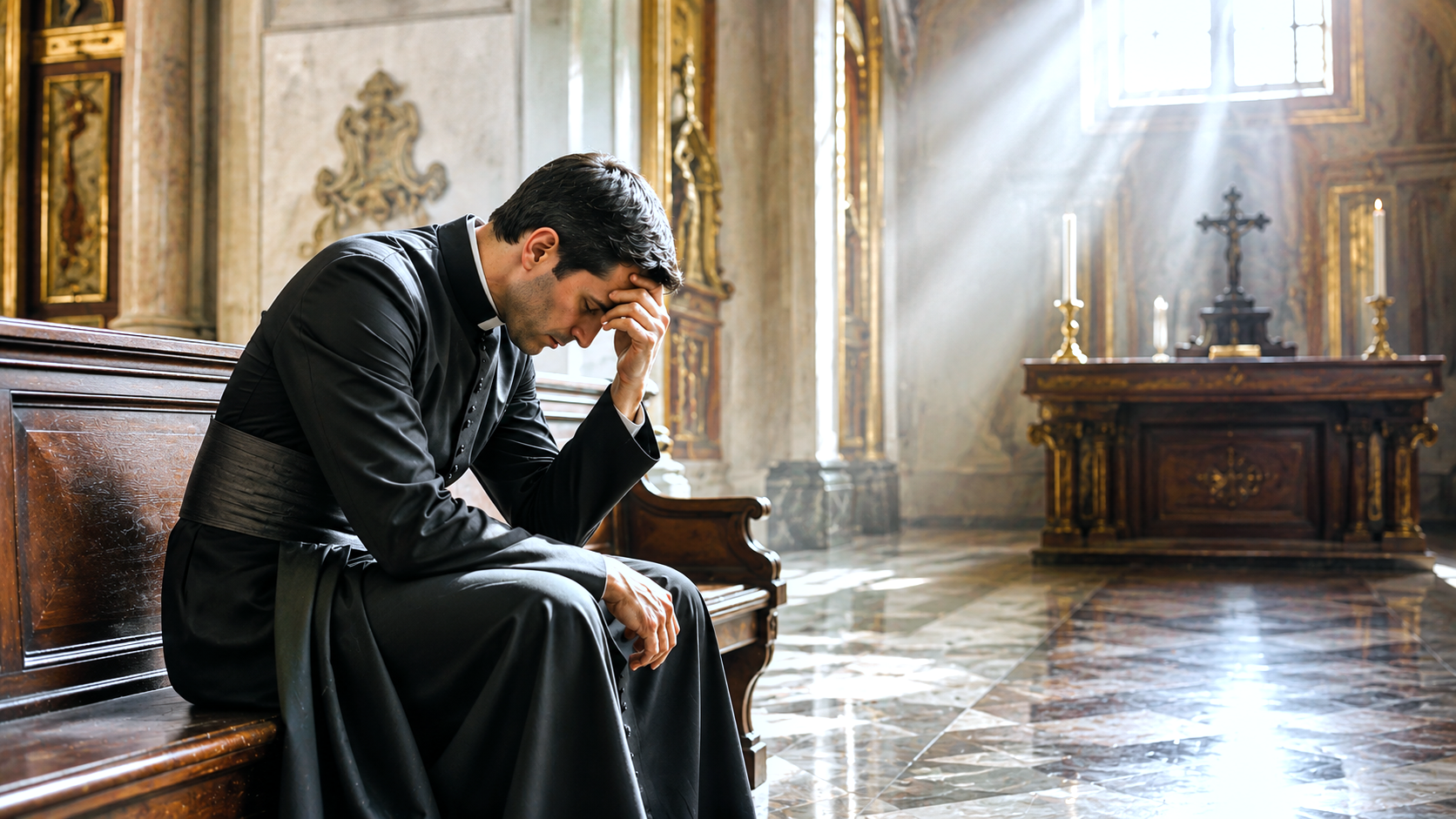
There is a sentence in Sacerdotalis Caelibatus that Paul VI plainly did not intend to be read the way I am about to read it. Defending the law of clerical celibacy against every objection he could muster the courage to name, he concedes that the young man who embraces it is walking a road that leads, “on the one hand … to a certain physical and psychic void.”[1] The clause is meant to be swallowed whole by the one that follows it — the void, we are told, is more than compensated by an interior richness — but the concession is made, in the Roman Catholic Church’s own voice, in her own encyclical, over her own signature. Rome named the wound. This essay is about what the wound actually is, and whether the medicine she prescribes for it is medicine or incantation.
I want to be scrupulously fair to the evidence in both directions, because the subject attracts nonsense from every quarter. The wellness internet insists that continence withers a man like unwatered stock; the sacristy insists that grace makes the whole question vanish. Both are selling something, and neither has read the literature. So let us do the unfashionable thing and read it — the four great magisterial texts on the priesthood on one side, and the actual medical and psychological evidence on the other — and see where an honest man is obliged to end up.
What the Documents Concede
Begin with the remarkable fact that the Roman Catholic Church argues against herself before anyone else can. Sacerdotalis Caelibatus §10 states the objection with a candour no critic could improve upon: that priests “find themselves in a situation that is not only against nature but also physically and psychologically detrimental to the development of a mature and well-balanced human personality,” that they “often become hard and lacking in human warmth,” condemned to “a life of solitude which leads to bitterness and discouragement.”[2] Having stated the charge, Paul VI answers it not with data but with a distinction: it is “not right to continue repeating … that celibacy is against nature,” because man is “not just flesh and blood,” and grace “far from destroying or doing violence to nature, elevates it.” The proof text is Augustine’s sigh at the limit of his own strength — “Grant what You command, and command what You will.”[3] It is a beautiful line. It is also, as an answer to an empirical objection, an admission that the empirical objection has no empirical answer. You do not reach for grace to fill a void you are claiming does not exist.
The pattern repeats across the corpus. Presbyterorum Ordinis concedes in the same breath that celibacy “is not demanded by the very nature of the priesthood,” as “the practice of the early Church and … the traditions of the Eastern Churches” prove — and then, some paragraphs later, admits that “the bitter loneliness which men experience can lead them to the danger of becoming spiritually depressed.”[4] Pius XI, writing in 1935, is franker still about the somatic pessimism underneath the whole edifice: because “God is a Spirit,” he reasons, the man who consecrates himself “should in some way divest himself of the body.”[5] There is the premise, stated without embarrassment — the body is the thing to be got rid of. And Pope St. John Paul II, in Pastores Dabo Vobis, quotes the Council conceding the obvious: “In the world today, many people call perfect continence impossible.”[6] His answer is to pray harder. It is always, in the end, to pray harder. But prayer does not resolve persistent arousal, hence the solution is often at-hand but too blunt for polite conversation.
So the magisterium’s own position, stripped of its music, is this: the discipline is not required by the priesthood; it exacts a physical and psychic cost the Church can describe in clinical detail; and that cost is met by a grace whose sufficiency cannot, by definition, be measured. That is a theological claim wearing the coat of a medical one. The interesting question is what happens when you take the coat off and ask the doctors.
The Physical Ledger — Where the Internet Is Simply Wrong
Here the honest verdict cuts against the Church’s critics, and it deserves saying plainly: as a matter of physiology, lifelong continence is not the catastrophe the wellness-industrial complex pretends it to be. The most popular claim — that abstinence tanks a man’s testosterone and leaves him a diminished husk, or, in the mirror-image NoFap fantasy, that retention floods him with superhuman vigour — rests on an evidence base so thin it barely qualifies as one. The entire edifice stands on two small studies. One, a laboratory experiment on ten men, found modestly higher testosterone after three weeks of abstinence — a real but slight effect, in ten subjects, over three weeks, with no evidence whatever of durable change or of any health consequence attached to it. The other, the source of the endlessly repeated claim that testosterone spikes to 146% of baseline on the seventh day of continence, was retracted by its journal in 2021 for substantial duplicate publication.[7] That is the whole foundation: a slight short-term uptick in ten men, and a withdrawn paper. Neither underwrites the withered-husk panic or the retention-as-superpower cult. The celibate priest is not, on this evidence, chemically transformed in either direction. His testosterone is, to a first approximation, simply his testosterone.
There is exactly one replicated somatic finding worth the Church’s attention, and it is a genuinely awkward one — awkward precisely because of what total continence entails. Large prospective cohorts have repeatedly found that higher ejaculation frequency is associated with lower prostate cancer risk. The Health Professionals Follow-up Study, tracking nearly 32,000 men, reported that those ejaculating twenty-one or more times a month had roughly a fifth lower incidence than those managing four to seven — a hazard ratio around 0.78 to 0.81, with the benefit concentrated in low-risk disease.[8] The original 2004 analysis found the same signal.[9] Now read the fine print that never makes the headline: “ejaculation” in these studies counts intercourse, masturbation, and nocturnal emission alike. The modest protective effect belongs to the physical act of clearing the gland, by whatever route. The Catholic ideal of perfect continence forbids two of those three routes outright and leaves the man only the involuntary one. He therefore forfeits most of the one measurable bodily hedge the literature offers — and, uniquely, cannot licitly recover it. That is a real cost. It is also a small one, and any polemic that rests the case against mandatory celibacy on the prostate is a weak polemic.
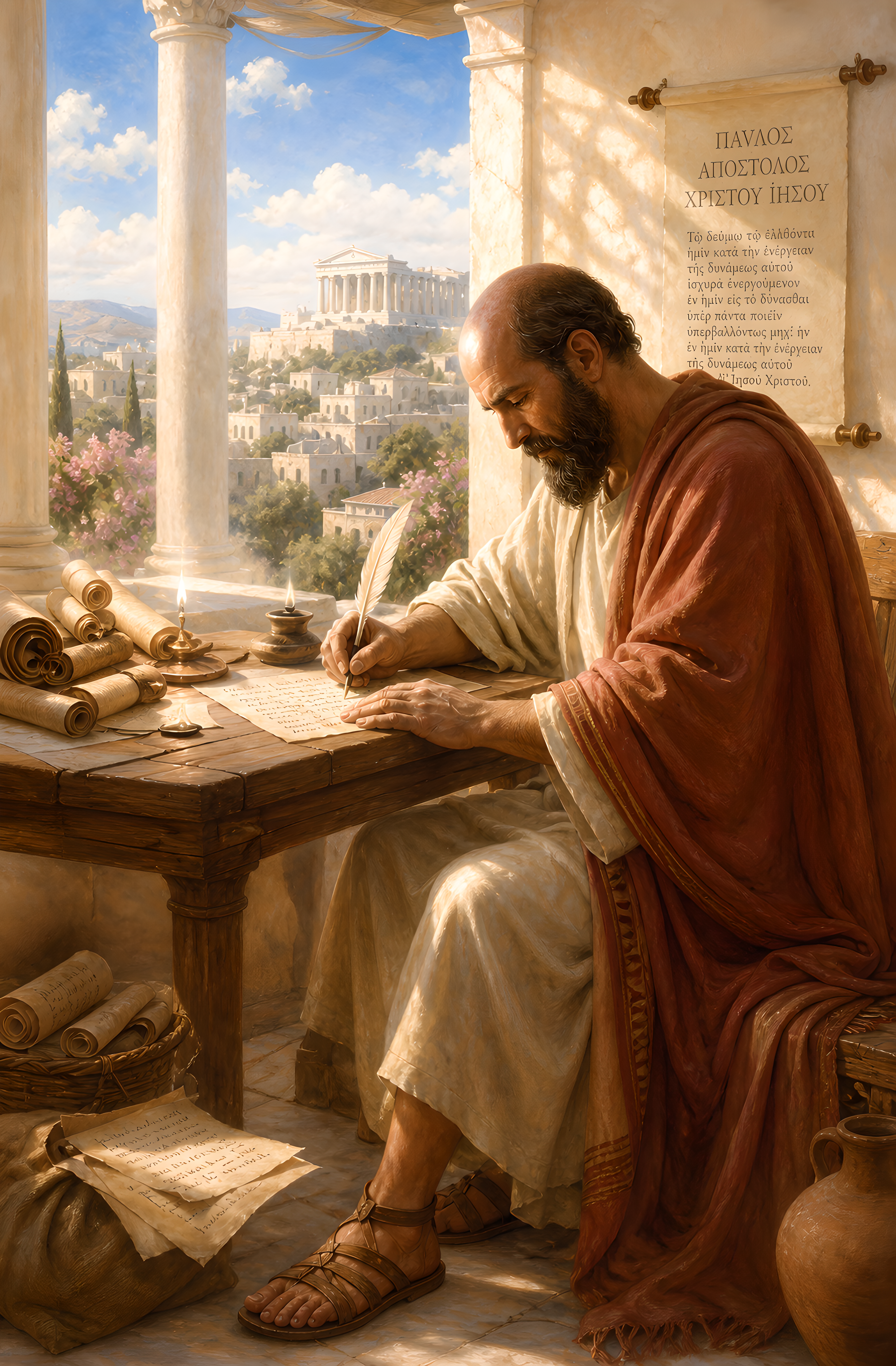
St. Paul, 1 Corinthians 5:9
Do not deprive each other except perhaps by mutual consent and for a time, so that you may devote yourselves to prayer and the Church. Then come together again so that Satan will not tempt you because of your lack of self-control. I say this as a concession, not as a command. I wish that all of you were as I am. But each of you has your own gift from God; one has this gift, another has that.
Now to the unmarried(…) I say: It is good for them to stay unmarried, as I do. But if they cannot control themselves, they should marry, for it is better to marry than to burn with passion.
The rest of the alleged physical harms evaporate on contact. “Congestion,” prostatic discomfort, the pathology of the unrelieved male, frequently referred to as feeling the need to empty, intense testicular pain, persistent and long-lasting arousal, etc.— these are minor, self-limiting, and resolved by the body’s own nocturnal housekeeping; they are not disease, however distressing they may be.
The one intriguing thread is mortality: the Caerphilly cohort in South Wales followed 918 men for a decade and found that those with high orgasmic frequency had roughly 50% the all-cause mortality of the abstemious, with a dose-response gradient and the steepest slope for coronary death.[10] It is a striking number and I will not pretend otherwise — but it is observational, and it almost certainly runs partly backwards: healthy men have more sex, rather than sex making men healthy, and a later follow-up of the same cohort softened the picture considerably. Taken together, the physical ledger reads: one small, real, and for the continent man irrecoverable loss on the prostate; a suggestive but confounded mortality signal; and a great deal of internet mythology the evidence simply does not support. If this were the whole case, the Roman Catholic Church could win the argument.
The Mental and Relational Ledger Where the Case Actually Lives
But it is not the whole case. The strongest evidence against lifelong mandatory continence has almost nothing to do with semen and everything to do with solitude — and here, for once, the numbers are not soft and offer some seriously difficult reading. Loneliness and social isolation are among the most robustly established mortality risks in all of epidemiology. The definitive meta-analysis, pooling data on hundreds of thousands of people, puts the increased likelihood of death at 26% for loneliness, 29% for social isolation, and 32% for living alone — a hazard the authors rate as comparable to Grade 2–3 obesity and greater than obesity itself.[11]This is not a study about hurt feelings. It is a study about dying sooner, and its effect sizes dwarf the prostate finding by an order of magnitude.
Now, the Church’s defenders will object — correctly — that celibacy is not loneliness. A man can be continent and richly connected; a married man can be desolate in a full house. Granted. But this is exactly where the honest argument bites, because mandatory, universal, lifelong celibacy does not merely perpetuate solitude — it structurally removes the single most reliable buffer against it. It forecloses, by rule and for life, the one pair-bond that the whole of social epidemiology identifies as most protective, and it does so as the flat price of ordination rather than as a gift a given man has been shown to possess. The Roman Catholic Church does not need me to tell her this. She told herself, in Presbyterorum Ordinis: bitter loneliness, spiritual depression, in her own words, in her own decree.
Honesty requires taking the strongest contrary evidence first, and it is stronger than the critics usually admit. The largest study in the field — a cross-sectional survey of 2,549 German priests, three of whose four authors are themselves priests — found that a majority regard celibacy as a genuine help to their ministry rather than a wound, and that those who sustain it well are marked by frequent liturgical practice, work engagement, and a felt personal relationship with God, which together explain a large share of the variance.[12] That is the Church’s case, made in her own data, and I will not pretend it away. But the same study reports that a large proportion of those same priests nonetheless experience celibacy as a burden and would not choose the celibate life again — which is precisely the population that a universal disciplinary imposition manufactures and that the theory of a freely received charism cannot account for. Smaller qualitative work points the same way: in one study of diocesan priests, 40% reported that celibacy negatively affected their psychological health, citing the thwarted desire for a family and feelings of depression or loneliness.[13] The broader literature finds Catholic clergy vulnerable to burnout and, in several samples, to depression at rates that appear to exceed the general population, with isolation and celibacy repeatedly named among the drivers.
And here is the detail that should interest a Superior General above all others. The same body of research consistently finds that diocesan priests — the men who live alone in presbyteries — fare worse than religious and monastic clergy, who live in community; and the German data locate the protective factors precisely in shared practice, engagement, and relationship. That convergence is the whole argument in miniature. It tells you that the toxic variable is not continence as such but the isolation that unsupported continence tends to produce — and that a shared roof, a common table, and a rule of life measurably blunt the harm. The Oratorian instinct, in other words, turns out to be not merely edifying but prophylactic. Men were not built to bear this alone, and the ones made to bear it alone are the ones the data finds bleeding.
The caveats are real and I will not bury them. The clergy studies are mostly cross-sectional or qualitative, and heavily confounded: priests carry crushing workloads, chronic lack of privacy, and a self-selected temperament, any of which could drive the distress independently of the vow. Continence is entangled with the entire clerical condition, and no study yet published has cleanly pulled the one thread free of the others. But the direction of every arrow is the same, and it converges with the strongest general finding we have. When the Roman Catholic Church’s own documents, the general mortality data, and the clergy-specific studies all point at loneliness, the reasonable mind stops calling it a coincidence.
Mother, Teacher, and the Wound She Won’t Name
Assemble the ledger honestly, and it comes to this. The crude charge — that continence is a physiological poison — is false, and the people who repeat it have not done the reading. The sophisticated charge is true and considerably more severe: that mandatory lifelong celibacy strips away, by institutional rule and for the whole of a man’s life, the most protective human bond known to medicine, and structurally predisposes him to the isolation that is one of the deadliest modifiable risks we can measure. The cost is not in the gland. It is in the slow attrition of a man living without the thing the rest of the species relies on to stay alive.
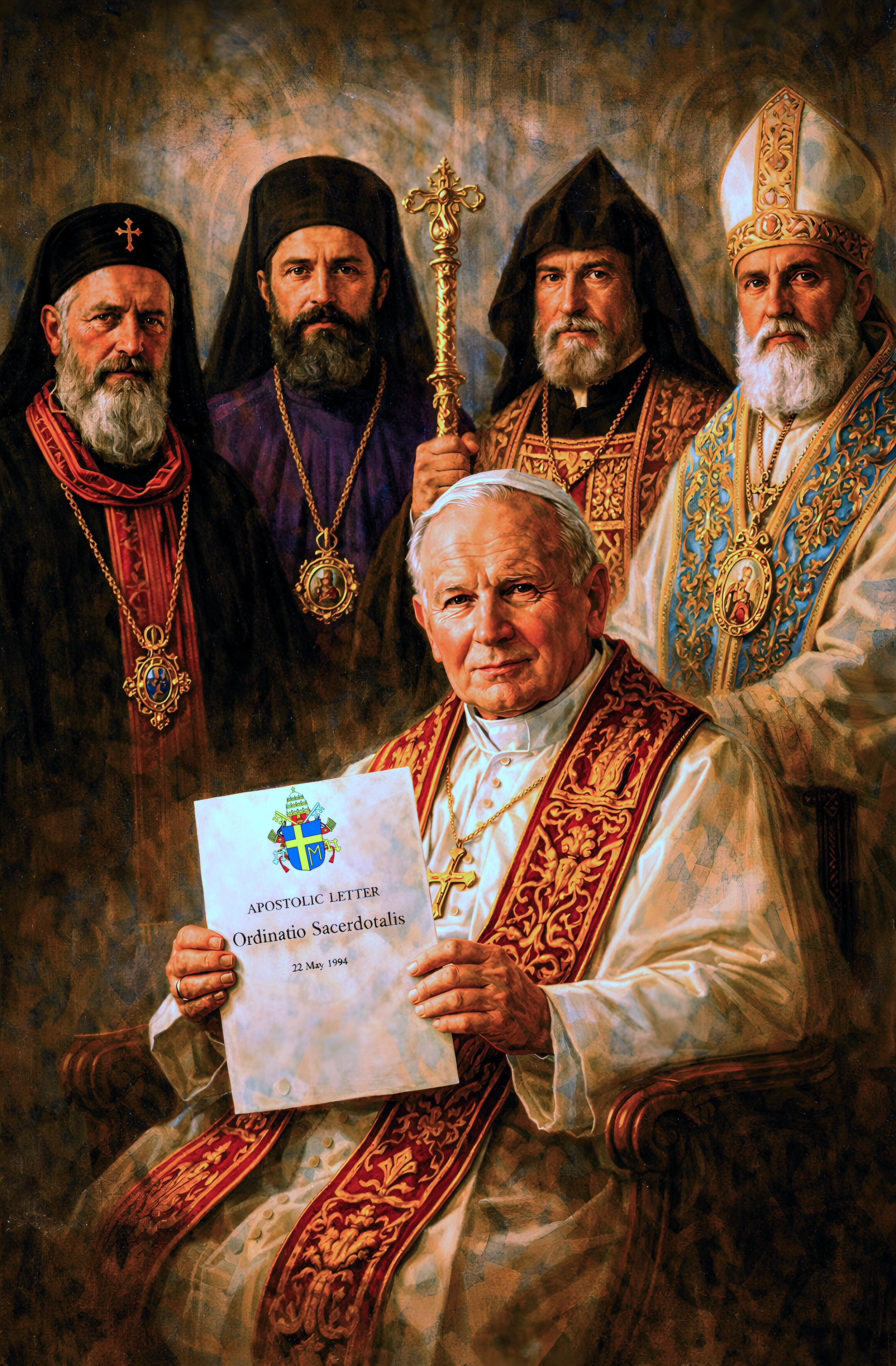
Recall:
Pope St. John Paul II, in Pastores Dabo Vobis, quotes the Council conceding the obvious: “In the world today, many people call perfect continence impossible.” His answer is to pray harder. It is always, in the end, to pray harder. But prayer does not resolve persistent arousal, hence the solution is often at-hand but too blunt for polite conversation.
So the magisterium’s own position, stripped of its music, is this: the discipline is not required by the priesthood; it exacts a physical and psychic cost the Church can describe in clinical detail; and that cost is met by a grace whose sufficiency cannot, by definition, be measured. That is a theological claim wearing the coat of a medical one. The interesting question is what happens when you take the coat off and ask the doctors.
To this the Church makes a genuinely serious reply, and I want to state it at its strongest. For the man who has actually received the charism — who chooses continence freely, sustains it in prayer, and is held inside a real community — the compensating goods are not fictional; the German data show as much, and the monastic evidence with it. Chosen meaning, a life of purpose, and above all belonging are themselves powerful protective factors. Sacerdotalis Caelibatus §15 even draws the crucial distinction itself: the vocation to the priesthood and the gift of celibacy are “undoubtedly distinct.” Where the gift is truly present and the community is truly there, the void Paul VI named may well be filled, and the grace he invoked may well be doing precisely what he said it does. I have no wish to deny it; I have watched it be true in men I admire.
The scandal is not the charism. The scandal is the conscription. Having conceded that the gift is distinct from the call, the Latin Church proceeds to demand both from every man alike — welding a discipline she admits is not doctrinal onto an ordination she admits does not require it, and imposing it universally on men she has not established possess the gift at all. The Eastern churches ordain married men; the very documents defending celibacy keep pausing to acknowledge it; Rome herself makes exceptions for married converts. The linkage is disciplinary, contingent, and elective. Which means the harm is elective too. The institution could, tomorrow, cease requiring of men without the charism a regimen whose downside it has itself described in the language of void, bitterness, and depression — and it declines.
A Church that calls herself mater et magistra — mother and teacher — might be expected to weigh that. A mother does not prescribe, universally and for life, a medicine she can only defend by conceding the wound in one clause and denying the injury in the next. A teacher does not answer an empirical objection with an unfalsifiable one and call the matter closed. The honest reading of her own four documents is that the Church has always known there was a cost, has always been able to describe it with precision, and has always chosen to answer the body with a doctrine. The doctrine may be true. The body is still keeping its own accounts — and, as it happens, we can now read them.
Which leaves the void exactly where Paul VI left it in 1967: named, conceded, and unfilled — except by grace, for those who have it, and by loneliness, for those who were handed the rule instead of the gift and told the two were the same thing. Mind, as ever, the Limoges, the crockery is about to hit the wall. And mind, rather more, the men.
[1]Paul VI, encyclical letter Sacerdotalis Caelibatus (24 June 1967), §69, in Acta Apostolicae Sedis [hereafter AAS] 59 (1967): 657–697. The candidate’s choice is said to lead “on the one hand … to a certain physical and psychic void.” https://www.vatican.va/content/paul-vi/en/encyclicals/documents/hf_p-vi_enc_24061967_sacerdotalis.html
[2]Ibid., §10. The encyclical states the objection it means to rebut: that priests “find themselves in a situation that is not only against nature but also physically and psychologically detrimental to the development of a mature and well-balanced human personality,” tending to become “hard and lacking in human warmth.”
[3]Ibid., §§51, 53. Section 53 insists it is “not right to continue repeating … that celibacy is against nature”; §51 grounds the reply in grace, quoting Augustine, Confessiones X.29.40 (PL 32:796): “Grant what You command, and command what You will” (Da quod iubes et iube quod vis).
[4]Second Vatican Council, decree Presbyterorum Ordinis (7 December 1965), §16 — celibacy “is not demanded by the very nature of the priesthood, as is apparent from the practice of the early Church and from the traditions of the Eastern Churches” — and §22, warning that “the bitter loneliness which men experience can lead them to the danger of becoming spiritually depressed.” AAS 58 (1966): 991–1024. https://www.vatican.va/archive/hist_councils/ii_vatican_council/documents/vat-ii_decree_19651207_presbyterorum-ordinis_en.html
[5]Pius XI, encyclical letter Ad Catholici Sacerdotii (20 December 1935), §42: because “God is a Spirit,” it is fitting that he who consecrates himself to God “should in some way divest himself of the body.” AAS 28 (1936): 5–53. https://www.vatican.va/content/pius-xi/en/encyclicals/documents/hf_p-xi_enc_19351220_ad-catholici-sacerdotii.html
[6]John Paul II, post-synodal apostolic exhortation Pastores Dabo Vobis (25 March 1992), §29, quoting Presbyterorum Ordinis §16: “In the world today, many people call perfect continence impossible.” AAS 84 (1992): 657–804. https://www.vatican.va/content/john-paul-ii/en/apost_exhortations/documents/hf_jp-ii_exh_25031992_pastores-dabo-vobis.html
[7]The popular claim that continence meaningfully raises testosterone rests on a strikingly thin and partly compromised evidence base. M. S. Exton et al., “Endocrine response to masturbation-induced orgasm in healthy men following a 3-week sexual abstinence,” World Journal of Urology 19, no. 5 (2001): 377–382, https://doi.org/10.1007/s003450100222, reported modestly higher testosterone after three weeks in a sample of only ten men, with no evidence of durable long-term change. The frequently repeated figure of a 145.7% “day-seven peak” derives from M. Jiang, J. Xin, Q. Zou, and J.-W. Shen, “A research on the relationship between ejaculation and serum testosterone level in men,” Journal of Zhejiang University Science A 4, no. 2 (2003): 236–240 — retracted by the journal in 2021 for substantial overlap with an earlier publication (retraction notice: https://doi.org/10.1631/jzus.2003.r236).
[8]J. R. Rider, K. M. Wilson, J. A. Sinnott, R. S. Kelly, L. A. Mucci, and E. L. Giovannucci, “Ejaculation Frequency and Risk of Prostate Cancer: Updated Results with an Additional Decade of Follow-up,” European Urology 70, no. 6 (2016): 974–982, https://doi.org/10.1016/j.eururo.2016.03.027. Hazard ratio 0.81 (ages 20–29) and 0.78 (ages 40–49) for ≥21 versus 4–7 ejaculations/month; the association was concentrated in low-risk disease. Ejaculation was defined to include intercourse, masturbation, and nocturnal emission.
[9]M. F. Leitzmann, E. A. Platz, M. J. Stampfer, W. C. Willett, and E. Giovannucci, “Ejaculation Frequency and Subsequent Risk of Prostate Cancer,” JAMA 291, no. 13 (2004): 1578–1586, https://doi.org/10.1001/jama.291.13.1578 — the original Health Professionals Follow-up Study analysis on which Rider et al. (2016) build.
[10]G. Davey Smith, S. Frankel, and J. Yarnell, “Sex and death: are they related? Findings from the Caerphilly Cohort Study,” BMJ 315 (1997): 1641–1644, https://doi.org/10.1136/bmj.315.7123.1641. All-cause mortality was roughly 50% lower among men with high orgasmic frequency (age-adjusted odds ratio 2.0 for the low-frequency group; 1.9 after adjustment for risk factors), with a dose-response gradient. The association is observational and vulnerable to reverse causation; a later 20-year follow-up of the same cohort found frequency of intercourse not associated with ischaemic stroke (S. Ebrahim et al., Journal of Epidemiology & Community Health 56, no. 2 [2002]: 99–102).
[11]J. Holt-Lunstad, T. B. Smith, M. Baker, T. Harris, and D. Stephenson, “Loneliness and Social Isolation as Risk Factors for Mortality: A Meta-Analytic Review,” Perspectives on Psychological Science 10, no. 2 (2015): 227–237, https://doi.org/10.1177/1745691614568352. Random-effects odds ratios: social isolation 1.29, loneliness 1.26, living alone 1.32; the authors judge the resulting mortality risk comparable to Grade 2–3 obesity and greater than obesity alone.
[12]K. Baumann, C. Jacobs, E. Frick, and A. Büssing, “Commitment to Celibacy in German Catholic Priests: Its Relation to Religious Practices, Psychosomatic Health and Psychosocial Resources,” Journal of Religion and Health 56, no. 2 (2017): 649–668, https://doi.org/10.1007/s10943-016-0313-9. Cross-sectional study of 2,549 priests (three of the four authors are themselves priests): a majority found celibacy helpful to their ministry, yet a large proportion experienced it as a burden and would not choose the celibate life again. Commitment to celibacy was best predicted by frequency of liturgical practice, work engagement, and personal relationship with God (39% of variance).
[13]A. Isacco, E. Sahker, E. Krinock, W. Sim, and D. Hamilton, “How Religious Beliefs and Practices Influence the Psychological Health of Catholic Priests,” American Journal of Men’s Health 10, no. 4 (2016): 325–337, https://doi.org/10.1177/1557988314567325. In this qualitative study of fifteen diocesan priests, 40% reported that celibacy negatively affected their psychological health, citing the thwarted desire for a family and feelings of depression or loneliness.