
The Mother Who Kept Him Waiting
Rome, the SSPX, and the Shape of a Manufactured Schism
The Roman Catholic Church likes to describe herself as mater et magistra — mother and teacher — an institution whose scale and antiquity are supposed to make possible a patience no smaller body could afford. Whatever verdict history eventually renders on the theology of the Society of Saint Pius X, the documentary record of the eleven months preceding 1 July 2026 does not show that patience being exercised. It shows a sequence of moves that any observer of institutional power would recognize on sight: silence long enough to breed desperation, an offer calibrated to be refused, a public transfer of blame onto the party who was kept waiting, and finally, punishment delivered exactly on schedule. Rome did not need to raise her voice. She simply declined to answer the door, then condemned the man outside for knocking too hard.
The Timeline
The dispute's documented origin is not February 2026 but August 2025, when Fr. Davide Pagliarani, Superior General of the SSPX, first sought a private audience with the newly elected Pope Leo XIV.[1] That request went unanswered for nearly six months. Only after the Society, having heard nothing, announced on 2 February 2026 that it would proceed with episcopal consecrations on 1 July did the Vatican produce a response — and a swift one, at that.[2] Cardinal Victor Manuel Fernández, Prefect of the Dicastery for the Doctrine of the Faith, met with Pagliarani on 12 February and proposed a "specifically theological dialogue" toward defining the minimum conditions for the Society's full communion, on one condition: that the consecrations be suspended.[3]
Pagliarani declined six days later, in a letter that is worth reading in full rather than in summary, because its tone is not the tone of a man spoiling for schism but of a man who believes he has seen this play before. He noted that Rome's proposal came only once consecrations were announced, and diagnosed the offer's structure without much charity — but also without much exaggeration: it arrived, he wrote, with "another hand already poised to impose sanctions."[4] Cardinal Fernández had, in the same meeting, reportedly told him that the texts of Vatican II "could not be corrected" — meaning the promised dialogue was conditioned not only on suspending the consecrations but on accepting in advance the very doctrinal terrain the Society disputes.[5]
In Focus:
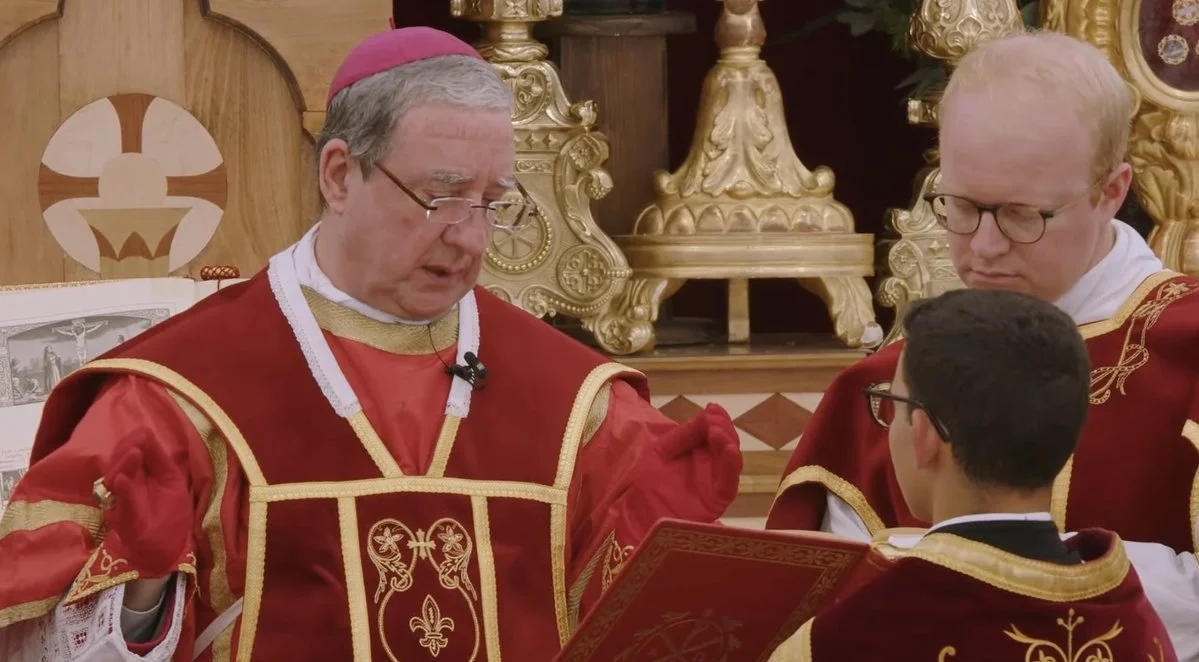
Bishop Dom Alfonso de Galarreta, principal consecrator at the SSPX Consecrations on the 1st of July 2026.
Three months of silence followed. Then, on 13 May, Fernández issued a communiqué warning that consecration without papal mandate would constitute "a schismatic act" carrying automatic excommunication.[6] Asked about the matter on 16 June at Castel Gandolfo, Leo XIV offered a small but telling admission: "We have invited them," he said, "and I am still considering making another appeal."[7] Whatever the invitation consisted of, it had not, by the Society's account, ever amounted to the personal audience Pagliarani had been requesting since the previous August. Two weeks later, on the eve of the ceremony, Leo issued his final written appeal — "please turn back!" — a letter of real pastoral warmth, addressed to a Superior General he had still, eleven months on, never met.[8]
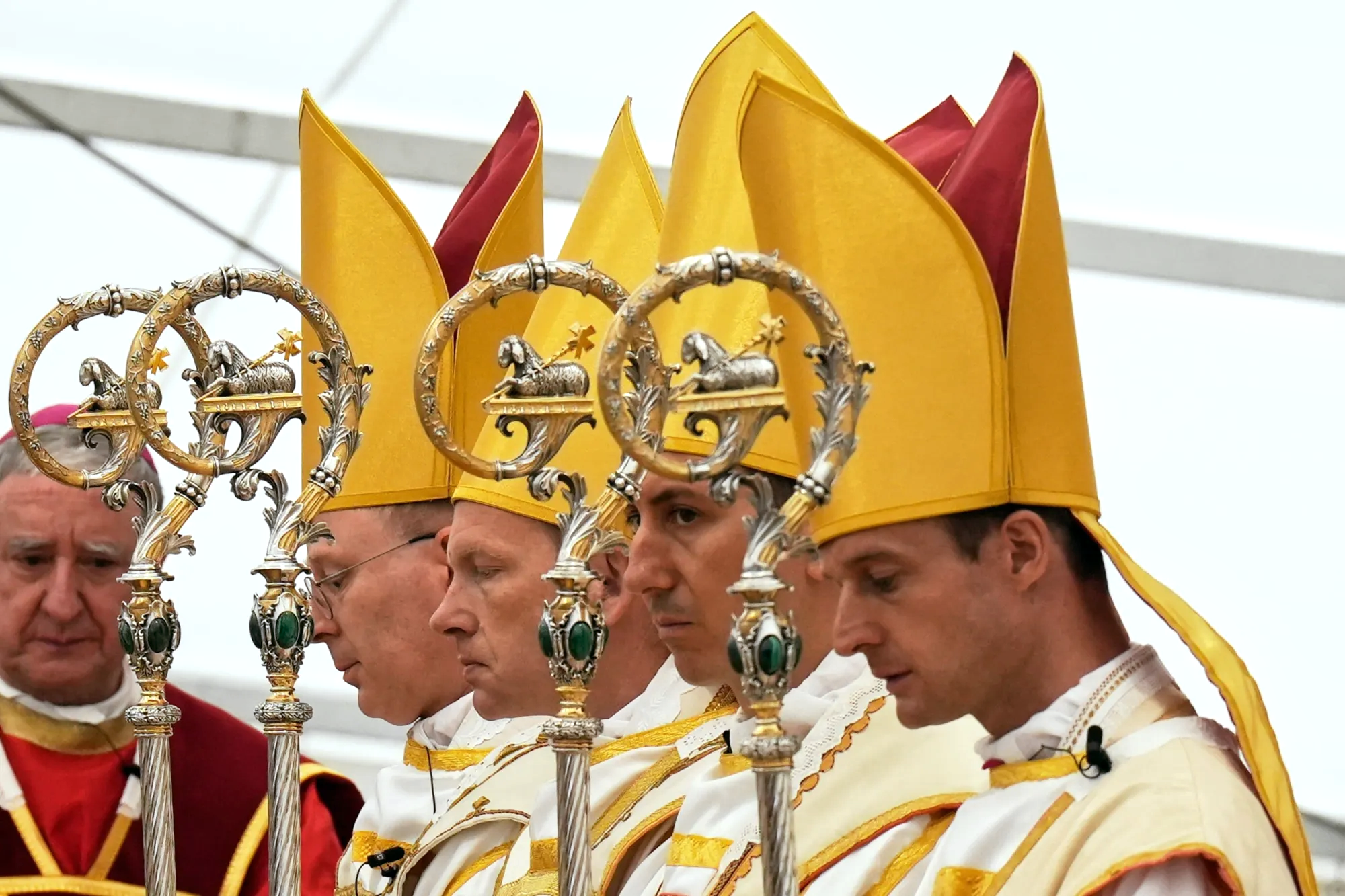
The consecrations went forward at Écône on 1 July. In its statement afterward, the Society noted with evident regret that Pagliarani "was not afforded the opportunity to meet personally" with the Holy Father, in order to lay before him the reasons that had made the ceremony seem necessary.[9] The Vatican declared the six bishops excommunicated the following day.[10]
The Anatomy of the Thing
Strip away the Latin and the liturgical solemnity, and the sequence above maps with uncomfortable precision onto a pattern familiar from any playground or workplace: drive the target to despair, let the desperation show itself in an unwelcome act, blame the target for that act, then punish him.
Drive to despair. Six months of silence on a request for a papal audience is not, by itself, damning — popes are busy, and audiences are not owed. But six months of silence following a seven-year silence, since Pagliarani's original 2019 proposal for calm doctrinal dialogue had gone unanswered until this same February, changes the character of the delay. It stops looking like scheduling and starts looking like policy.
Let the target get desperate. The Society did not invent its deadline out of impatience; it announced 1 July only after exhausting the quieter channel. And Rome's own conduct validates the reading that the deadline, not the request, was what finally produced a response. Nothing moved in six months of silence. Everything moved nine days after a headline.
Blame the target. Every subsequent Vatican document treats the SSPX's decision to proceed as the sole moral fact requiring explanation. The 13 May communiqué speaks of a "schismatic act." Leo's own letter, warm as its language is, places the entire weight of the coming rupture on the Society, with no accompanying acknowledgment that a Superior General's audience request had gone unanswered for the better part of a year. The causal story Rome tells the public is clean, one-directional, and conveniently silent about its own contribution to the impasse.
Punish. This stage requires no argument. Excommunication was threatened on 13 May and delivered on 2 July, precisely as promised.
The Offer Engineered to Fail
The sharpest question is whether the February offer was made in good faith or made knowing it would be refused, so that Rome could point to it afterward as evidence of magnanimity extended and rejected. The documentary record does not hand us a smoking gun on Fernández's private intentions — no memorandum states that the plan was to manufacture a pretext. But the structure of the offer bears all the marks of one designed to fail. It demanded, as its price of admission, the one concession the Society could not make without appearing to capitulate publicly on the very date it had just announced. And it foreclosed, before a single session convened, the doctrinal ground on which any real dialogue would have had to occur: Vatican II, Fernández made clear, was not on the table. An invitation to a conversation whose only permitted conclusion is agreement with the host is not, in any ordinary sense, an invitation to dialogue. It is a formality performed for the historical record — the diplomatic equivalent of a plea deal offered with the confession already written.
In Focus:
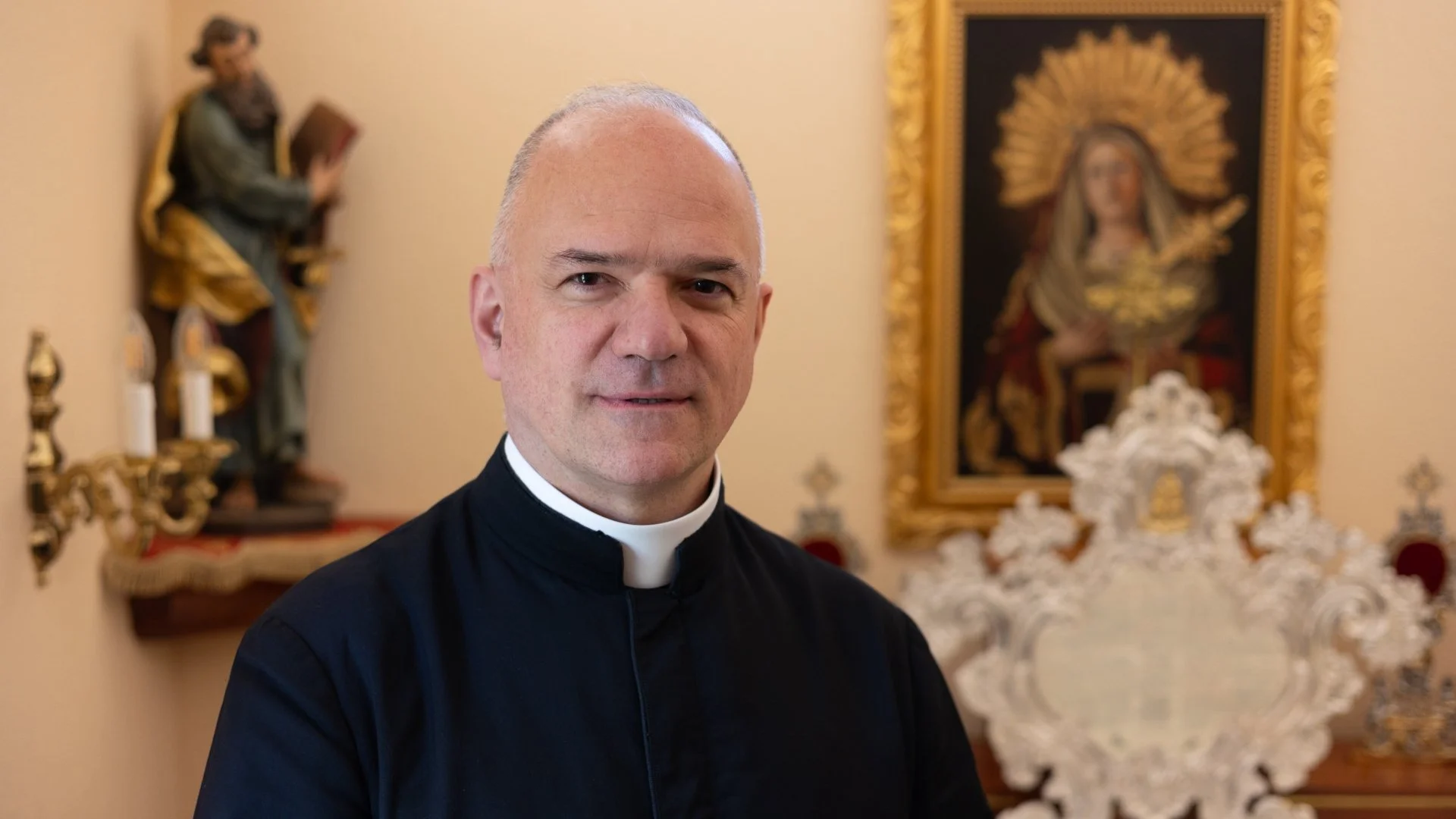
Rev. Fr. Davide Pagliarani, SSPX Superior General
If this reading is correct, then the February offer was never meant to produce reconciliation. It was meant to produce a refusal that Rome could subsequently cite: we made a generous offer, and they turned it down. That is not evidence of a Church discerning her way through a painful dispute. That is the oldest trick available to any institution large enough to survive being seen as unreasonable — provided a document exists somewhere proving reasonableness was tried.
Petty, Not Prophetic
It would be easier, in a sense, if Rome's conduct here amounted to tyranny. Tyranny at least concedes that power is being deliberately wielded. What the record instead suggests is something smaller and, for an institution that claims universal and maternal authority, more damning: pettiness. A mother who lets a son's request for an audience sit unanswered for half a year, who offers reconciliation only once he has committed himself publicly to leaving, and who then disciplines him for leaving on schedule, is not exercising the mater et magistra she claims to be. She is behaving like any institution embarrassed by a subordinate's insistence on being heard — withholding attention until the insistence becomes public, and then treating the publicity itself as the offense.
The Church is, by her own telling, big enough to have absorbed worse insubordination than four bishops consecrated at Écône and answered it with patience rather than procedure. She had the instrument close at hand: Pope Francis had already extended partial faculties to SSPX priests in 2015 and 2017, proof that generosity toward this particular Society was neither unprecedented nor doctrinally impossible. Leo XIV inherited that playbook and chose, instead, eleven months of silence punctuated by one conditional offer and one moving, too-late letter. Whatever the merits of the Society's own stubbornness — and this piece has made no claim that Pagliarani's doctrinal objections to the Council were themselves correct — the manner of Rome's handling does not read as prophetic firmness. It reads as an institution that mistook withholding an audience for exercising authority, and then found itself surprised when the silence it had cultivated came back to it as schism.
[1]"The Society had sought to meet with Pope Leo since August 2025," Catholic Herald, 2 July 2026, https://thecatholicherald.com/article/sspx-defies-pope-leo-with-four-new-bishops.
[2]Ibid.
[3]"The SSPX's Split Personality," Where Peter Is, 7 May 2026, https://wherepeteris.com/the-sspxs-split-personality/.
[4]Fr. Davide Pagliarani to Cardinal Victor Manuel Fernández, 18 February 2026, published as "Letter from Father Pagliarani to Cardinal Fernández," SSPX District of the USA, https://sspx.org/en/news/letter-father-pagliarani-cardinal-fernandez-57309.
[5]"SSPX rejects Vatican dialogue offer," The Tablet, 20 February 2026, https://www.thetablet.co.uk/news/sspx-rejects-vatican-dialogue-offer/.
[6]"SSPX defies Pope Leo with four new bishops," Catholic Herald, 2 July 2026, https://thecatholicherald.com/article/sspx-defies-pope-leo-with-four-new-bishops.
[7]"Pope Leo makes final appeal to SSPX before schismatic ordination of bishops," America Magazine, 30 June 2026, https://www.americamagazine.org/vatican-dispatch/2026/06/30/pope-leo-sspx-ordination-bishops-schism/.
[8]Pope Leo XIV to Fr. Davide Pagliarani, 29 June 2026, Vatican.va, https://www.vatican.va/content/leo-xiv/en/letters/2026/documents/20260629-lettera-fraternita-sanpiox.html.
[9]"SSPX proceeds with episcopal ordinations without Pope's permission," Zeale, 2 July 2026, https://zeale.co/news/articles/sspx-proceeds-with-illicit-episcopal-ordinations-without-popes-permission.
[10]"What Is the SSPX? A Look at the Traditionalist Catholic Group in Schism With the Church," National Catholic Register, 2 July 2026, https://www.ncregister.com/cna/what-is-the-sspx-a-look-at-the-traditionalist-catholic-group-in-schism-with-the-church.