
Defender of the Faith, of All Faiths, or None?
King Charles III, the Coronation Oath, and the Incoherence of Royal Pluralism
There is a certain kind of confusion that presents itself as magnanimity. It speaks warmly of inclusion, of tolerance, of the spiritual richness of diverse traditions — and it does so with complete sincerity. What it does not do, because it cannot, is think the position through to its conclusions. King Charles III is a man of genuine religious curiosity and evident personal piety. He is also, on the specific question of his role as Defender of the Faith, in a position of irresolvable self-contradiction — and the coronation oath he swore before God in Westminster Abbey in May 2023 makes that contradiction a matter of public and solemn record.
The Title He SoughT
and the Oath He Took
In 1994, the then-Prince Charles gave an interview in which he expressed a preference that would define speculation about his eventual coronation for nearly three decades. He did not, as popular shorthand often has it, propose the title 'Defender of Faiths' in the plural. What he said was more precise, and in some ways more revealing: he would rather be seen as 'defender of faith, not the faith, because it means just one particular interpretation of the faith.'[1]
The distinction matters. He was not simply proposing to add other religions to his portfolio of defended traditions. He was expressing unease with the specificity of the existing title — with the definite article, with the confessional particularity it implies. He wanted the monarchy to stand for religion in general, for the spiritual impulse as a human universal, rather than for a defined, historically-rooted, doctrinally-specific Christian confession.
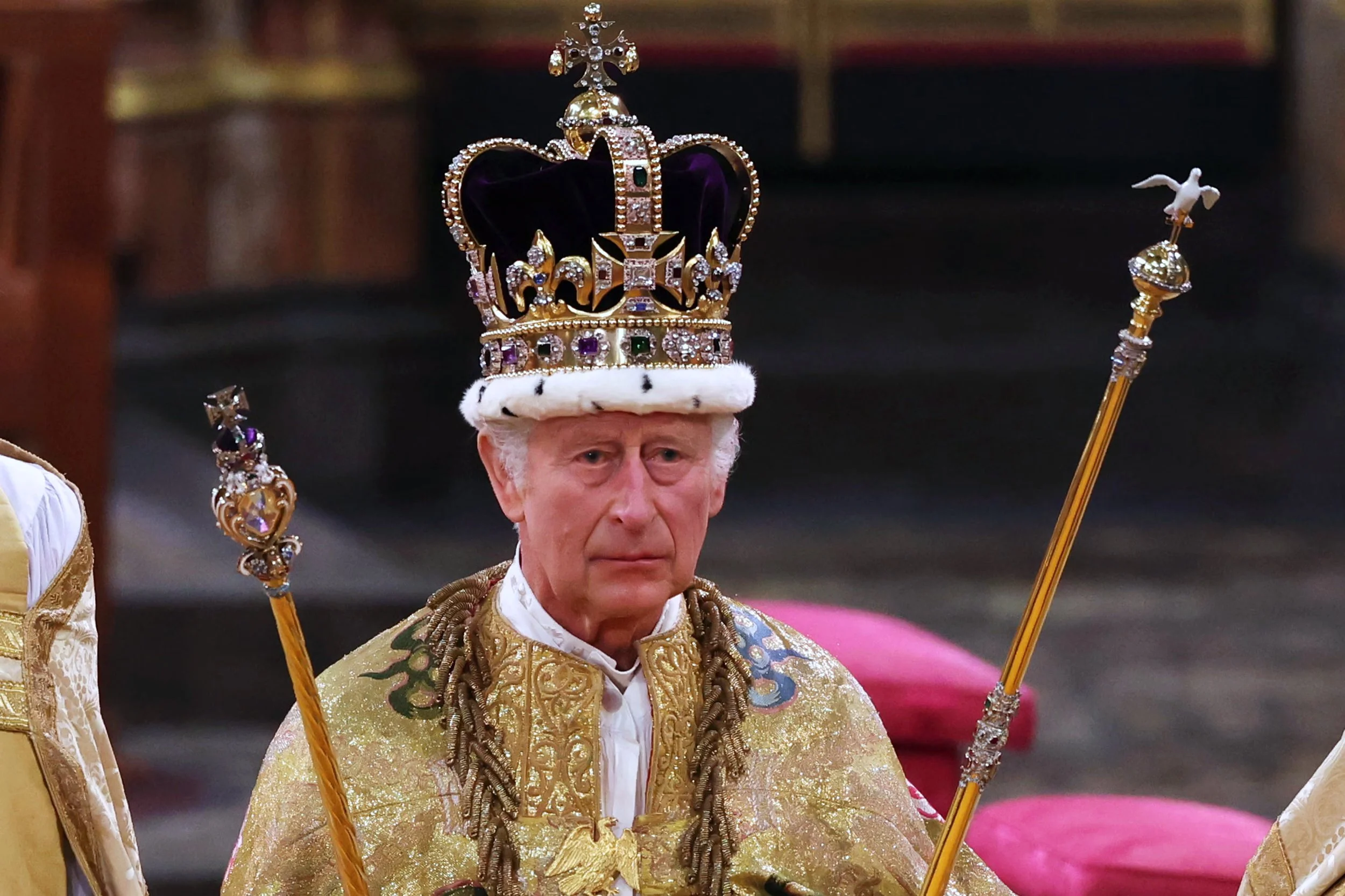
The coronation ceremony of May 2023 did not grant him this wish — at least not formally. The ancient oath remained. He knelt, placed his hand upon the Bible, and swore:
Will you to the utmost of your power maintain the Laws of God and the true profession of the Gospel? Will you to the utmost of your power maintain in the United Kingdom the Protestant Reformed Religion established by law? Will you maintain and preserve inviolably the settlement of the Church of England, and the doctrine, worship, discipline, and government thereof, as by law established in England?
He answered:
'All this I promise to do.'
He kissed the Bible.[2]
There is nothing ambiguous in that text. It does not gesture toward a generalised spirituality. It names, in specific and legally operative terms, the Gospel, the Protestant Reformed Religion, the Church of England, and the rights of its bishops and clergy. This is a confessional oath, sworn covenantally before God. It is not a statement of aspiration. It is not a mission statement. It is a binding promise with a clearly defined object.
What did change was the framing. Before the oath was administered, the Archbishop of Canterbury inserted a preamble declaring that the Church of England, which the King was about to swear to uphold, is committed to fostering 'an environment in which people of all faiths and beliefs may live freely.'[3] This was the workaround — not a revision of the oath itself (which would have required an Act of Parliament and the kind of ecclesiastical and political controversy no one wished to invite), but a recontextualisation of it. The operative clauses remained intact. Only the mood music changed.
The title itself — Defender of the Faith, Fidei Defensor, bestowed by Parliament upon Henry VIII in 1546 following his break with Rome[4] — was likewise unchanged. At his coronation, Charles was proclaimed Defender of the Faith. The plural never made it into law, into the liturgy, or onto the coinage. What changed was not the office but the King's publicly stated attitude toward it.
This is a not a trivial distinction. An oath is not a mood. A legal title is not an aspiration. The question of what Charles actually swore, and what that oath requires of him, does not dissolve simply because the ceremony was surrounded by representatives of other faith traditions or because the Archbishop chose his preamble carefully.
The Islam Problem,
Which Is Not a Small Problem
Charles has spoken warmly of Islam throughout his public life. He has described the faith as a spiritual tradition from which he believes much can be learned. He served as vice patron of the Oxford Centre for Islamic Studies. He has expressed publicly, and apparently sincerely, his admiration for Islamic devotion, scholarship, and ethics.[5]
None of this is objectionable in itself. A man may admire another tradition without being obligated to defend it. The problem arises when the admiration is elevated into a constitutional aspiration — when the King of England proposes, even informally, to be the protector of a religion that is, at its theological core, a systematic repudiation of the faith he has sworn before God to defend.
Islam does not merely differ from Christianity on secondary matters. It does not represent a variation on a common theme. At the points that matter most — the points around which Christianity's entire soteriological structure is built — Islam is not merely silent but explicitly contrary:
The Divinity of Christ. In Islamic theology, the ascription of divinity to Jesus constitutes shirk — the association of partners with God, and the gravest sin conceivable. There is no reconciling this with the Nicene Creed faith Charles swore to uphold.
The Holy Trinity. Surah 5:73 of the Qur'an states plainly that those who say God is the third of three have committed disbelief.[6] This is not a misunderstanding of Christian theology that further dialogue might resolve. It is a theological position.
The Crucifixion. Surah 4:157 states that Jesus was not killed, nor was he crucified — 'but it was made to appear so to them.'[7] This is not an alternative interpretation of the Passion narrative. It is a denial of the central historical claim upon which the entire Christian faith rests.
The Resurrection. If the Crucifixion did not occur, neither did the Resurrection. St. Paul was unequivocal on what follows from this: 'If Christ be not raised, your faith is vain; ye are yet in your sins.'[8]
These are not peripheral disagreements. They are not the kind of differences that can be papered over with a shared commitment to public service or the common good. They concern the identity of God, the nature of Jesus Christ, and the mechanism of human salvation. Christianity and Islam give irreconcilable answers to all three questions.
And so the question — not rhetorical, but genuinely urgent — is this: in an antagonistic situation in which Christianity and Islam make contradictory truth claims about the same historical events, what does a 'Defender of Faiths' actually defend? He cannot defend both simultaneously. To defend the Christian claim that Christ was crucified and rose from the dead is necessarily to decline to defend the Islamic claim that he was not. To defend the Islamic claim is to abandon the faith he swore to uphold. The very logic of 'defending' requires a position from which to defend — and Charles has already sworn, publicly and covenantally, what that position is.
The aspiration to defend all faiths is, in other words, not an expansion of the royal religious function. It is its abolition. A monarch who is the guardian of everything is the guardian of nothing, because guardianship requires a standard by which to guard.
The Constitutional
Absurdity
Leaving aside the theology, the constitutional position is no less strained. The religious oaths of the coronation are not ceremonial furniture. They are legally operative instruments, required by statutes that have not been amended and that Parliament has shown no appetite to amend — precisely because any amendment would require a political battle nobody wants to have.[9]
The title Defender of the Faith appears on proclamations, Parliamentary writs, and the coinage of the realm. It is part of the monarch's full formal legal title. It has not been altered. What Charles has done is to express, repeatedly and publicly, an aspiration that exists in direct tension with what he is constitutionally required to be. He has not changed the law. He has not changed the oath. He has not changed the title. He has changed only his stated attitude toward all three — and the law, the oath, and the title remain as they were.
One is entitled to ask what an oath is for, if the person who swore it feels at liberty to reinterpret its object. The oath was not sworn to 'religion in general.' It was sworn to the Protestant Reformed Religion established by law and to the Church of England specifically. If Charles genuinely holds that his role is to defend all faiths equally, then he is either in breach of the spirit of what he swore — or he regards the oath as a form of ceremonial theatre, which is a rather more troubling conclusion.
An oath sworn before God on Scripture, in the context of a Christian sacramental rite, is not a form of theatre. It binds the conscience of the sovereign.[10] It reminds the Crown that its authority is not merely constitutional but moral. The moment it becomes negotiable in its specificity, it ceases to be an oath and becomes a gesture — and the institution it undergirds loses the spiritual coherence that has always been its deepest justification.
What Has Become of
Queen Elizabeth II's Legacy?
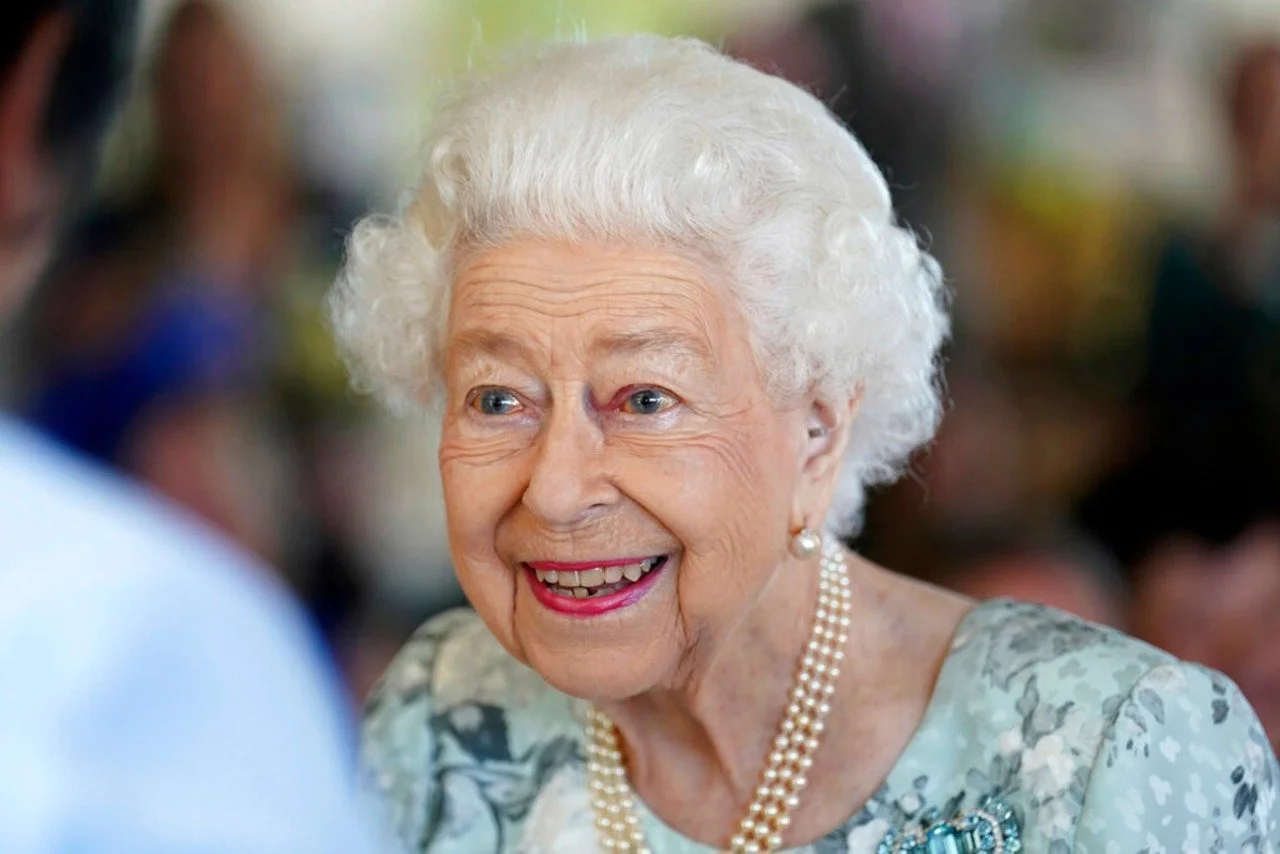
The late Queen Elizabeth II was not a constitutional Christian in the merely formal sense. She was, by every available evidence, a personal one. Her Christmas broadcasts returned year after year, with no apparent embarrassment, to the specific claims of the Gospel: the Incarnation, the Resurrection, the person of Jesus Christ as the ground of her own hope and service. She spoke of her faith as the anchor of her life — not as one tradition among many that she found equally valuable, but as the truth by which she lived.
She understood, it seems, something that her son has not yet grasped: that the Crown's spiritual authority derives from its confessional specificity, not from its inclusivity. A monarch who is simultaneously the guardian of all faiths offers considerably less to Muslims, Sikhs, and Hindus than he imagines — because they have their own robust traditions, their own deep roots, and they do not need a well-meaning Anglican king to validate them. What they need from the Crown is not theological solidarity but the rule of law and the protection of conscience. Elizabeth provided that, precisely because she stood somewhere herself.
FOCUS
The late Queen Elizabeth II was not a constitutional Christian in the merely formal sense. She was, by every available evidence, a personal one. Her Christmas broadcasts returned year after year, with no apparent embarrassment, to the specific claims of the Gospel: the Incarnation, the Resurrection, the person of Jesus Christ as the ground of her own hope and service. She spoke of her faith as the anchor of her life — not as one tradition among many that she found equally valuable, but as the truth by which she lived.
The genius of the established settlement — whatever one makes of establishment as such — is that it provides the nation with a sovereign whose spiritual commitments are known, whose accountability to a transcendent order is publicly affirmed, and whose authority is therefore not merely the authority of office but the authority of vocation. Elizabeth inhabited that vocation with consistency and evident sincerity. The faith was not decorative to her. It was constitutive.
Charles has inherited that institution and has, with entirely good intentions, begun the work of making it mean something different. The difficulty is that the something different it is being made to mean is theologically incoherent and constitutionally unsupported. A monarchy that stands for the spiritual in general, for the religious impulse as a human universal, is a monarchy that has quietly abandoned the specific grounds on which its spiritual authority rested.
Elizabeth left her son an institution with integrity — not without its tensions, but with a recognisable spine. The question now is not whether that integrity can be modernised. It is whether what is being offered in its place is a principled pluralism or an elegant confusion dressed in the vestments of magnanimity.
The coronation oath, which he swore and which stands, suggests the answer is already written. Whether the King intends to honour it remains, for the moment, an open question. He might not want to… And then, what?
[1]ITV News, 'How the King's coronation oath changed in historic break with tradition,' 6 May 2023.
[2]Church of England, 'Why is the King known as Defender of the Faith?' — official statement on the title's statutory basis.
[3]The Conversation, op. cit. The Archbishop prefaced the oath with the declaration that the Church of England is committed to fostering 'an environment in which people of all faiths and beliefs may live freely.'
[4]Church of England official statement, op. cit. The title dates to Parliament's 1546 Act bestowing it upon Henry VIII following his break with Rome.
[5]Juan Cole, 'King Charles III as Defender of all Faiths, including Islam,' Informed Comment, May 2023.
[6]Qur'an, Surah 5:73 (Al-Ma'idah). 'They have certainly disbelieved who say, 'Allah is the third of three.' And there is no god except one God.'
[7]Qur'an, Surah 4:157 (An-Nisa). The verse explicitly states: 'They did not kill him, nor did they crucify him; but it was made to appear so to them.'
[8]1 Corinthians 15:17 (KJV): 'And if Christ be not raised, your faith is vain; ye are yet in your sins.'
[9]The Conversation / Durham University, 'How King Charles's coronation will reflect his desire to be defender of all faiths,' May 2023.
[10]The New Neo, 'King Charles: defender of which faith?' April 2026.