
Called, But Not Yet Certain?
A guide to vocational discernment for the
Canons Regular of the Sacred Heart of Jesus
The Question That Arrived Uninvited
There is a peculiar feature of a genuine vocation: it does not wait to be convenient. It arrives — quietly, persistently, sometimes inconveniently — not as a thunderclap but as a steady accumulation of quiet certainties. Newman captured something of this when he wrote of God creating each person to do "some definite service" that no other can do in quite the same way.
If you have found your way to this article, the question has probably already arrived. You may not yet know what to do with it. You may be married, employed, settled — and wondering whether a serious Christian vocation and an ordinary human life are genuinely reconcilable, or whether holy orders demand the surrender of everything you have built. The short answer is: in the Old Catholic tradition, they do not. But that answer deserves to be unpacked properly.
IN CONTEXT:
The Canons Regular of the Sacred Heart of Jesus (CRSHJ) is an Old Catholic religious institute following the Oratorian model of St Philip Neri. It exists precisely for the man whose interior call to priestly or religious life has been sharpened, not extinguished, by a life fully embedded in the secular world. This article is for that man — and for anyone who stands near enough to the question to want an honest account of what the discernment process actually involves.
The Canons Regular of the Sacred Heart of Jesus (CRSHJ) is an Old Catholic religious institute following the Oratorian model of St Philip Neri. It exists precisely for the man whose interior call to priestly or religious life has been sharpened, not extinguished, by a life fully embedded in the secular world. This article is for that man — and for anyone who stands near enough to the question to want an honest account of what the discernment process actually involves.
Indicators of a Vocation to the CRSHJ
Vocational indicators are not infallible. They are, rather, a grammar — patterns of interior life and exterior disposition that, taken together, suggest the Spirit may be at work. The CRSHJ does not look for prodigies of piety or ecclesiastical CVs/résumés. It looks for a particular constellation of qualities, each of which can coexist quite naturally with a full secular life.
A Deep Eucharistic Devotion
The Canon Regular is, above all, a man of the Eucharist. If the Mass is not merely rite but encounter — if Exposition and Adoration of the Blessed Sacrament draw you not out of duty but from something more like thirst — this is among the clearest vocational indicators we know. Liturgy, properly celebrated, must feel to the candidate like a homecoming rather than a performance.
A Longing for Spiritual Brotherhood
The CRSHJ is a community — dispersed, certainly, but real. The candidate who has never felt the pull of religious brotherhood, who is content with entirely solitary faith, is unlikely to flourish in an Oratorian context. The Oratorian spirit is relational to its core: Philip Neri built his apostolate on friendship, conversation, a great sense of humour, and shared prayer long before he built anything on stone.
A Pastoral Heart for the Overlooked
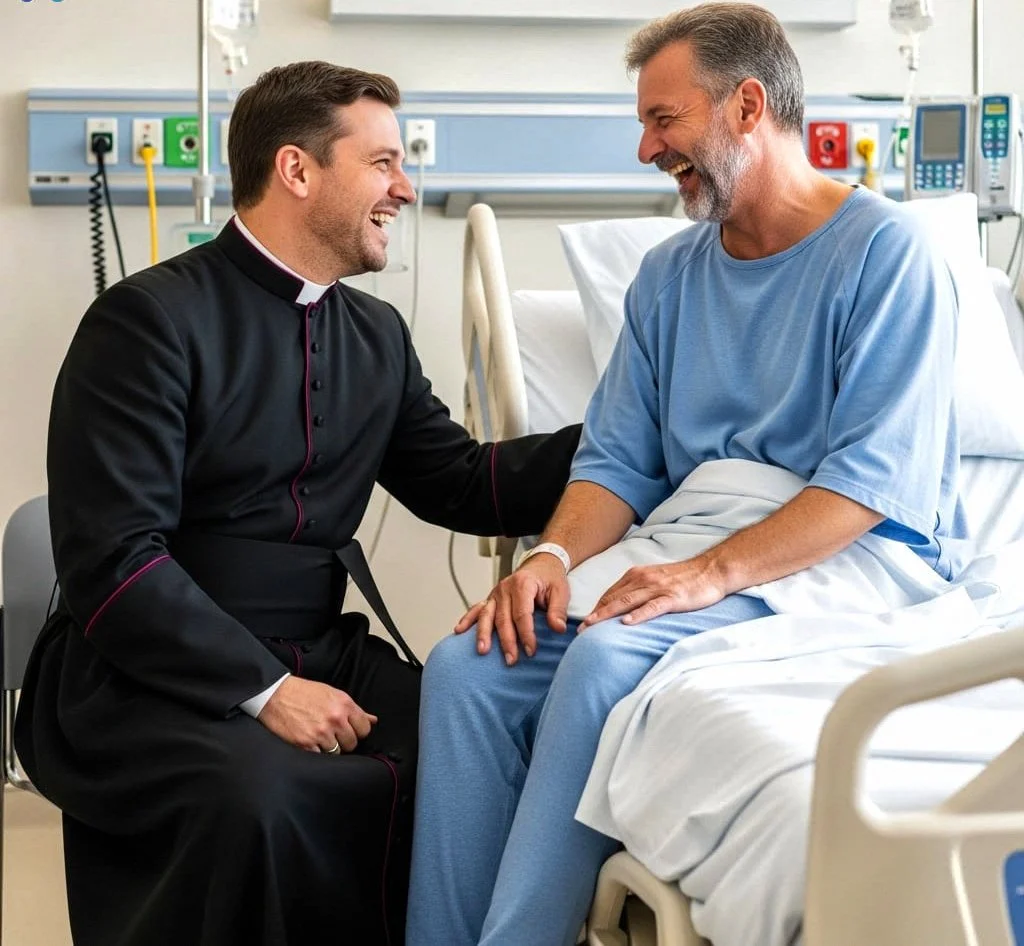
The CRSHJ exercises its ministry primarily at the margins — among the elderly, the isolated, those whom more institutionally cautious forms of pastoral care have difficulty reaching: single parents, the divorced and remarried, those from our LGBQ+ communities who have been made to feel that the Church is a place from which they are excluded rather than invited. If your instinct is toward these people, rather than away from them, the Oratorian model was made for you.
Integration in the Secular World
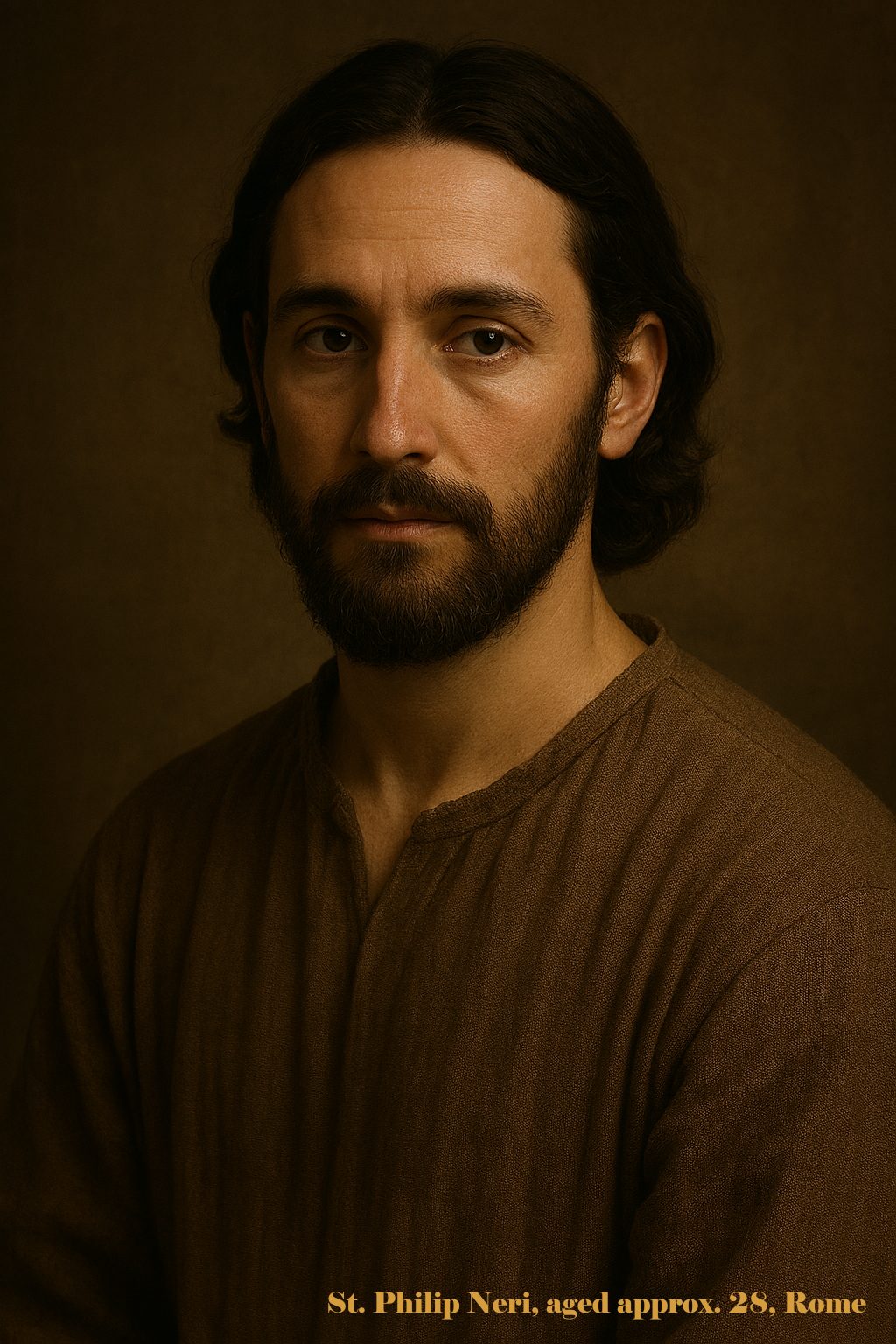
St Philip Neri (1515 - 1595) spent thirteen years as a lay apostle before ordination — working, praying, evangelising through ordinary life. He earned his wages as a teacher, paid rent and his bills like everyone else in everyday life. The CRSHJ follows this model. Members are expected, at least initially, to remain in secular employment. This is not a compromise but a conviction: that the priest embedded in a workplace, a neighbourhood, a school, a family home, reaches souls that the cloistered man cannot. If you feel that your professional or family life is the context rather than the obstacle of your ministry, you are thinking in CRSHJ Oratorian categories.
Maturity and Stability
The CRSHJ welcomes candidates from the age of twenty-five, with no upper age limit. The Spirit, as the Vocations page rightly observes, does not count years. But what is sought is maturity of character — not academic credentials, not a spotless life, but a man who knows something of failure and has not been destroyed by it. The priesthood is not a refuge from life's complications but a way of accompanying others through them. That requires a formation and practical experience, which ordinary life provides rather well.
Orthodoxy Rooted in Love
The ideal candidate holds a theology of the Church that is expansive without being shapeless. He belongs to the Roman or Reformed Catholic tradition and is at home with its sacramental world — but he has not confused discipline with dogma, nor institutional preference with divine law. He is willing to think carefully about what the tradition actually requires, as distinct from what it has historically assumed.
"The Spirit does not count years — but He does look for a man whose life has been lived rather than merely passed."
Learning to Discern: A Practical Guide
Discernment is an art, not a science. It has a literature — Ignatius of Loyola's Spiritual Exercises remain the locus classicus — but its practice is less systematic than it sounds. The following steps are offered not as a checklist but as a framework for those beginning to take the question seriously.
Sit Quietly with the Question: Before you do anything else — before you research, contact, apply — give the question room to breathe. Many men rush toward resolution because the uncertainty is uncomfortable. But discernment requires the capacity to tolerate not-knowing for long enough to hear something beneath the noise. Bring the question to prayer; notice whether, over weeks and months, it quietens or intensifies.
Examine the Interior Movements: Ignatius distinguished between "consolations" and "desolations" — movements toward God and away from Him — as diagnostic tools in discernment. Ask yourself: when I imagine a life of priestly ministry alongside my current commitments, what do I feel? Not what do I think I should feel, but what actually arises? Peace and energy suggest the Spirit's presence. Anxiety is not necessarily a negative sign; but compulsion, escapism, or a desire to flee rather than to serve, generally is.
Test the Call Against Reality: The CRSHJ offers a two-year period of vocational discernment and formation before any decision regarding holy orders is made. This is not a bureaucratic delay but a gift — to both the candidate and the Institute. During this time, a man is incardinated as a Lay Brother and accompanies the community's life whilst studying theology and pastoral ministry. The CRSHJ does not ordain permanent deacons; ordination to the priesthood follows satisfactory completion of this discernment journey.
Seek Spiritual Accompaniment: No man discerns a vocation in isolation — and if he tries, he is likely to discern poorly. A spiritual director or confessor is not a luxury at this stage but a necessity. If you do not currently have one, the CRSHJ can provide appropriate accompaniment as part of its enquiry process. The aim is not to tell you what you want but to help you hear what is already being said.
Speak Honestly with Those Closest to You: For married candidates in particular, a vocation to the CRSHJ is not a solo decision. It involves a family. A wife who understands and supports her husband's clerical life is not an obstacle to it — she is, in many cases, what makes it possible. The CRSHJ takes family contexts seriously. If this is your situation, begin the conversation at home before you begin it with us.
Why Old Catholic Priesthood? The Case for a Fuller Integration
A comparison between Old Catholic and Roman Catholic priesthood is not an exercise in institutional rivalry but a question of genuine theological significance. The differences are real, and they matter — particularly for the man whose call to holy orders has been checked, until now, by a discipline he has always found harder to accept than the faith that produced it.
Celibacy: Discipline, Not Dogma
The Second Vatican Council was admirably clear on a point that later discourse has sometimes obscured: mandatory clerical celibacy is an ecclesiastical discipline, not a requirement of the divine law. It is a noble discipline, with a distinguished theological rationale, and the CRSHJ respects it in those who embrace it freely. But "free" is the operative word. The Old Catholic tradition, separating from Rome in 1870 over the definition of papal infallibility rather than over any question of sacramental theology, did not carry mandatory celibacy with it. Old Catholic priests have always been free to marry. Married men have always been ordainable. This is not a concession to modernity; it is the ancient practice of the Church in both East and West.
IN CONTEXT
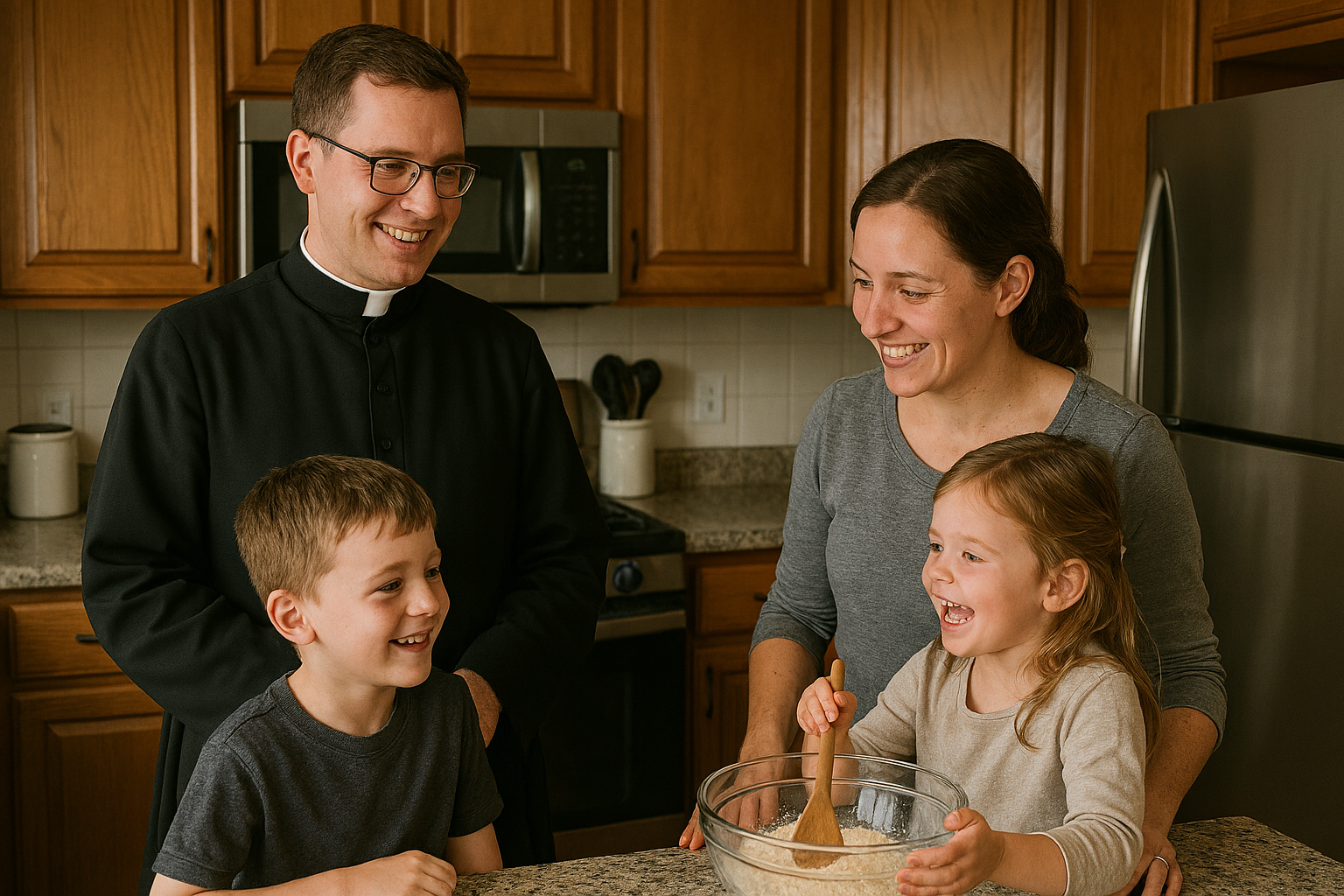
Old Catholic priests have always been free to marry. Married men have always been ordainable. A married priest brings to his ministry something that no seminary training provides: the lived experience of conjugal love, of parenthood, of the daily negotiations of domestic life, of financial anxiety and relational joy.
The Family as Pastoral Context
A married priest brings to his ministry something that no seminary training provides: the lived experience of conjugal love, of parenthood, of the daily negotiations of domestic life, of financial anxiety and relational joy. These are not distractions from pastoral ministry — they are its very texture. The man who has sat with his own child through a night of illness understands something about human vulnerability that cannot be acquired by reading about it. The CRSHJ regards this not as a regrettable compromise but as a genuine pastoral asset.
Secular Employment: Embedded Rather Than Separate
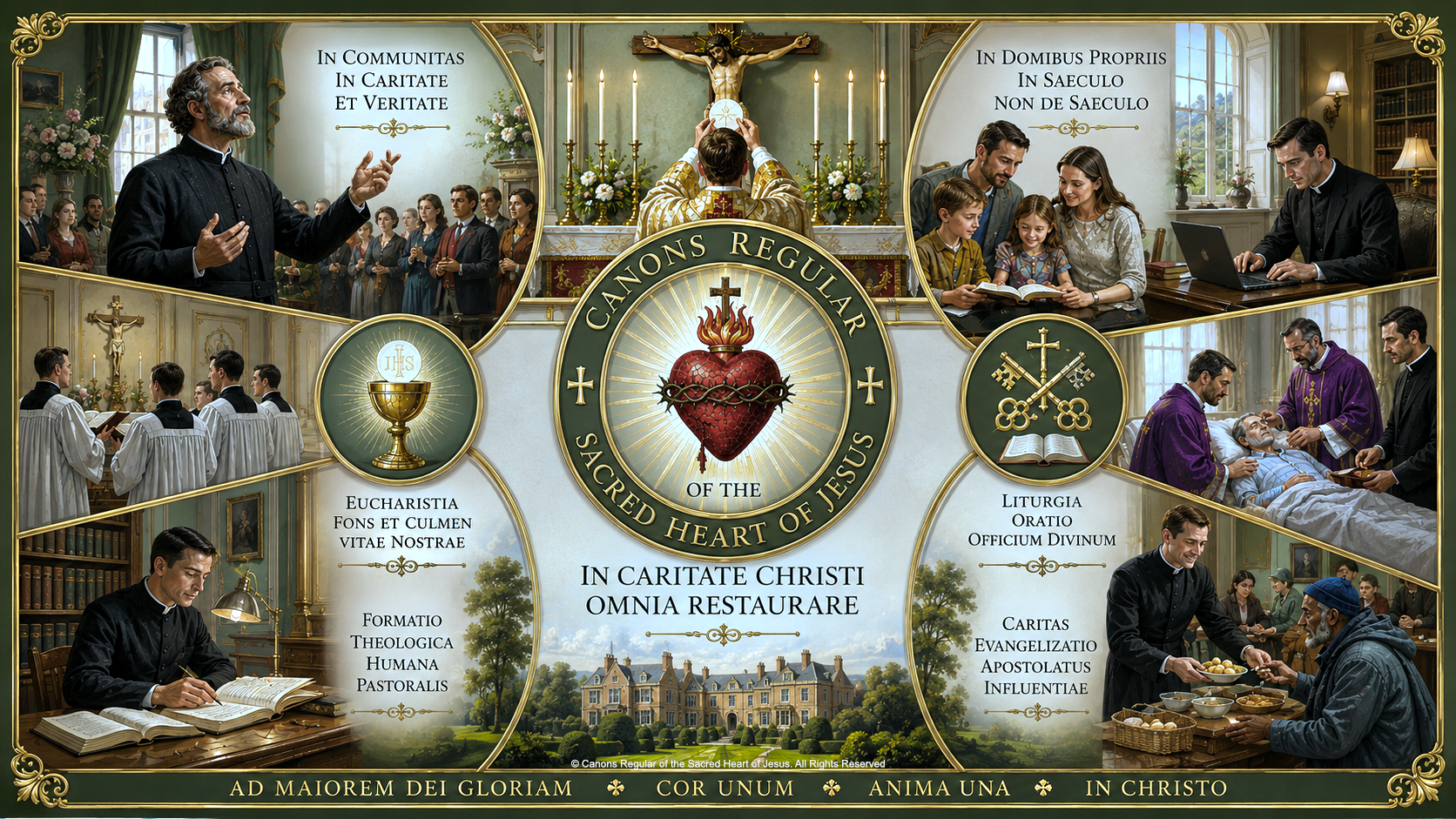
CRSHJ Canon Regulars may — and many do — hold secular employment. The secondary school teacher who administers the sacraments on Sunday, the IT engineer who visits retirement homes on his day off, the nurse who brings Communion to the housebound: these are not part-time priests but fully integrated ones. The Oratorian model insists that the priest is most effective when he is not visibly separated from the world he serves. A clerical culture that exists separately from ordinary life can speak about that life; the Canons Regular of the Sacred Heart of Jesus’ Oratorian model speaks from within it.
Canonical Security and Doctrinal Integrity
The CRSHJ is a non-profit body incorporated in England and Wales (Registration No. 16585492). Its clergy are validly ordained within a verified apostolic succession. Its theological position is fully Catholic — Nicene, sacramental, and creedal — whilst being Old Catholic in its ecclesiology. Members are incardinated directly in the Institute, providing the canonical security and accountability under the appropriate oversight of an Old Catholic Archbishop and affiliation with the Ancient Apostolic Catholic Church, all of which an independent ministry cannot offer. The CRSHJ is not a freelance operation; it is a structured religious institute with proper canonical formation, governance, Constitutions, Canonical Law and safeguarding procedures.
A Welcoming Theology
The CRSHJ holds a deliberately inclusive theological anthropology. It serves a Church that reflects the radical welcome of Christ — one that does not turn away the divorced and remarried, the single parent, or those from LGBQ+ communities. This is not a theological novelty; it is a recovery of the pastoral instinct evident throughout the Gospels. For the candidate who has felt, in his own soul, the tension between an exclusivist Church culture and the expansive charity of the Gospel, this may be precisely the community he has been looking for.
The Practical Path: What to Do Next
If you have reached this point in the article and find that the question has not receded but sharpened, the next step is straightforward: make contact. The CRSHJ welcomes enquiries at all stages — from the man barely at the beginning of his discernment to the already-ordained priest seeking a canonical home.
Three Routes to Membership
Lay Membership (Incardination as a Brother): All CRSHJ members, whatever their vocational trajectory, enter the Institute as Lay Brothers first. Once your application is received and processed satisfactorily, you will be incardinated in the Institute and issued your membership card. This is also the beginning of the path toward holy orders, should that prove to be your calling.
The Path to the Priesthood: From Lay Brotherhood, male candidates enter a two-year period of discernment and formal theological study. This is not a burden to be endured but a formation to be welcomed: it provides the doctrinal grounding, the pastoral exposure, and the personal accompaniment that holy orders deserve. Upon satisfactory completion, the candidate is scheduled for ordination — to the priesthood directly, as the CRSHJ does not ordain to the diaconate. Ordination is followed by full incardination as a Canon Regular of the Sacred Heart of Jesus.
Incardination of External Priests: Clergy already ordained elsewhere are warmly welcomed to apply for incardination in the CRSHJ. The process requires submission of existing ordination and incardination certificates, satisfactory references, and an Enhanced DBS Check. Where doubts exist regarding the validity of prior orders, re-ordination sub-conditione may be required. The CRSHJ encourages full transparency from the outset — the details of a man's situation are precisely what enables the Institute to assess his suitability with fairness and care.
Two Ways of Living the Vocation
CRSHJ members may live their vocations in one of two modes:
In domibus propriis: the married priest, or the single man in his own home, integrated fully in his local community and holding secular employment should he wish.
In communitas: single members who choose to share a community house, pooling their resources and living a more “monastic” Oratorian life.
Both modes are equally valid; the choice depends on the candidate's state of life and personal calling.
Contact the CRSHJ
The CRSHJ can be reached through the contact form on the official website. Enquiries are handled by the Canon Superior General and treated with full confidentiality. There is no pressure, no commitment required at the enquiry stage, and no assumption that contact implies application.
Why Now? The Urgency of the Moment
There is a wider context to this personal question of vocation, and it would be dishonest to ignore it. The Western Church — in all its denominations — is in serious demographic trouble. Congregations age and shrink. Church buildings close or are sold. The cultural presence of Christianity, which shaped Western law, ethics, literature, music, and civic life for two millennia, has retreated from public life to the extent that many younger people encounter the Gospel, if at all, only in caricature.
This is not the moment for despair, but it is not the moment for complacency either. The CRSHJ was founded precisely as a response to this situation — to put trained, pastorally competent, theologically grounded clergy back into the communities where the Church has lost its presence, without requiring those clergy to be either celibate or non-working. The barriers to entry are lower, by design, because the need is greater.
If you are a man of faith who has watched this contraction with a gathering sense that something is being asked of you — not abstract concern but personal response — the CRSHJ invites your discernment. Not with pressure, as the Vocations page rightly says, but with possibility.
As our Superior General puts it, "We are not asking for perfection; only presence, sincerity, and the courage to care."
The opportunity is available. The question is whether you are willing to pick it up.