
Islam, Haram, and the Fate of the West
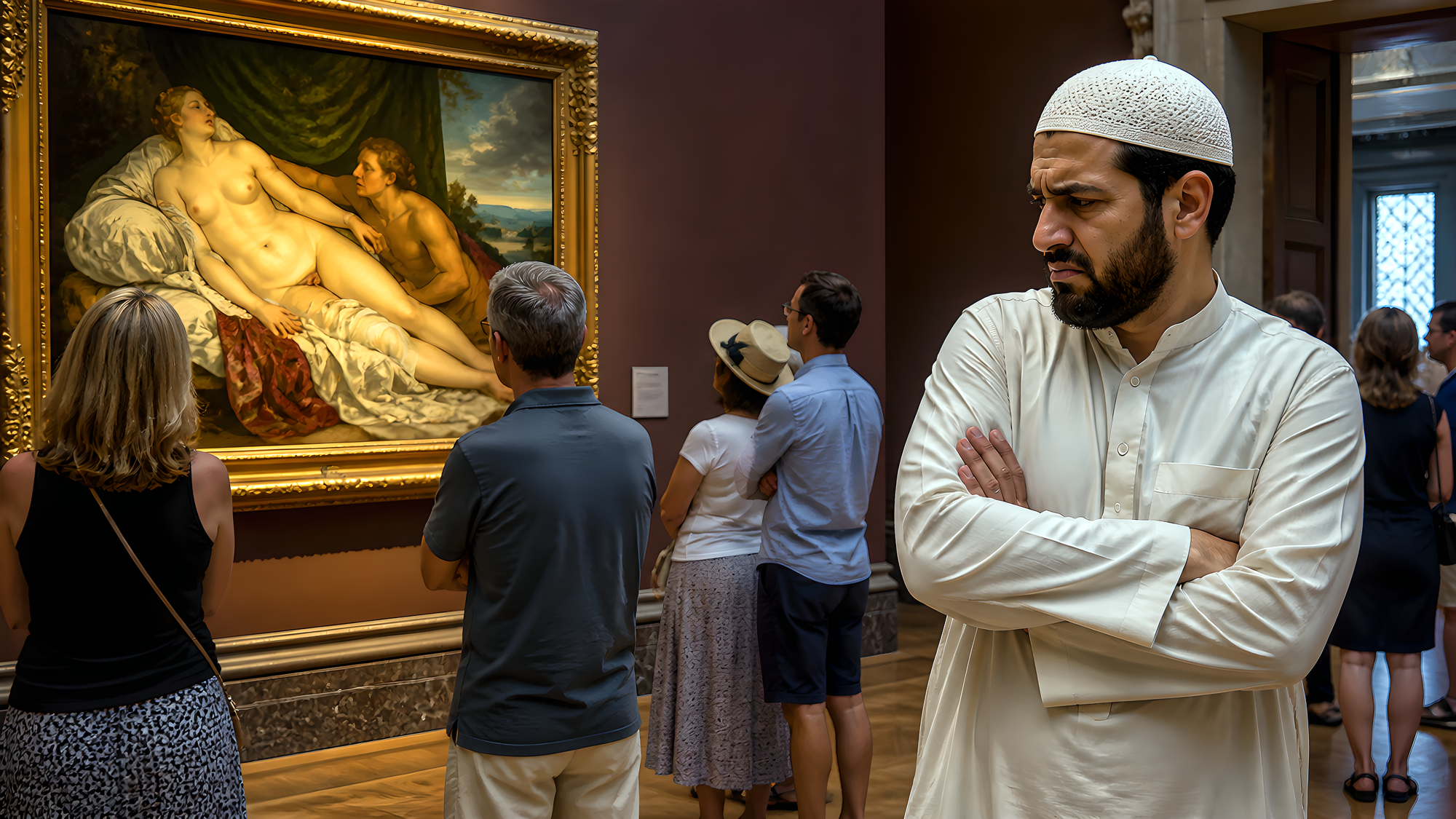
Islam’s ‘Haram’ Theology collides directly with Western Cultural Heritage
On the Islamic Concept of Haram and
Its Collision with Western Civilisation
There are conversations that polite society prefers to defer, always hoping that the urgency will somehow resolve itself. This is no longer one of those conversations. Churches have been set ablaze. Synagogues have been firebombed. Sacred art has been desecrated. And across European and North American cities, the accumulated heritage of two thousand years of Christian civilisation — its music, its sculpture, its literature, its architecture — is increasingly subject to demands, pressures, and acts of hostility rooted in a theological framework that considers much of that heritage to be, quite literally, forbidden. The name of that framework is haram.
This article does not argue that all Muslims are violent, or that the diversity of Islamic practice is without significance. It does argue that classical Islamic jurisprudence contains a structural logic — the logic of the haram — that places it in fundamental tension with the cultural inheritance of the West; and that this tension has real-world consequences that can no longer be ignored by Christians, by citizens, or by the governments charged with protecting what remains.
I. What Is Haram?
The Arabic term haram ( حَرَام ) carries a range of meanings that do not translate easily into Western categories. It can denote something sacred and therefore inviolable — as in the Haram Sharif, the sacred precinct of Mecca — or, more commonly in jurisprudential usage, something sinful and therefore forbidden. In Islamic law, haram is one of the five categories of the al-Ahkam al-Khamsa, the hierarchy of moral-legal evaluations that governs all human action, from the obligatory (fard) to the permitted (mubah) to the absolutely forbidden (haram).
The classical legal definition is precise: haram refers to any act explicitly prohibited by Allah in the Quran or by the authenticated sayings and practices of the Prophet Muhammad (the Sunnah and Hadith). Those who intentionally engage in haram acts are considered to have incurred sin requiring repentance, and in certain cases — under Sharia-governed states — legal punishment in this world.[1]
There is an important structural principle embedded in classical haram reasoning that must be grasped from the outset: 'If something is prohibited, then anything that leads to it is also haram.' This extension principle — sometimes called sadd al-dhara'i, the blocking of means — means that haram is not merely a list of forbidden items but a generative legal principle with an expanding circumference. The prohibition of idols, for example, readily extends to representational images; the prohibition of intoxication readily extends to musical instruments said to induce altered emotional states.
A further principle holds that 'the sin of haram is not limited to the person who engages in the prohibited activity, but extends to those who support the person in the activity, whether materially or morally.' The implications of this extension for cultural life — for artists, musicians, writers, architects, and their patrons — are severe.
Recall:
Haram is not merely a list of forbidden items but a generative legal principle with an expanding circumference. It spreads, adding ever more items to the list, as it progresses.
II. The Arts Under Prohibition
Figurative Art and Sculpture
The classical Islamic prohibition on the representation of living beings — humans and animals — derives from Hadith rather than the Quran itself. The most frequently cited tradition, found in Sahih Bukhari, records that the Prophet declared: 'The most severely punished among the people on the Day of Judgment will be the image-makers.' This tradition, considered sahih (authentic) by mainstream scholarship, became the foundation for a sweeping prohibition across all four major Sunni schools of jurisprudence — the Hanafi, Maliki, Shafi'i, and Hanbali — which have traditionally held that sculptures and paintings of living beings are haram as a form of tasawwur, prohibited image-making that approaches the prerogatives of the Creator.[2]
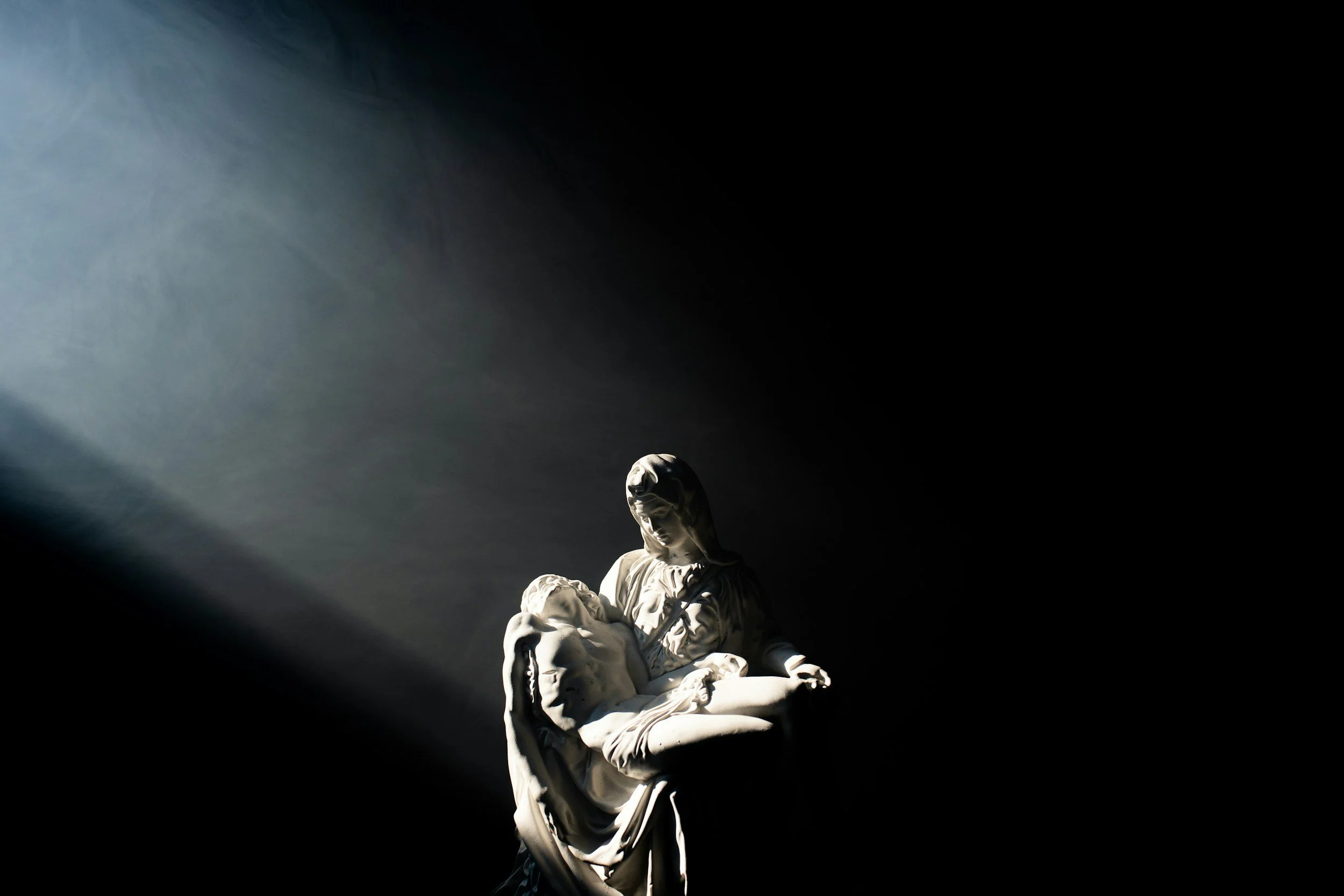
The implications for the Western artistic tradition are devastating in their scope. The entirety of the figurative tradition — from Pheidias's sculptures of the Parthenon to Michelangelo's Pietà, from Leonardo's Annunciation to Rembrandt's Christ in the Storm on the Sea of Galilee — falls under condemnation in this framework. The human form, which Christian art from the beginning celebrated as the image of God (imago Dei) and the medium through which the Incarnation itself was depicted, is precisely the subject that classical Islamic jurisprudence identifies as most dangerous.
This is not a peripheral opinion. Sheikh Muhammad al-Munajjid, one of the most widely consulted Islamic scholars online, states unambiguously that 'making pictures of animate beings is haram... and this applies to pictures made by hand or by camera.' The Saudi religious establishment built its entire cultural policy on this prohibition, banning representational art in public spaces for decades.[3]
Music
The prohibition of music in mainstream classical Islamic jurisprudence is, if anything, even more thoroughgoing than the prohibition of representational art. The foundational hadith, recorded in Sahih Bukhari (5590), records the Prophet's words warning against those who would make lawful 'musical instruments.' A separate tradition in Sunan Abu Dawud declares that 'the bell is the musical instrument of Satan.' These texts became the basis for a broad scholarly consensus that the playing of musical instruments — particularly those used in entertainment — is haram.[4]
The four Sunni schools of law arrived at varying degrees of prohibition, but the dominant position across Hanbali and much of Shafi'i scholarship is that instrumental music for entertainment is unlawful. The Taliban's total ban on music during their first period of rule (1996–2001) and again since 2021 represents the application of this jurisprudence in its most consistent form. Iran's Islamic Republic exercises extensive censorship over music, prohibiting female musicians from performing publicly and restricting musical content that is deemed emotionally stimulating.
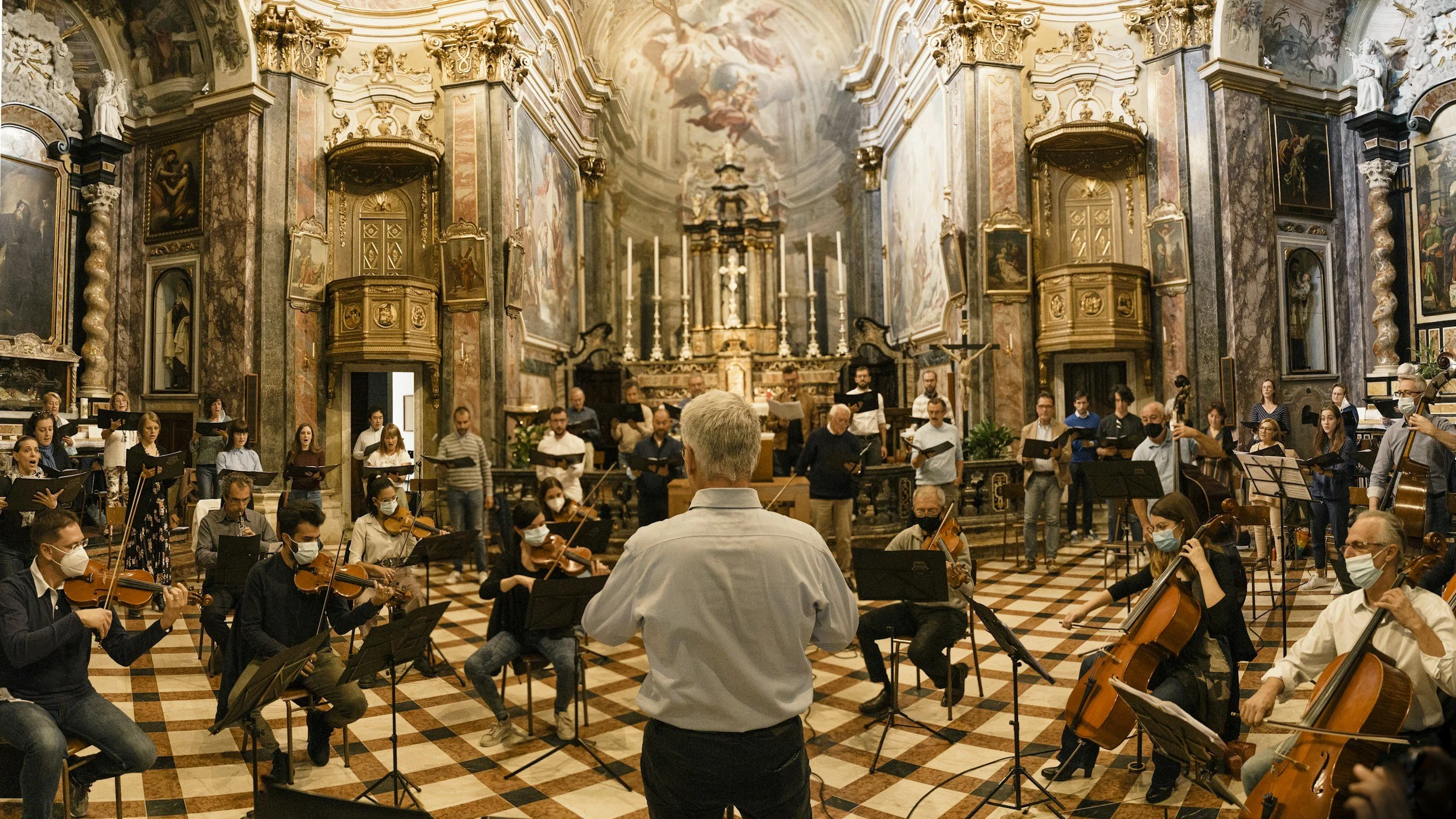
Consider what this means when placed beside the Western musical heritage. Gregorian chant — which arose from the liturgical heart of the Church — is music. Palestrina's polyphony is music. Bach's St Matthew Passion is music. Beethoven's Ninth Symphony is music. Mozart's Requiem is music. The entire tradition of Western sacred and classical music, which took centuries to develop and which carries within it the theological imagination of Christian civilisation, falls within the category of what orthodox Islamic jurisprudence considers, at minimum, deeply problematic and at maximum, sinful.
Recall:
The entire tradition of Western sacred and classical music falls within what orthodox Islamic jurisprudence considers sinful. This is not a caricature. It is jurisprudence. It is Islamic Law.
Literature
Classical Islamic restrictions on literature are more contested and context-dependent than those on visual art and music, but they are by no means absent. The principle of laghw — vain, useless, or morally corrupting speech and activity — provides a broad category under which much of Western literature can be, and has been, classified as impermissible. Poetry and narrative that depicts romantic or erotic love, celebrates pre-Islamic heroism, represents polytheistic religion sympathetically, or explores religious doubt or heterodoxy falls under suspicion.
The consequences for the Western literary tradition are significant. Homer's Iliad and Odyssey are steeped in polytheistic mythology. Dante's Divine Comedy presents Islamic figures — including Muhammad — in Hell, and the entire architecture of the poem presupposes a Christian cosmology incompatible with Islamic theology. Shakespeare's dramatic world includes witches, spirits, the celebration of romantic and physical love, and Christian sacramental imagery. Chaucer's Canterbury Tales contains bawdy satire. Milton's Paradise Lost imagines the Christian theology of fall and redemption as its central subject. Goethe's Faust makes a pact with the devil. None of these could be described, from an orthodox Islamic standpoint, as morally edifying in the required sense.[5]
The Satanic Verses affair of 1989 stands as the most vivid modern demonstration of this collision. Salman Rushdie's novel — a work of literary fiction engaging with questions of revelation, identity, and Islamic history — was met with a fatwa calling for his death issued by Iran's Supreme Leader, Ayatollah Khomeini. Rushdie spent years in hiding, his Japanese translator was murdered, his Italian and Norwegian translators were seriously wounded, and bookshops in the United Kingdom were bombed. The implicit message was unambiguous: certain forms of literary imagination are not merely offensive but punishable by death.
Architecture and Sacred Space
Islamic architectural tradition developed a rich and distinct aesthetic — the arabesque, geometric pattern, the calligraphic inscription — precisely because figurative representation was excluded. The great mosques of the world are architecturally magnificent, but their magnificence is achieved through abstraction and pattern rather than through the representation of persons, events, or narratives.
The Western architectural tradition, by contrast, is inseparable from its figurative and narrative content. The façades of the great medieval cathedrals are encyclopaedias of Christian theology rendered in stone — Christ in Majesty over the west door of Chartres, the Last Judgement at Bourges, the sculpted apostles and saints at Reims. The Sistine Chapel ceiling is figurative painting on the grandest conceivable scale. The stained glass of York Minster tells the story of salvation in coloured light. The bronze doors of the Baptistery in Florence are a Gospel summary.
From an orthodox Islamic standpoint informed by the prohibition of tasawwur and the theological suspicion of shirk (association, i.e., idolatry), the very nature of Christian sacred architecture — its exaltation of the human form, its narrative depiction of divine persons, its use of the cross as a visual symbol — marks it as, at best, problematic, and at worst, idolatrous. This is not a peripheral reading. The Taliban's response to Buddhist statuary at Bamiyan was framed in precisely these terms: Mullah Omar declared that his 'job is the implementation of Islamic order' before ordering the demolition of figures that had stood for fifteen centuries.[6]
III. Theology to History: The Pattern of Destruction
It would be possible to treat this theological analysis as a purely theoretical exercise — interesting for comparative religion, but without material consequences. History does not permit this evasion.
When Islamic armies conquered Egypt in the seventh century, Christian icons and religious statuary were systematically destroyed. When the Mughal Emperor Babur passed through Gwalior in 1528, he ordered the destruction of the large Jain Tirthankara figures carved from the rock face, recording in his own memoirs that they were 'idols.' When the Taliban came to power in Afghanistan, they enforced a total ban on music, photography, television, and representational imagery, closing schools for girls and destroying whatever figurative art could be found. In 2001, despite international outcry, they blew up the Bamiyan Buddhas — two colossal figures, 38 and 55 metres high, carved into the cliff face some fifteen centuries earlier — because they represented 'idols' inconsistent with Islamic order.[7]
In 2012, Islamist groups Ansar Dine and the MNLA occupied Timbuktu in northern Mali, attacking that city's magnificent medieval library and unique collection of shrines and mausoleums. Up to 2,000 manuscripts at the Ahmed Baba Institute — texts that scholars have compared to the Dead Sea Scrolls in historical significance — were destroyed or looted. The shrines of Muslim saints were demolished as un-Islamic and idolatrous: evidence that the iconoclastic impulse targets not only Western or non-Muslim heritage but the full breadth of human cultural memory.[8]
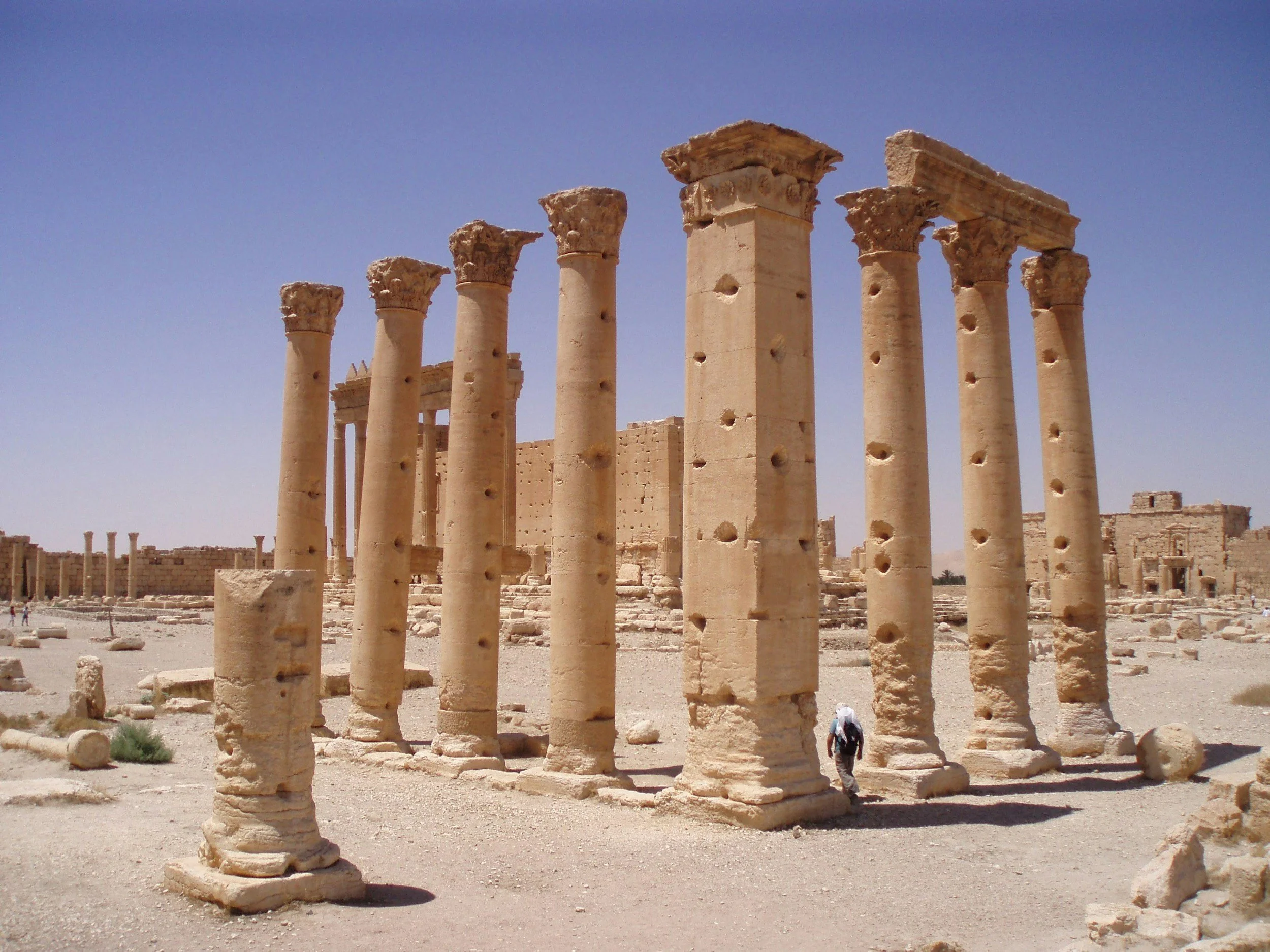
The Islamic State (ISIS/Daesh) carried this programme to its most systematic and publicly celebrated expression. In 2015, ISIS fighters entered the ancient Syrian city of Palmyra — a UNESCO World Heritage Site — and proceeded to demolish the Temple of Bel, the Temple of Baalshamin, the Arch of Triumph, and numerous funerary towers, all structures of extraordinary antiquity. The organisation's chief archaeologist, Khaled al-Asaad, who had devoted his professional life to studying Palmyra, was publicly beheaded when he refused to reveal the locations of hidden artefacts. ISIS released videos of its fighters smashing Assyrian and Mesopotamian artefacts in the Mosul Museum, destroying objects that were three thousand years old, and explaining their actions in terms of the prohibition on idolatry.[9]
Recall:
In Palmyra, Mosul, Timbuktu, and Bamiyan, the logic of the haram was enacted in stone and fire. This is not ancient history. It is our own century.
It is crucial to understand the theological logic connecting these events. This is not mere vandalism, or at least not vandalism without a coherent rationale. From within the framework of classical Islamic jurisprudence, the destruction of idolatrous or forbidden objects is not a crime but an act of piety — the implementation of divine order against the corruption of the created world. When ISIS fighters smashed Assyrian reliefs, they believed they were doing what Muhammad did when he cleared the Kaaba of its pagan idols in 630 CE. When the Taliban destroyed the Bamiyan Buddhas, they were acting on the same principle, applied to the contemporary world with modern explosives.
The historian of Islamic iconoclasm Finbarr Barry Flood has observed that the prohibition on figurative imagery, far from being consistently enforced throughout Islamic history, was consolidated gradually over the first century of Islam and became 'quite firmly established through Hadith and theological treatises by 750 CE.' The Wahhabi school that arose in eighteenth-century Arabia — and which now funds religious education worldwide through Saudi petrodollars — represented a rigorist revival of this aniconic tradition, and it is Wahhabism's influence that most directly connects classical jurisprudence to modern iconoclasm.
IV. What Is Happening in the West
The pattern of violence against sacred and cultural heritage sites in the West has accelerated sharply since October 2023. According to Aid to the Church in Need's Religious Freedom in the World Report 2025, France alone recorded approximately 1,000 anti-Christian incidents in 2023, while Greece reported over 600 cases of church vandalism. In France, antisemitic acts increased by 1,000 percent following the Hamas attack of 7 October 2023, while Germany recorded 4,369 offences linked to the conflict — up from just 61 in 2022.[10]
The catalogue of specific incidents is extensive and deeply troubling. In October 2023, Molotov cocktails were thrown at the Kahal Adass Jisroel synagogue in Berlin. In November 2023, the gate of a synagogue in Lyon was vandalized with Arabic graffiti reading 'Victory to our brothers in Gaza.' In December 2024 and again in 2024, Congregation Beth Tikvah in Montreal was firebombed. In October 2025, a man who had pledged allegiance to the Islamic State killed two members of a congregation in an attack on Heaton Synagogue in Manchester, England. According to the Community Security Trust, there were 562 incidents targeting synagogues in the United Kingdom between 2023 and 2025.
In April 2026, ISIS published calls in its weekly propaganda outlet al-Naba urging Muslims worldwide to 'set fire to the Jewish synagogues scattered across America, Europe, Russia, India, and elsewhere,' and to attack 'Jewish gatherings' — this in direct response to the closure of the al-Aqsa Mosque in Jerusalem. The same publication praised the perpetrators of the Bondi Beach massacre as 'heroes' to be emulated.[11]
It is vital to note that not all of these incidents are perpetrated by religious Muslims acting on jurisprudential convictions, and that Muslims themselves have been targets of violence. The motivations are mixed — some are geopolitical solidarity with Palestinians, some are straightforward antisemitism, some are the actions of jihadist cells. But the consistency of the targeting — sacred sites, Jewish institutions, Christian churches — and the theological language in which the most explicit attacks are framed, points to a current of Islamic iconoclasm that is not merely political but has its roots in the theological structure examined in this article.

Recall:
The question is no longer whether this collision is happening. It is a question of whether the Western World governments have the self-knowledge, the wisdom to recognise the irreplaceable value of Western Culture, and the will to respond to the urgent need to protect it.
V. The Christian Theological Response
The Christian tradition has always understood beauty as a form of revelation. The Incarnation — God taking flesh, taking form, taking visible and tangible existence — is the theological ground for the Christian engagement with the arts. Because God became a human being with a human face, the human face can be painted, sculpted, and venerated. Because creation is the work of a good God, its beauty can be celebrated in music, poetry, and architecture. Because the Word became flesh, literature and narrative have theological dignity.
The great tradition of Christian art — sacred music, figurative painting and sculpture, liturgical architecture, the poetry of the Psalms and the theological drama of the Gospels — is not an incidental cultural accretion but an expression of the doctrinal content of the faith itself. When a church is burned, something more than property is destroyed. When a cathedral is desecrated, something more than stone is violated. When the tradition of Western sacred music is silenced, something more than aesthetic preference is suppressed. The incarnational logic of Christian civilisation — its conviction that the material world can bear the weight of the divine — is what is under assault.
The Church has a prophetic responsibility not merely to lament these attacks but to name their source, understand their logic, and articulate with confidence what is being defended. We are defending not merely 'Western values' in some vague cultural sense, but the visible, audible, and tangible fruits of the Gospel: the beauty that the Faith made possible, and that the Faith alone can fully explain.
This requires of us a courage that is not aggression. We are not called to hatred of persons — Muslim human beings bear the image of God as surely as any other. We are called to honest speech about ideas, about legal systems, about the theological logic that has driven centuries of iconoclasm and that is once again active in the cities of Europe and North America. Truth-telling in love is not the same as hatred. Silence in the name of politeness is not the same as peace.
Recall:
We are defending not merely 'Western values' but the visible, audible, and tangible fruits of the Gospel: the beauty that the Faith made possible, not just across religious culture but especially Western secular expressions of creativity rooted in the Western societal model.
VI. What Must Be Done
The responsibility before us is practical as well as prophetic. We propose the following:
First, the naming. Christian leaders, pastors, and theologians must be willing to identify the theological source of the iconoclastic tradition that is currently targeting Western cultural and sacred heritage. This is not hate speech; it is theological literacy. The same intellectual seriousness that we bring to the study of Christian heresy or Marxist materialism must be brought to the study of Islamic jurisprudence.
Second, the advocacy. Churches and religious institutions must call upon their governments to enforce existing laws against attacks on religious and cultural property with the full rigour of the law, and without political hesitation born of misplaced sensitivity or unwarranted political correctness. The protection of sacred sites, cultural monuments, and religious communities is not a sectarian interest but a civilisational one.
Third, the renewal. The most effective long-term response to the forces that would erase Western cultural heritage is the renewal of that heritage from within. Churches that have abandoned sacred music, figurative art, and liturgical beauty have disarmed themselves in the very areas where the assault is most concentrated. A Church that sings, that builds beautifully, that fills its walls with the human face of Christ and his saints, is a Church that bears witness by its very existence.
Fourth, the solidarity. The attacks on synagogues across Europe and North America remind us that the community most immediately endangered by this violence is the Jewish community. Christian solidarity with Jewish communities — not merely verbal but active, physical, and persistent — is a moral imperative and a theological one. We share a heritage of Scripture, of sacred song, of the God who speaks and reveals himself in history. We must stand together.
Conclusion: Beauty Is Not Negotiable
The civilisation that produced the Parthenon and the Hagia Sophia, the Psalms and the St Matthew Passion, the Divine Comedy and the Sistine Chapel, stands now in a moment of decision. The forces that would unmake it are not new — they are as old as the jurisprudential traditions that declared the human image forbidden and the musical note sinful. What is new is that those forces are present and active within the cities of the West, in a context of demographic change, geopolitical upheaval, and cultural self-doubt that has left many in the governing classes unable to name what they are seeing.
The Church names it. Beauty is not negotiable. The arts are not peripheral. The heritage of Christian civilisation — its music, its art, its literature, its sacred architecture — is not a museum curiosity but a living inheritance, and it belongs to every human being who has been shaped by the culture it created. We will defend it. We will renew it. And we will speak plainly about the forces that oppose it, because plainness is what the moment requires.
Notes
[1] On the classical definition of haram and the al-Ahkam al-Khamsa, see Nuh Ha Mim Keller (trans.), Reliance of the Traveller: A Classic Manual of Islamic Sacred Law ['Umdat al-Salik] (Amana Publications, 1994), Book c, sections c3.0–c5.0. See also the entry 'Haram,' Encyclopaedia of the Quran, ed. Jane Dammen McAuliffe (Brill, 2002), vol. 2, pp. 404–406.
[2] Sahih al-Bukhari, Book 77 (Dress), Hadith 5950 (numbering varies by edition): 'Verily the most grievously tormented people on the Day of Resurrection will be the image-makers.' See also Imam al-Nawawi's commentary in Sharh Sahih Muslim. For the jurisprudential consensus of the four schools, see Ibn Qudama, al-Mughni, vol. 7, on the prohibition of tasawwur.
[3] Sheikh Muhammad Salih al-Munajjid, 'Ruling on Drawing Animate Beings,' IslamQA (islamqa.info), Fatwa No. 10668. Al-Munajjid's fatwa database is one of the most widely accessed Sunni legal resources in the world.
[4] Sahih al-Bukhari, Book 74, Hadith 5590. Sunan Abi Dawud, Book of Music and Singing. For the Hanbali consensus, see Ibn al-Qayyim al-Jawziyya, Ighathat al-Lahfan, vol. 1, chapter on musical instruments. A useful summary in English is provided by Yusuf al-Qaradawi, The Lawful and the Prohibited in Islam (American Trust Publications, 1994), chapter on music.
[5] On the representation of Muhammad in Western literature and the controversy it has historically generated, see Dante's Inferno, Canto 28, ll. 19–42, where the Prophet appears among the sowers of discord. For the broader question of Islam and Western literature, see Norman Daniel, Islam and the West: The Making of an Image (Edinburgh University Press, 1960).
[6] AFP, 26 February 2001: Mullah Omar quoted on the destruction of the Bamiyan Buddhas. See also 'The Death of the Buddhas of Bamiyan,' Middle East Institute analysis (April 2012). On the decree ordering the elimination of all non-Islamic statues in Afghanistan, see the full text discussed in Finbarr Barry Flood, 'Between Cult and Culture: Bamiyan, Islamic Iconoclasm, and the Museum,' The Art Bulletin 84.4 (2002), pp. 641–659.
[7] On the Timbuktu manuscripts, see 'Why Extreme Islamists Are Intent on Destroying Cultural Artifacts,' NBC News, 2 February 2013. On the broader pattern of early Islamic iconoclasm in conquered territories, see Robert Hillenbrand, 'Caveats and Controversies: The Problem of Iconoclasm in Early Islamic History,' in Iconoclasm and Iconoclash: Struggle for Religious Identity, ed. Willem van Asselt et al. (Brill, 2007).
[8] On the Timbuktu manuscripts destruction, see Stephanie Decker and Sam Mattison, 'The Destruction of Timbuktu's Cultural Heritage,' The Journal of North African Studies 19.1 (2014). The comparison to the Dead Sea Scrolls in historical value was made by UNESCO Director-General Irina Bokova.
[9] On the destruction of Palmyra and the murder of Khaled al-Asaad, see Josephine Crawley Quinn and Andrew Wilson, eds., The Roman Empire (2016); see also reports from UNESCO and the ASOR Cultural Heritage Initiatives. On the Mosul Museum destruction, see the ISIL video released February 2015, extensively documented by the American Schools of Oriental Research.
[10] Aid to the Church in Need, Religious Freedom in the World Report 2025, covering the period 1 January 2023 – 31 December 2024. Available at acnuk.org. Figures on French anti-Christian incidents and German conflict-linked offences from this report.
[11] ISIS, al-Naba, Issue 432 (April 2026), translated and reported by GB News, Premier Christian News, and The Times of Israel (April 2026). The call cited the closure of the al-Aqsa Mosque and praised perpetrators of the Bondi Beach Hanukkah festival attack of December 2025.