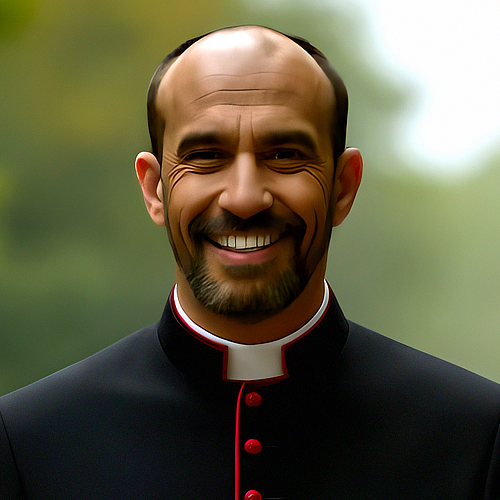

Resurrection: The Quiet Triumph of Absence
What the empty tomb whispers — and what a length of linen continues to say aloud
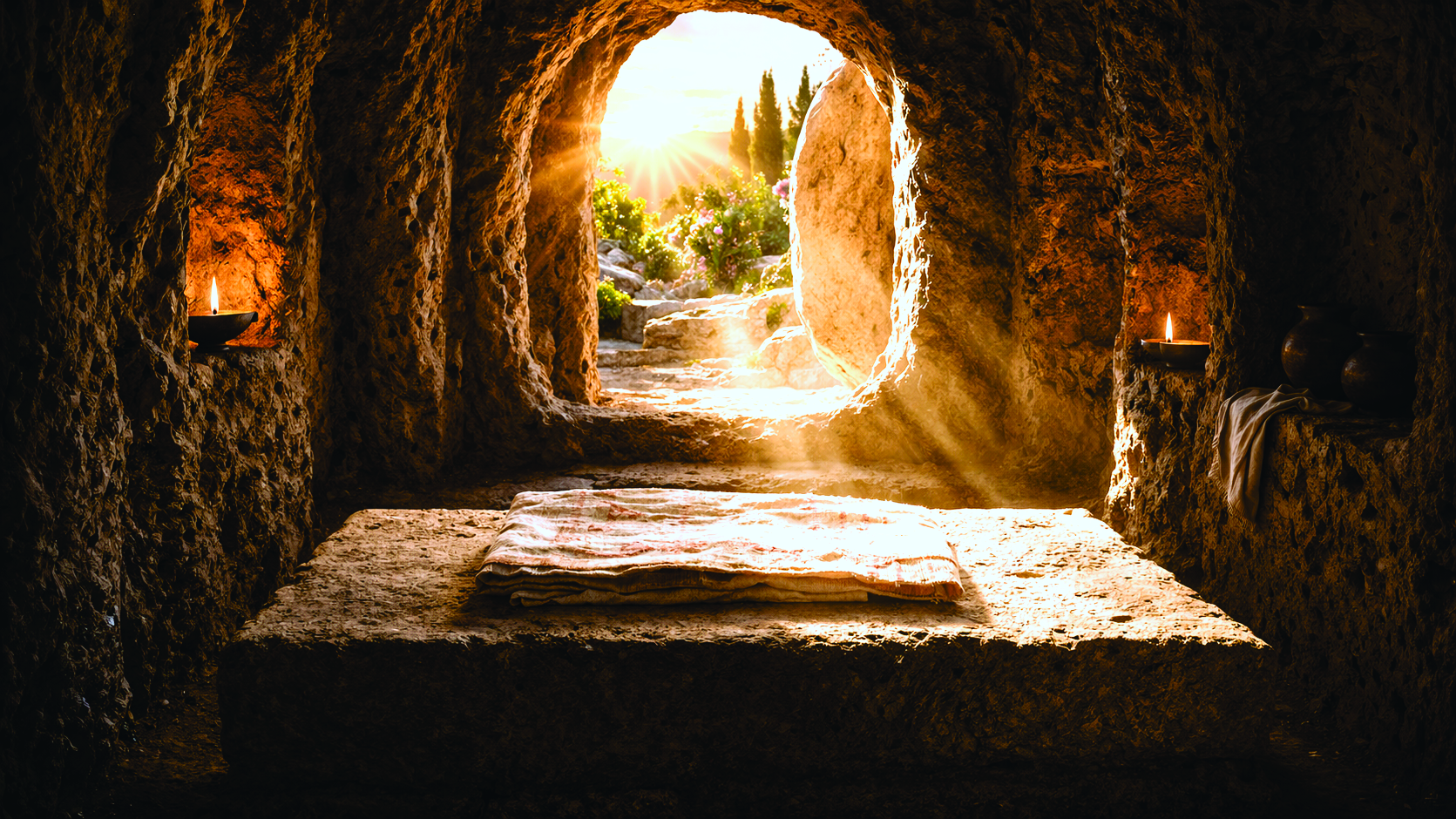
The angel’s words at the tomb are among the most understated in all of Scripture. He is not here. No thunder. No celestial choir audible to the frightened women. No pillar of fire. The great announcement of the most extraordinary event in human history was made through an absence — through the simple, world-overturning fact that the body was gone and the grave-cloths were folded. The stone had been rolled away not to let Jesus out, but to let the witnesses in.
This is the particular genius of the Resurrection: it does not perform. It does not compete with itself. It does not need to. Every human triumph since has involved noise — armies, proclamations, parades, spectacle. The Resurrection of the Lord left behind nothing but silence, morning light, and linen.
“The stone had been rolled away not to let Jesus out, but to let the witnesses in. And the Shroud, carefully folded, a signature of a quiet but earth-shattering event”
Focus:
“The stone had been rolled away not to let Jesus out, but to let the witnesses in. And the Shroud, carefully folded, a signature of a quiet but earth-shattering event”
Mary Magdalene, arriving in the pre-dawn dark, at first concludes the worst: that the body has been stolen. She weeps. She does not recognise the risen Christ when he stands before her. She mistakes him for the gardener. Even the disciples, when they first hear her report, dismiss it as idle talk. The Resurrection enters the world quietly — almost reluctantly — and it asks not for immediate acclaim but for the slow, deepening recognition that transforms fishermen into martyrs.
There is something deeply counter-cultural about this. Ours is an age that demands immediacy, proof, spectacle — the viral moment, the incontrovertible clip. We have trained ourselves to disbelieve anything that does not arrive with decibels. And so the Resurrection, 2000 years on, continues to unsettle us on its own terms. It does not come louder when pressed. It comes deeper.
THE CLOTH THAT KEEPS SPEAKING
And yet — and this is where the mystery deepens rather than resolves — the Resurrection did leave something behind. Not a recording, not a monument, but a length of linen fourteen feet long, bearing the inexplicable faint image of a crucified man. The Shroud of Turin is, in a very real sense, the Resurrection’s own afterword: a document it did not need to write, addressed to generations it knew would need more than silence.
For much of the twentieth century, the Shroud was bracketed by the infamous 1988 carbon-dating result, which placed the cloth firmly in the medieval period. The case, many assumed, was closed. But science, like faith, is a discipline that grows. And in the decades since 1988, what has grown is an extraordinary body of evidence pointing stubbornly in the opposite direction.
WHAT THE SCIENCE HAS REVEALED
A SUMMARY FOR THE GENERAL READER
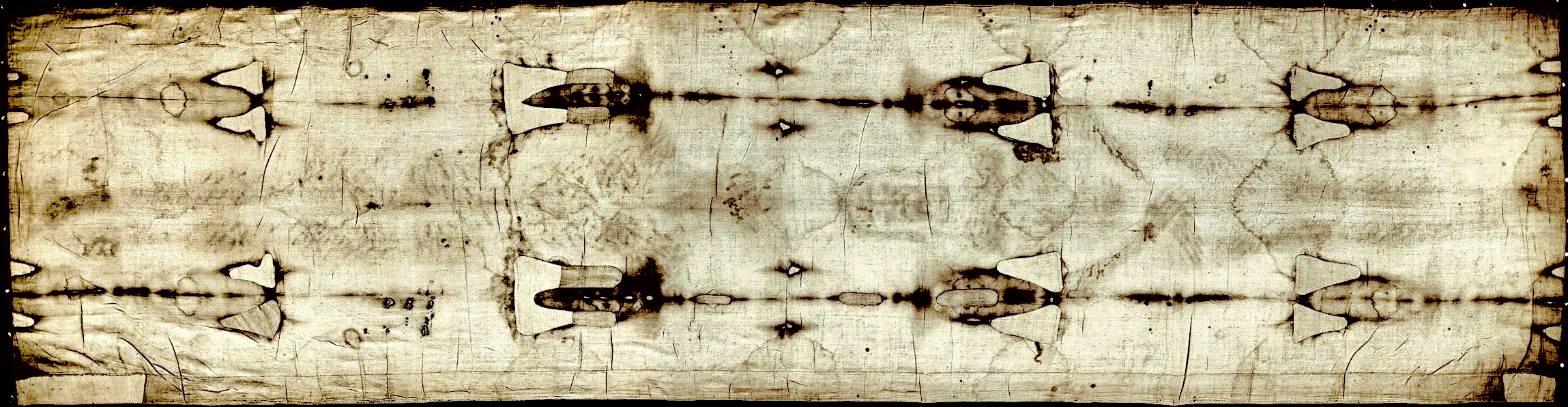
The Shroud - The Resurrection ‘signature’ that keeps revealing when we are ready to find it!
The 1988 carbon dating was flawed.The samples tested were almost certainly taken from a corner of the cloth that had been re-woven by nuns after a fire in 1532 — a medieval patch, not the original linen. When statisticians finally examined the raw laboratory data (long kept private), they found the results were internally inconsistent and scientifically inconclusive.
New dating places the cloth in the first century.Using Wide-Angle X-ray Scattering (WAXS) — measuring the molecular degradation of the linen fibres themselves rather than radioactive isotopes — Dr. Liberato De Caro of Italy’s National Research Council found that the Shroud’s fibre decay matches linen from the siege of Masada (55–74 AD), placing the cloth squarely in the era of Christ.
The image cannot have been painted, stained, or scorched.Teams of scientists, including the landmark 1978 STURP investigation involving over forty specialists, confirmed that the image contains no pigment, ink, dye, or any artist’s material. The discolouration is confined to the topmost layer of microscopic fibres — so superficial that no liquid or gas could have produced it.
The image encodes three-dimensional information.When the image is processed by a VP-8 intensity analyser — a NASA tool designed for reading depth data in photographs — it yields a perfect three-dimensional relief of a human body. No ordinary photograph, painting, or rubbing has this property. A 2025 study in the International Journal of Archaeology, applying AI pattern-recognition to the Shroud’s images, confirmed that this three-dimensional depth information is intrinsic to the cloth itself.
The blood is real, ancient, and precisely positioned.Human blood — identified as type AB — is present on the cloth, with staining patterns consistent with the specific wounds described in the Passion narratives: nail wounds to the wrists (not the palms, as medieval iconography mistakenly depicted), scourge marks across the back, a crown of thorns, a lance wound to the side, and — uniquely — evidence of what may be haematidrosis, the sweating of blood described in the Gethsemane accounts.
The burst of energy: the latest and most extraordinary finding.The most widely accepted current hypothesis for how the image formed is a sudden, intense burst of radiation — most likely ultraviolet light — emitted from the body itself. The image on the Shroud is so superficial, so precise, and so lacking in any directional brushstroke or contact pattern that only a radiant energy source, passing outward through the cloth in all directions simultaneously, fits the physical evidence. The 2025 AI analysis reinforced this conclusion. Physics, as yet, cannot explain the mechanism. Which is perhaps the point.
A REVELATION FOR EVERY GENERATION
Consider what this means. In 1898, Secondo Pia photographed the Shroud for the first time and noticed, while developing his glass plates, that the negative image on the cloth became a positive — that the Shroud itself was, in effect, a photographic negative, produced centuries before photography existed. It took the invention of photography for humanity to begin to read it.
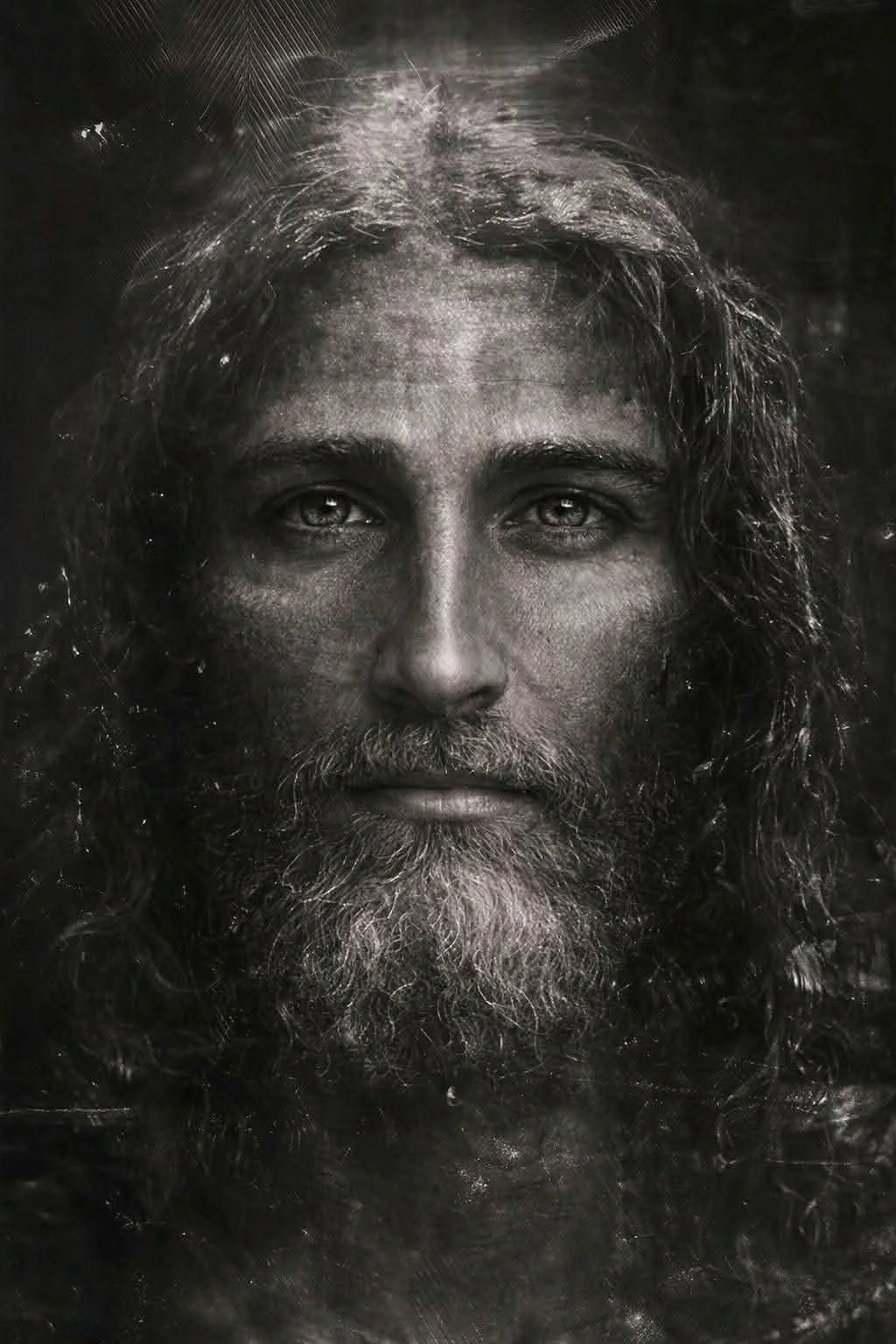
The Revealed True Face of Jesus
Using the 1976 3D dataset and the 2024/25 X-Ray Crystallography dataset, extracted from the Shroud, removing the swelling and the trauma damage inflicted upon Jesus during the Passion and Crucifixion, the AI complex image analysis reveals Jesus’ true face.
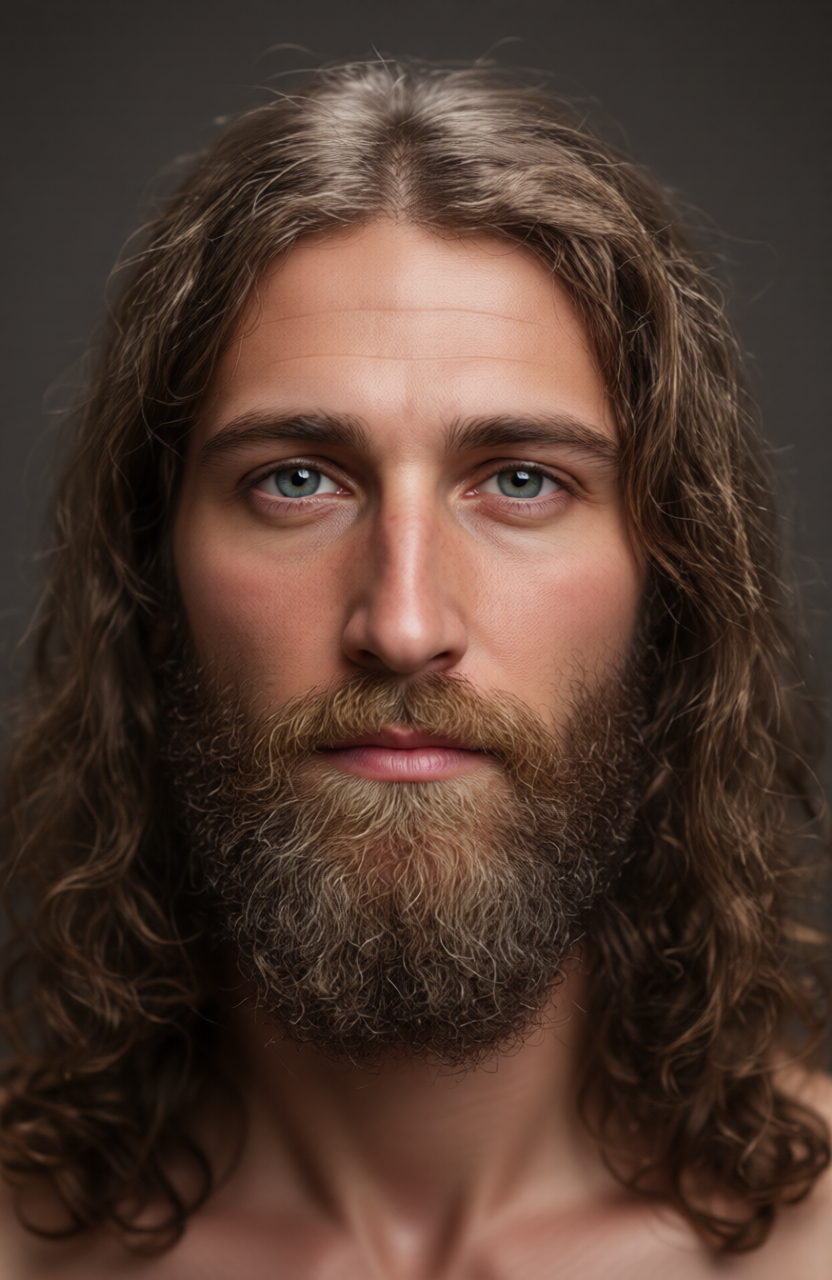
Interpreting the Greys Gradations
The AI processing of the greys captured in the complex image analysis into colour, using the reverse process of how colour is captured in black and white photography, this is the face of Jesus we arrive at; a male in his early to mid-thirties, commensurate with the historic age of Jesus at the time of His crucifixion, death and resurrection.
In 1976, it took a NASA image-processing tool to reveal its three-dimensional properties. In 2024 and 2025, it took X-ray crystallography and artificial intelligence to overturn the carbon dating and confirm the radiation hypothesis. Each generation, as it develops new instruments of knowledge, finds that the cloth has been waiting patiently with something new to say.
“The Shroud has been waiting patiently — with something new
to say to each generation that arrives with new eyes.”
This is not a coincidence. It is consonant with the entire logic of the Incarnation: that God chooses to speak through matter, through history, through the slow accumulation of human understanding. The Resurrection did not leave behind a text to be decoded in a single reading. It left behind a cloth — humble, physical, contingent — that has been unfolding its testimony across two thousand years of scientific advance.
The Shroud is not proof that bypasses faith. Cardinal Pizzaballa, the Latin Patriarch of Jerusalem, recently made this point with precision: “the Shroud does not explain the Resurrection; it serves as a sign that introduces us to its mystery”. That is exactly right. But “sign” is not a small word. Signs are given precisely for those who, in their honesty, need something to point toward the threshold before they can step over it.
THE QUIET TRIUMPH
We began with absence. We end — perhaps surprisingly — not with proof, but with an invitation. The empty tomb and the imprinted cloth are two faces of the same mystery:
One says He is not here,
And the other says something was here, something beyond our categories, our knowledge, our ability to grasp.
Neither compels. Both beckon.
The Resurrection is not finished speaking. It is, by its nature, an event whose implications Humanity has not yet fully absorbed — not because the event is incomplete, but because we are incomplete. Science continues to bring new faculties of perception to this inexhaustible cloth. Theology continues to plumb the depths of what it means for a human body to be transformed rather than dissolved. And the Church continues, Easter after Easter, to announce in the quiet register that has always been its native tongue:
He is risen.
Not a shout. A proclamation. The difference matters. Shouts fade. Proclamations echo down the centuries, gathering resonance as they go — finding, in each age, new ears, new instruments, new reasons to pause at the threshold and look again at the folded linen.
The tomb is still empty. The cloth is still speaking. The quiet triumph continues.