
Sealed in Stone
© CRSHJ
The Closed Tomb and What It Was Meant to Prevent
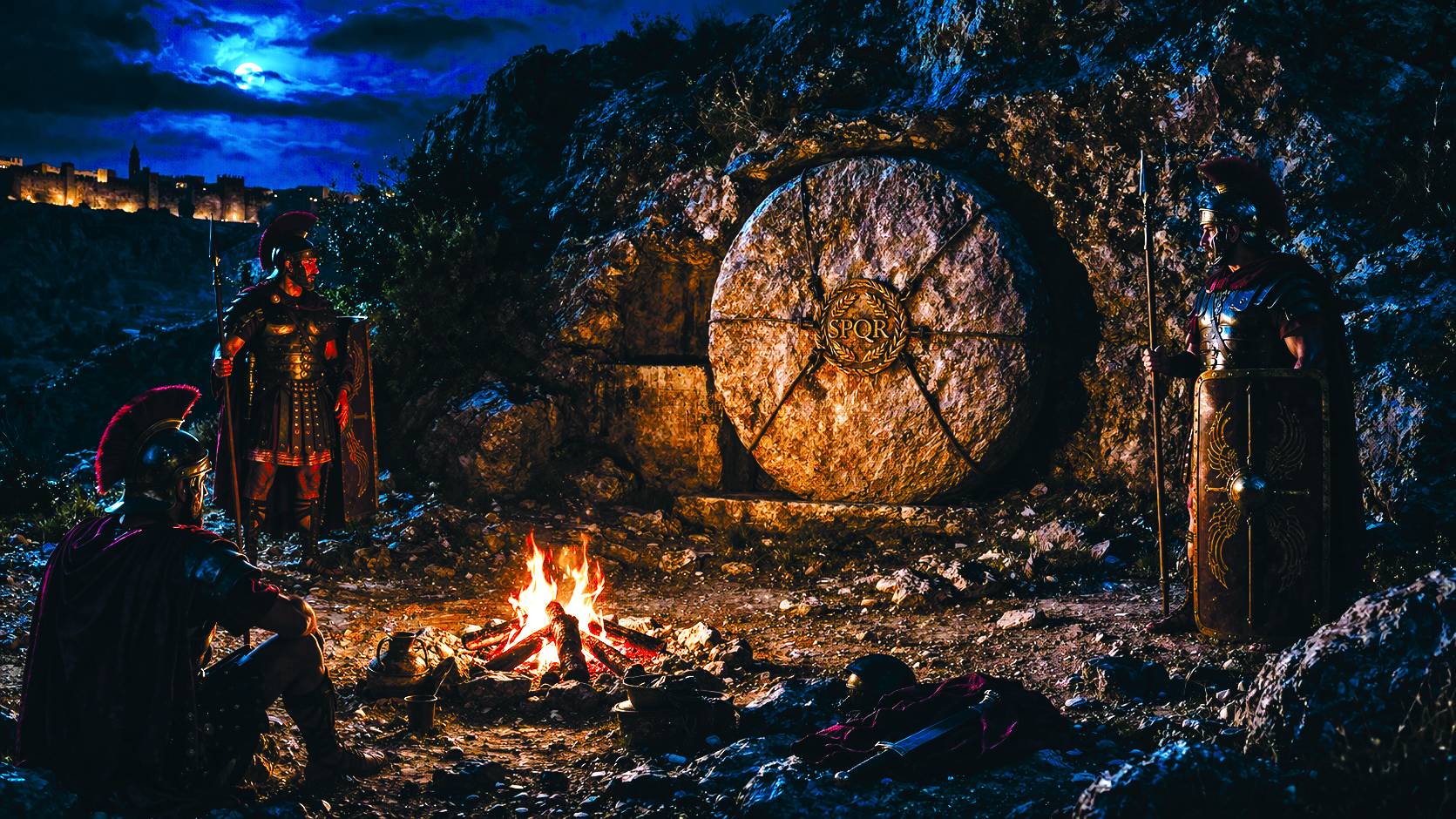
Holy Saturday is the quietest day in the Christian calendar. The crowds have gone. The disciples are hidden behind locked doors. The shouting, the trial, the agony, the death — all of it is over. And in a garden outside the walls of Jerusalem, a great stone has been rolled across the entrance to a tomb, and sealed.
We tend to rush past that sealed stone on our way to Easter Sunday. But it is worth pausing here, in the silence, and asking what that sealed tomb actually means — and why it matters so much for everything that comes next.
They Meant It to Be Final
The sealing of the tomb was not a casual precaution. Matthew's Gospel tells us that the chief priests and Pharisees went to Pilate the day after the Crucifixion with a specific request: that the tomb be made secure, because they remembered Jesus had spoken of rising after three days. Pilate granted it. A guard was posted. The stone was sealed with an official Roman seal.
This was a deliberate act of closure. It was meant to end the story — to put a full stop after a life that had caused too much disruption, raised too many hopes, and asked too many uncomfortable questions. The stone was not merely physical. It was political, religious, and psychological. It was the world's way of saying: this is over.
"The sealed tomb was the world's verdict.
The empty tomb would be God's reply."
A Womb, Not a Prison
And yet the Christian tradition has always looked at that sealed tomb through different eyes. Far from being a place of defeat, the tomb in Christian symbolism is a place of hidden transformation — a womb, not a prison.
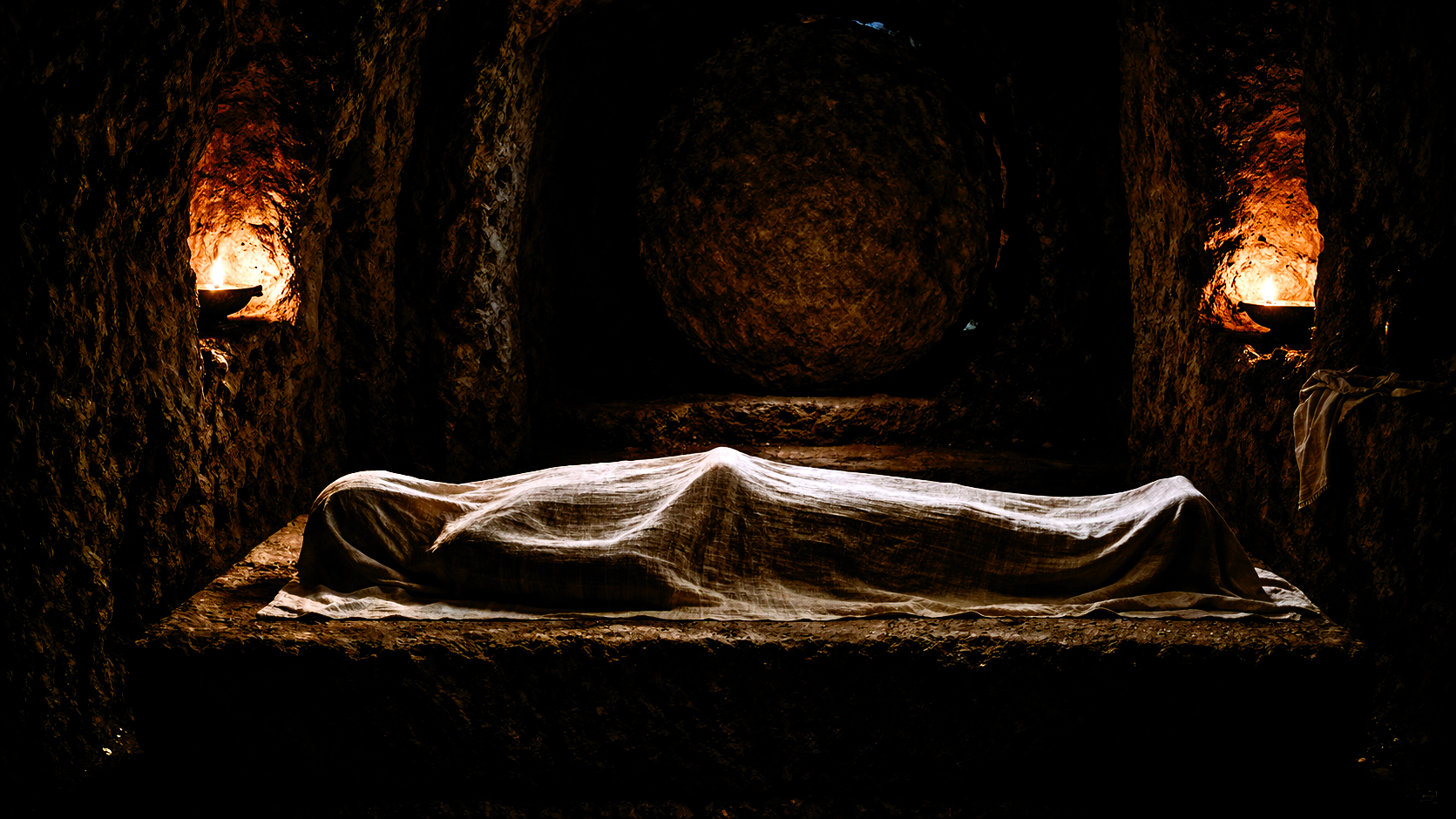
This is not a modern reinterpretation. It runs deep in the patristic tradition. The early Church Fathers saw in the sealed tomb a deliberate divine mystery: that the greatest event in history would be hidden from human eyes. No one witnessed the Resurrection itself. There were no cameras, no witnesses inside the tomb. What the world saw was the stone, the seal, the silence. What God was doing in that darkness was known only to God.
FULL CLOSURE
The stone was not merely physical. It was political, religious, and psychological. It was the world's way of saying: this is over.
There is something profoundly important in that. The Resurrection was not a public spectacle staged for human approval. It was the quiet, sovereign act of the Father raising the Son — and it happened precisely in the place where the world had tried to make His story impossible.
The Symbolism of the Stone
In Scripture, stones carry weight — not just physical weight, but symbolic weight. They mark thresholds. They seal covenants. They close off one chapter and, when moved, open another. Jacob sealed his vision at Bethel with a stone. The Law of God was inscribed in stone. And now the body of the Lawgiver lies behind one.
The sealed stone also echoes another image from Israel's story: the prophet Jonah, three days in the belly of the great fish, in a darkness from which there seemed no escape. Jesus himself had invoked that image as a sign of what was coming. The tomb, sealed and guarded, was the belly of the fish — and the third day would be the shore.
"No power that seals a tomb has ever yet
contained what God intends to raise."
Why the Sealing Matters for the Resurrection
Here is the theological point that is easy to miss: the more thoroughly the tomb was sealed, the more undeniable the Resurrection becomes. The guard, the Roman seal, the great stone — these were not obstacles to the Resurrection. They were, unwittingly, its witnesses.
When the women arrive at dawn on the first day of the week, they are not approaching an unsecured grave. They are approaching a tomb that the most powerful empire in the world has officially closed. And it is open. Not broken into from the outside. Not tampered with by frightened disciples. Open — the grave cloths folded, the body gone, and an angel sitting calmly where the stone had been.
The sealed tomb is what makes the empty tomb so extraordinary. You cannot have one without the other. The guards, the seal, and the stone were meant to make resurrection impossible. Instead, they made it undeniable.
Holy Saturday and the Human Experience
There is also a deeply pastoral dimension to the sealed tomb that speaks directly to human experience. Most of us know what it is to sit with something that feels final — a grief that will not lift, a door that has closed, a silence where there was once a voice. Holy Saturday is the liturgical space for exactly that experience.
The sealed tomb says: God is not afraid of finality. He is not unsettled by what the world declares to be over. He enters our sealed places — our griefs, our defeats, our dead ends, our thoughts — and He works there, in the dark, unseen, until the morning comes.
This is why Holy Saturday deserves more than a rushed passage to Easter. It is the day of hiddenness, of trust without sight, of faith that holds on when there is nothing to hold onto but the promise. And the promise, as it turns out, was stronger than the stone.