
Combatting Hate: THE Believer’s Guide to Canada’s Bill C-9
CRSHJ · Reflections on Law, Faith and Public Witness
DISCLAIMER
This article is offered as pastoral and legal common-sense information
for reflection and discussion within the CRSHJ community.
It is not legal advice. Canadian readers facing a tangible risk
should seek qualified counsel.
Where things stand
On 17 June 2026, after nine months of filibuster, committee brawling and a great deal of public alarm, the Parliament of Canada gave final approval to Bill C-9, the Combatting Hate Act. It now awaits Royal Assent, and its provisions take effect on the thirtieth day after the Governor General signs.[1] So this is no longer a proposal to be debated into the long grass. It is, to all intents and purposes, the law of the land—and it touches, directly, how every preacher, teacher, catechist and ordinary believer in Canada may speak about God, morality and one another in public.
Two stories have been told about this law. In one, Parliament has finally given the police the tools to protect synagogues, mosques and churches from a genuine and rising tide of intimidation. In the other, Parliament has quietly removed a half-century-old shield for religious speech and left the faithful exposed to prosecution for preaching what their traditions have always taught. Both stories contain truth, and the honest course is to resist the temptation to tell only one of them. The purpose of this article is to set out, in plain language, what the Act actually does; what it means for Christians, Muslims and Jews alike; where the real dangers lie; and—most practically—how to go on speaking the truth in charity without handing a prosecutor a file.
A word of honesty before we begin. The breathless claim that Bill C-9 “criminalises the Bible” is not quite true, and pretending otherwise will only get a well-meaning believer into trouble of a different kind. The more sober reality—that the Act removes a specific, named protection and shifts the whole question onto general defences and the discretion of prosecutors—is quite serious enough without embellishment. Sobriety here is not timidity; it is the prerequisite of useful advice.
What the Combatting Hate Act
actually does
Strip away the headlines and the Act has five working parts. Four create or sharpen offences; one is a definition that quietly governs all the rest.
A new offence of displaying
hate symbols in public
It is now a crime to wilfully promote hatred against an identifiable group by displaying, in any public place, certain symbols: a symbol principally associated with a listed terrorist entity; the Nazi swastika (the Hakenkreuz) or the SS double Sig-rune; the noose—added at the last minute by the Senate because of its association with anti-Black racism;[2] or anything closely resembling these. The maximum penalty is two years’ imprisonment. Crucially, the offence is not “displaying a swastika” in the abstract; it is displaying it in order to wilfully promote hatred. The Act preserves defences for a legitimate purpose connected to journalism, education or art, and for displaying a symbol in good faith in order to point it out for removal. A museum curator, a documentary maker and a history teacher are not the targets here.
Repeal of the
“religious opinion” defence
This is the heart of the controversy, and it has its own section below. Since the 1970s, anyone charged with the hate-propaganda offences could escape conviction by showing that, in good faith, they had expressed or argued an opinion on a religious subject or based on a religious text. Bill C-9 repeals that defence—both for the general offence of wilfully promoting hatred and for the newer offence of wilfully promoting antisemitism by condoning, denying or downplaying the Holocaust.[3] The other defences—truth, public interest, and good-faith pointing-out-for-removal—survive. Only the explicitly religious one is struck out.
A new, free-standing
“hate crime” offence
Canadian law already required judges to treat hate motivation as an aggravating factor at sentencing. The Act goes further: it makes the hate motivation a chargeable offence in its own right. Commit any federal offence—from mischief to assault—while motivated by hatred based on race, national or ethnic origin, language, colour, religion, sex, age, disability, sexual orientation, or gender identity or expression, and you may be charged with a distinct hate-crime offence whose maximum penalty is laddered up from the underlying offence, in the gravest cases all the way to life imprisonment. The same clarification applies: an act is not “hate-motivated” merely because it discredits, humiliates, hurts or offends.
New offences of intimidating or obstructing access to sacred
and communal places
It becomes an offence to try to frighten someone in order to impede their access to—or simply to obstruct their lawful access to—a building used mainly for worship, or used by an identifiable group for administrative, social, cultural or sporting purposes, as a school or daycare, or as a seniors’ residence, as well as to cemeteries. The maximum is ten years. There is an express carve-out: you do not commit the obstruction offence merely by being near such a place, or approaching it, solely to obtain or communicate information—which is to say, peaceful leafleting and ordinary protest are protected.[4] This is the part of the Act most squarely aimed at protecting congregations, and the part faith communities have least reason to fear.
A statutory definition of
“hatred”
Finally, and easily overlooked, the Act writes the Supreme Court’s own test into the Criminal Code. “Hatred” now means an emotion of an intense and extreme nature, clearly associated with vilification and detestation.[5] The Act adds, for greater certainty, that communicating a statement does not promote hatred solely because it discredits, humiliates, hurts or offends. This definition is the single most important friend the believer has in the whole statute, and we shall return to it repeatedly.
The hinge:
the defence that was removed
To understand why three faiths that agree on remarkably little found themselves writing to the same senators, you have to understand what the old defence did and what now stands in its place.
The repealed provision was a complete defence: if you were charged with wilfully promoting hatred but could show that you had, in good faith, advanced an opinion on a religious subject or grounded in a sacred text, you were acquitted. It did not licence hatred dressed up in religious language—“good faith” did real work—but it gave the preacher, the imam and the rabbi a firm place to stand. A sermon on a hard text was protected as religious speech, not merely as speech that happened to be tolerable.
With that gone, the believer’s protection now rests on three thinner supports. The first support is the high threshold of the offence itself. The Crown must prove that hatred was wilfully promoted, and “hatred” now means detestation and vilification of the most extreme kind. The Supreme Court has spelled out “hallmarks of hatred” that courts look for: portraying a group as a powerful menace or secret conspiracy; calling them liars, criminals or subhuman; describing them as animals or as creatures who ought not to be allowed to live; equating them with child abusers.[6] This is the vocabulary of the pogrom and the propaganda sheet, not of the pulpit. Ordinary moral teaching—however unfashionable—does not come close.

Recall:
The Crown must prove that hatred was wilfully promoted, and “hatred” now means detestation and vilification of the most extreme kind. The Supreme Court has spelled out “hallmarks of hatred” that courts look for: portraying a group as a powerful menace or secret conspiracy; calling them liars, criminals or subhuman; describing them as animals or as creatures who ought not to be allowed to live; equating them with child abusers.[6] This is the vocabulary of the pogrom and the propaganda sheet, not of the pulpit. Ordinary moral teaching—however unfashionable—does not come close.
The second support is a pair of “for greater certainty” clauses added late in the process to calm religious nerves. They declare that nothing in the hate-propaganda or antisemitism provisions prevents a person from communicating a statement on a matter of public interest—including an educational, religious, political or scientific statement made in discussion, publication or debate—provided they do not thereby wilfully promote hatred.[7] This is genuinely helpful as a signal to judges. But notice what it is and is not: it is an instruction on how to interpret the offence, not a defence that ends a prosecution. It guides the court that eventually hears the case; it does not stop a charge being laid in the first place.
The third support is prosecutorial discretion. The propaganda and symbol offences may not be prosecuted without the consent of the Attorney General, and commentators reasonably treat this as a meaningful filter against zealous local charges.[8] It is a filter, not a wall. Discretion is, by its nature, a matter of who holds the office and what the politics of the day demand. A protection that depends on the goodwill of the prosecutor is a different thing from a protection written into the statute as your right.
Put plainly: the floor did not collapse, but a load-bearing beam was removed and the weight redistributed onto supports that are real but softer. That is the change. Everything that follows is a working-out of it for each tradition.
Three faiths - three angles
One of the more striking features of the C-9 debate was the unusual alignment it produced. Over three hundred and fifty Muslim organisations, leaders of the Orthodox Jewish community, Christian bodies of many denominations and the Canadian Conference of Catholic Bishops all urged the government to reconsider.[9] They did not agree about God; they agreed that a state which feels free to adjudicate the orthodoxy of religious speech has crossed a line that will, sooner or later, reach all of them. Yet the implications fall differently on each.
For the Jewish community:
protected and divided
No community has more obvious reason to welcome much of this Act. The provisions on Nazi symbols, on Holocaust denial, and on intimidation outside synagogues, Jewish schools and cemeteries answer a real and documented rise in antisemitic violence. Mainstream Jewish advocacy—the Centre for Israel and Jewish Affairs, B’nai Brith Canada, Friends of Simon Wiesenthal Center—welcomed the bill and pressed for swift passage and, just as importantly, for vigorous enforcement of the laws already on the books.[10]

Recall:
The Canadian Jewish community was not of one mind, and the division is instructive. Independent Jewish Voices and others warned that a hate law drafted in a season of high political feeling could be turned against legitimate protest, “particularly when associated with criticism of the State of Israel.”[11] Here is the first hard lesson of C-9, and it is ecumenical: a sword forged to protect you can be picked up by someone else.
But the community was not of one mind, and the division is instructive. Independent Jewish Voices and others warned that a hate law drafted in a season of high political feeling could be turned against legitimate protest, “particularly when associated with criticism of the State of Israel.”[11] Here is the first hard lesson of C-9, and it is ecumenical: a sword forged to protect you can be picked up by someone else. The same breadth that protects a synagogue from a mob can, in other hands and other years, be aimed at a demonstration. And the repeal of the religious-text defence reaches Orthodox Jewish teaching on sexuality, marriage and gender exactly as it reaches Christian and Muslim teaching—which is why Orthodox leaders signed the letters of concern alongside Catholic bishops.
For Muslims:
protected, exposed, and caught
by the symbols clause
Canadian Muslims, too, stand to gain real protection from a law aimed at Islamophobic intimidation and vandalism. Yet the Muslim community carries a particular, double-edged exposure that Christians and Jews do not share to the same degree.
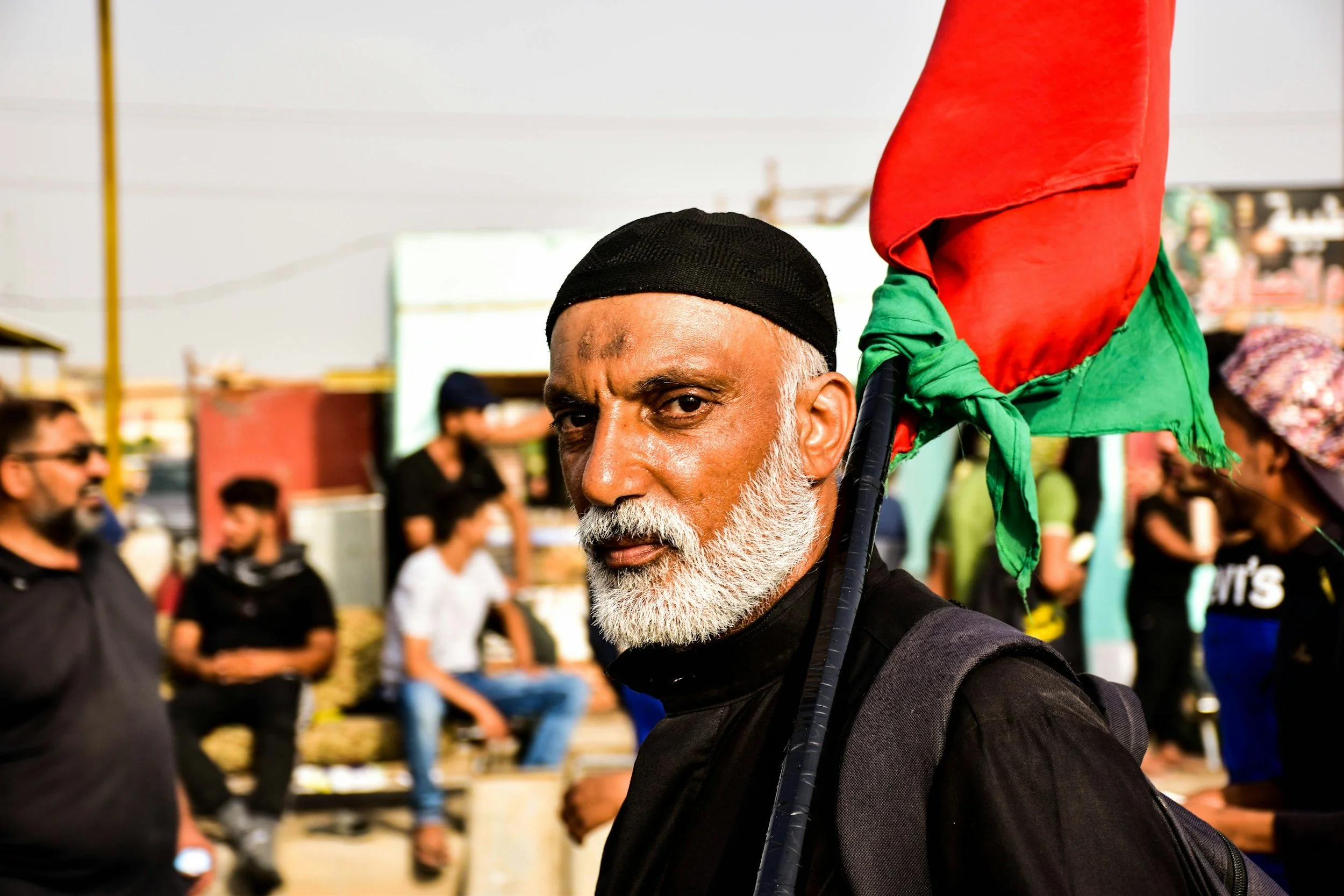
The first edge is the symbols clause. Because several listed terrorist entities have appropriated Islamic religious imagery—most pointedly the shahāda, the Muslim profession of faith, which appears on certain militant flags—the National Council of Canadian Muslims warned that ordinary believers displaying sacred text could be “inadvertently captured” by a clause that catches symbols “so nearly resembling” a banned one.[12] The wilful-promotion-of-hatred requirement should, properly applied, protect the devout from this—you do not promote hatred by professing your own faith—but the very fact that the “for greater certainty” clauses were partly designed to address this worry tells you the worry was not fanciful.
Recall:
Because several listed terrorist entities have appropriated Islamic religious imagery—most pointedly the shahāda, the Muslim profession of faith, which appears on certain militant flags—the National Council of Canadian Muslims warned that ordinary believers displaying sacred text could be “inadvertently captured” by a clause that catches symbols “so nearly resembling” a banned one.
The second edge is the same one every traditional believer faces: classical Islamic teaching on apostasy, on the moral status of certain conduct, and on sex and gender now stands without the dedicated religious-text defence. And there is a sharp historical irony worth naming honestly: much of the political momentum for this law is traced to a controversial sermon delivered in a Montreal mosque.[13] The community whose preaching helped trigger the legislation is also among those most exposed by it. That is not a reason for resentment; it is a reason for the careful, charitable speech this article commends to everyone.
For Christians:
the defence removal bites
hardest on the pulpit
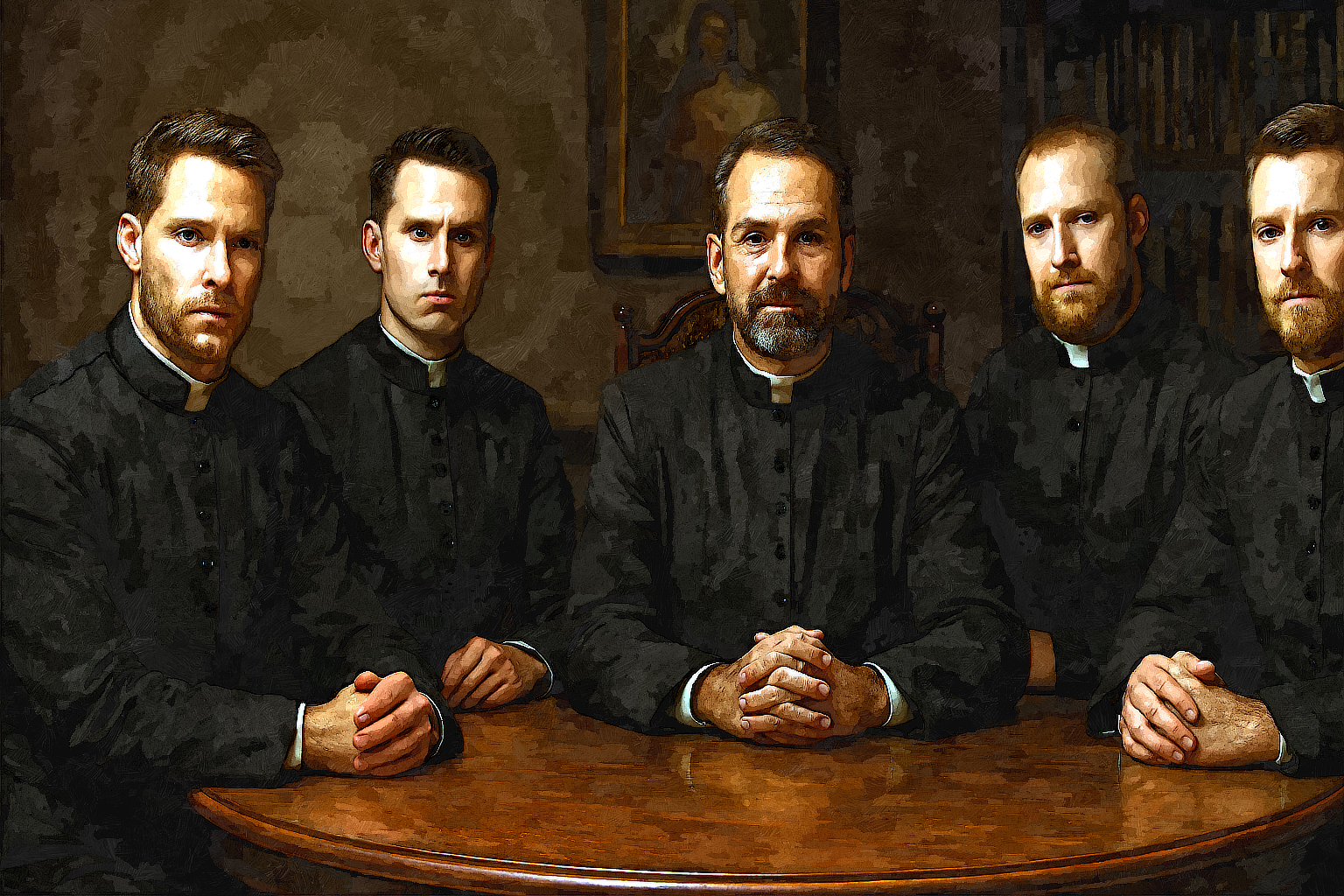
For Christians—and the bishops said so plainly—the centre of gravity is the lost defence and its effect on ordinary preaching and catechesis. Cardinal Frank Leo of Toronto wrote to senators asking for an unambiguous guarantee that reading Scripture, preaching and teaching could never count as wilfully promoting hatred; the request was not granted in those terms.[14] The Canadian bishops, while affirming without reservation the duty to condemn hatred and protect the vulnerable, warned that removing the defence risks exposing clergy and laity to prosecution for upholding the Church’s perennial doctrine.[15]
Where, concretely, does the exposure lie? Consider the much-cited verse from Leviticus, with its language of “abomination” and death. Read aloud on its own, or expounded as part of the Church’s teaching, it is most unlikely to ground a charge.[16] But the defence that once made that conclusion automatic is gone; now it depends on context—where it is said, to whom, and what is said around it. The same is true of the great Pauline texts on the moral law, of catechesis on marriage as the union of man and woman, and of the Church’s claim that salvation is found in Christ. None of these promotes detestation. All of them could, in the wrong hands and the wrong framing, be alleged to do so.
Recall:
It is a useful occasion for Christians to ensure that their language about Israel and the Synagogue reflects the language of the Church’s mature teaching rather than its worst centuries. Second, and consolingly, the building-access provisions protect churches, church halls, Catholic schools and parish cemeteries exactly as they protect every other community’s sacred places. The Act is not only a burden to Christians; in part it is a shield.
Two further Christian-specific wrinkles deserve a mention. First, the antisemitism offence and its lost religious defence sit awkwardly beside the older, cruder forms of supersessionist rhetoric; the offence itself targets Holocaust denial, not theology, but it is a useful occasion for Christians to ensure their language about Israel and the Synagogue is the language of the Church’s mature teaching rather than of its worst centuries. Second, and consolingly, the building-access provisions protect churches, church halls, Catholic schools and parish cemeteries exactly as they protect every other community’s sacred places. The Act is not only a burden to Christians; in part it is a shield.
The pitfalls:
where the real dangers lie
Having resisted alarmism, we must be equally honest about genuine hazards. They are not mainly about mass prosecutions of preachers, which remain unlikely. They are subtler, and arguably more corrosive.
The chill is the point…
…and the chill is real
The greatest danger of a vague speech offence is not conviction but self-censorship. A preacher who cannot be sure where the line falls will, sensibly, retreat well behind it. The process itself—investigation, charge, the months of anxiety and legal cost before any acquittal—is punishment enough to deter speech that would, in the end, have been found perfectly lawful. A law need not secure a single conviction to silence a great deal of legitimate teaching. This is the pitfall that should most concern a religious community, because it works on the timid and the conscientious precisely while leaving the genuinely hateful undeterred.
Discretion is not
principle
We have already met this point and it bears repeating as a hazard in its own right. The protections that now matter most—the high threshold, the interpretive clauses, the Attorney General’s consent—are all, in different ways, dependent on judgement: the judgement of police about what to investigate, of prosecutors about what to charge, of Attorneys General about what to consent to, of judges about how to read the clarifications. Judgement is shaped by the temper of the times. A protection that is robust in a calm decade may feel very thin in an anxious one.
Breadth:
the symbols clause and
the hate-crime offence
Two provisions are drafted broadly enough to invite trouble. The symbols clause reaches anything that “so nearly resembles” a banned symbol—language elastic enough to snare the shahāda-bearing flag of the devout, the historical re-enactor, or the artist, and to require the mens-rea requirement to do a great deal of rescuing after the fact. And the new hate-crime offence attaches to any federal offence whatever, with penalties laddered to life. Couple “any offence” with a motive ground as contested as “gender identity or expression,” and you have created a mechanism whose reach will be defined, case by case, by the very cultural disputes the religious believer is most likely to be drawn into.
Clarifications that clarify
less than they promise
The “for greater certainty” clauses are worth having, but a believer should not mistake a thermostat for a fortress. They tell a court how to read the offence once a defendant is standing in it. They do not prevent the complaint, the investigation or the charge; and Cardinal Leo’s requested guarantee—that Scripture, preaching and teaching are categorically excluded—was precisely what the drafters declined to give.[17] The gap between what was asked and what was granted is the measure of the residual risk.
Asymmetry
Finally, there is the perennial worry about even-handed enforcement: that a law sold as protecting everyone will in practice protect some viewpoints more readily than others, and that the believer’s traditional moral convictions will find themselves on the wrong side of the prevailing wind more often than the convictions of his opponents. This is not a prophecy—and it cuts in more than one direction, as the divided Jewish and Muslim responses show—but it is a reasonable vigilance, and the remedy for it is partly in the community’s own hands: to be visibly, scrupulously charitable, so that any asymmetry is the prosecutor’s to explain and not the preacher’s.
How to go on:
speaking truth → within the law
Here is the practical heart of the matter. The aim is not to trim the faith to fit the statute; the aim is to preach and teach the whole of it in a way that no honest prosecutor could call the wilful promotion of detestation—because it will not be. Almost everything in this section is simply the ancient counsel to speak the truth in love, now with a legal edge.
Let the high threshold
work for you
Internalise the test. The offence is not “saying something a group dislikes”; it is the wilful promotion of detestation and vilification—the menace, the conspiracy, the dehumanisation. If your words would be at home in the Supreme Court’s catalogue of the hallmarks of hatred, stop. If they would not—if you are teaching doctrine, not inciting contempt—you are on the right side of the line the law actually draws.
Distinguish the act from the person:
always, and audibly
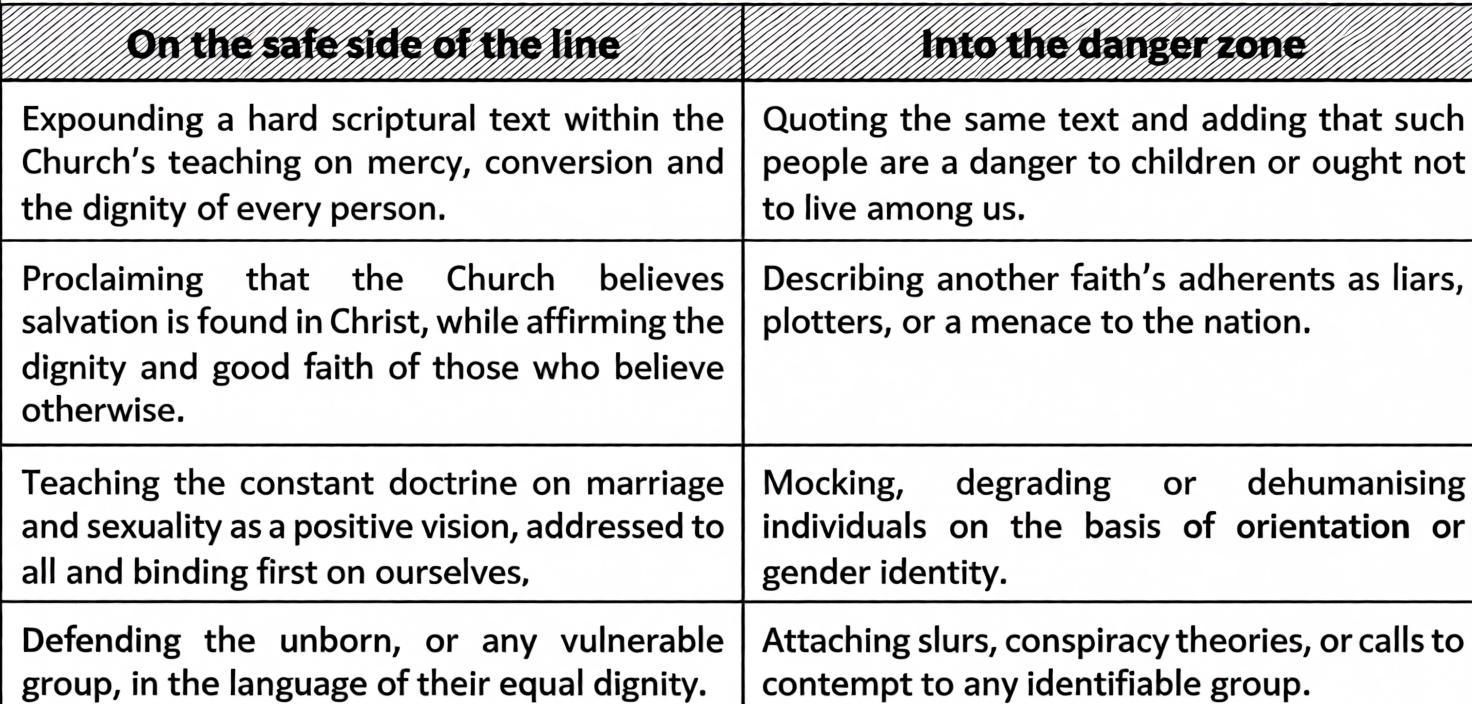
The oldest distinction in moral theology is now also your best legal protection. Teach about conduct, vocation and truth; never characterise persons as subhuman, dangerous, or unworthy of dignity. “The Church calls all people to chastity and holds out a demanding vision of marriage” is doctrine. A tirade portraying a group as a corrupting menace is something else, and the law can tell the difference because the tradition can.
A few worked contrasts. The left-hand column is ordinary, lawful religious teaching. The right-hand column is the sort of thing that invites a file—and that the Gospel rejects anyway.
Mind the symbols
This is mostly common sense, but with one trap. Do not display banned or near-banned symbols, even ironically or as provocation. The particular caution for Muslim readers—and for anyone using sacred imagery that a terrorist group has stolen—is to be aware of context: the shahāda on a mosque banner at prayer is one thing; the same script on a flag at a charged demonstration may be read very differently by a nervous constable. Context is the whole of the offence, so control the context you can.
Do not obstruct; and know
your protected ground
The access offences are easy to stay clear of: never frighten or physically impede anyone’s entry to a place of worship, school, community building or cemetery—including those of other faiths and of none. At the same time, know your protected ground: approaching such a place peacefully to obtain or communicate information—leafleting, witnessing, peaceful vigil—is expressly carved out. Lawful witness is one thing; blockade and intimidation are another, and the Church has no interest in the latter.
The internet MAY
collapse your context?…
write as if it will
Online, the dangers multiply because the medium strips away everything that makes a sermon safe. A clip is severed from the homily around it; a sentence is screenshotted without the paragraph that qualified it; an algorithm rewards heat over light; and a post written for your parish is read by the whole world, including the least charitable reader in it. Practical counsel:
Write the qualification into the same sentence, not three sentences later. Assume the clip will start and end at the worst possible moment.
State your pastoral or educational purpose explicitly, especially when handling a hard text. “I want to explain what the Church teaches and why” is both true and legally useful.
Avoid the vocabulary of contempt entirely—the sneer, the slur, the meme that dehumanises. It adds nothing to the argument and everything to the prosecutor’s file.
Do not let the comment thread preach in your name. Moderate your own platforms; a hateful pile-on under your post is the context a prosecutor will read your post in.
When the subject is genuinely incendiary, prefer the long form—an article, a recorded talk—where context travels with the words, over the bare post that travels naked.

Recall:
Write the qualification into the same sentence, not three sentences later.
State your pastoral or educational purpose explicitly, especially when handling a hard text.
Avoid the vocabulary of contempt entirely.
Do not let the comment thread preach in your name. Moderate your own platforms.
When the subject is genuinely incendiary, prefer the long form—an article, a recorded talk—where context travels with the words, over the bare post that travels naked.
Keep your house
in order
A little prudence goes a long way. Where you are teaching on contested matters, it does no harm to retain your text, your sources and your framing, so that the educational and pastoral purpose is documented rather than reconstructed under pressure. Where a real risk or an actual complaint arises, consult a criminal-defence lawyer promptly and say less in the meantime, not more.[18] And teach your people the same calm: the goal is not a community that whispers, but one that speaks clearly, charitably and without the self-inflicted wounds that careless speech invites.
A closing word
The Church has preached the whole counsel of God under emperors, commissars and colonial governors far less accommodating than the Parliament of Canada, and she will preach it under this Act too. Bill C-9 has made the legal weather a degree or two harsher; it has not changed the commission. “Render unto Caesar the things that are Caesar’s” has always coexisted with “we must obey God rather than men,” and the art of the faithful citizen is to know, in each particular, which sentence applies.
Here the two sentences mostly point the same way. The state’s concern—that synagogues, mosques and churches not be places of fear, that no one be hounded as subhuman—is the Gospel’s concern too. The danger is not that the law asks us to love our neighbour; it is that, in a clumsy and discretionary way, it may chill the honest teaching that real love requires. The believer’s answer is not to grow quiet, and not to grow shrill, but to grow precise: to say exactly what the tradition holds, with exactly the charity the tradition commands, so that if we are ever opposed it is plainly for the truth we proclaim and never for contempt we have indulged. There is a great difference between being hated for the Gospel and being, ourselves, hateful. C-9 makes that difference matter more. It was always supposed to.
DISCLAIMER
This article is offered as pastoral and legal common-sense information
for reflection and discussion within the CRSHJ community.
It is not legal advice. Canadian readers facing a tangible risk
should seek qualified counsel.
[1] Parliament gave the bill final approval on 17 June 2026 when the House of Commons concurred in the lone Senate amendment; it awaits Royal Assent and comes into force on the thirtieth day thereafter (s. 12). See The Catholic Register, “Parliament passes Bill C-9 into law” (17 June 2026); The Globe and Mail (June 2026).
[2] The Senate’s single amendment added the noose — long associated with anti-Black racism — to the list of prohibited symbols. See The Globe and Mail (June 2026); The Catholic Register (17 June 2026).
[3] Bill C-9, An Act to amend the Criminal Code (hate propaganda, hate crime and access to religious or cultural places) (“Combatting Hate Act”), 1st Sess, 45th Parl, 2025–2026 (as passed by the House of Commons, 25 March 2026). Section and subsection references throughout are to the Criminal Code, RSC 1985, c C-46, as amended by the bill.
[4] Intimidation is already an offence under s. 423 of the Criminal Code (maximum five years). The new s. 423.3 overlaps with it but carries a higher maximum (ten years) and is tailored to places of worship and community use; critics call it partly redundant, supporters say it clarifies the law for police. See CCF explainer, supra n 4.
[5] R v Whatcott, 2013 SCC 11. The Supreme Court there limited actionable “hatred” to the extreme emotions of detestation and vilification, well beyond speech that merely offends, humiliates or discredits. Bill C-9 imports this standard into the Code’s new definition (s. 319(7)).
[6] Canadian Constitution Foundation, “Bill C-9 has passed. Here’s what you need to know” (5 June 2026), summarising the Supreme Court’s “hallmarks of hatred.” The CCF is a civil-liberties charity, not a religious body; its analysis is offered here as legal information.
[7] The “for greater certainty” clause now in the Act (s. 11.1) was tabled by Parliamentary Secretary Patricia Lattanzio in an effort to reassure faith groups. See Catholic Saskatoon News (27 March 2026).
[9] Canadian Conference of Catholic Bishops; Bishop Pierre Goudreault of Sainte-Anne-de-la-Pocatière, CCCB President, affirming both the duty to condemn hatred and the need to protect religious expression. See Catholic Saskatoon News (27 March 2026).
[10] A coalition including the Centre for Israel and Jewish Affairs, B’nai Brith Canada and Friends of Simon Wiesenthal Center welcomed the bill as protection against rising antisemitism. See The Globe and Mail (March and June 2026).
[11] Independent Jewish Voices Canada cautioned that the bill could chill legitimate protest and dissent, “particularly when associated with criticism of the State of Israel.” See The Globe and Mail (March 2026). Several Muslim and civil-liberties bodies raised the same concern: see the joint statement of the Canadian Muslim Public Affairs Council and others (2 April 2026).
[12] The National Council of Canadian Muslims warned that worshippers bearing certain Islamic scriptural symbols (e.g. the shahāda) might be “inadvertently captured” where a listed terrorist entity has appropriated that imagery. See remarks of Sen. Kristopher Wells, Progressive Senate Group, third-reading debate (June 2026); Catholic Saskatoon News (27 March 2026).
[13] Several commentators trace the legislative momentum to a controversial Montreal sermon. See The Canadian Jewish News, “What changes now?” (31 March 2026).
[14] Cardinal Frank Leo, Archbishop of Toronto, letter to senators (27 March 2026), urging an explicit clarification that reading Scripture, preaching and teaching do not constitute the wilful promotion of hatred. See The Catholic Herald (June 2026).
[16] Example and analysis drawn from the CCF explainer, ibid. The point is that scripture read on its own is unlikely to ground a charge; context is everything.
[18] This is legal and pastoral information for reflection and discussion. It is not legal advice, and it does not create any solicitor–client relationship. Anyone facing an actual charge or a concrete risk should consult a criminal-defence lawyer qualified in the relevant jurisdiction without delay.