
Before There Was "The Church," There Was History
A point-by-point rebuttal of a widely circulated piece of Catholic apologetics
A short text has been making the rounds in religious circles, presenting what it calls a straightforward historical argument: that one single, unbroken Church — founded by Jesus Christ Himself — has existed from the first century to the present day, and that history's finger points unmistakably toward Rome. The argument sounds reasonable, even compelling, on first reading. But on closer inspection, nearly every claim it makes either distorts history, makes unjustified logical leaps, or simply assumes the very conclusion it purports to prove. This article addresses those claims one by one.
Claim 1
"Jesus Christ founded a Church"
This is the foundational premise of the entire argument, and it is the one that crumbles first under historical scrutiny.
Jesus of Nazareth was a Jewish teacher and preacher operating within the tradition of Second Temple Judaism. He gathered disciples, proclaimed the Kingdom of God, and is recorded as having said to Peter, "upon this rock I will build my church" (Matthew 16:18). But the word translated as "church" — ekklesia in Greek — simply means "assembly" or "gathering." It carries no institutional weight in the first century. It was a common Greek term used for civic assemblies across the ancient world.
RECALL:
“Jesus left no written instructions, established no hierarchy, appointed no administrators, drew no organisational chart, and created no governance structure. He did not found a denomination, write a constitution, or set up a succession plan. What he did was gather a community of followers and preach. The institutional Church — with its bishops, creeds, canons, and councils — was a later human construction, however Spirit-led its architects believed it to be.”
More critically: Jesus left no written instructions, established no hierarchy, appointed no administrators, drew no organisational chart, and created no governance structure. He did not found a denomination, write a constitution, or set up a succession plan. What he did was gather a community of followers and preach. The institutional Church — with its bishops, creeds, canons, and councils — was a later human construction, however Spirit-led its architects believed it to be.
The institutional Church was built after Pentecost, by the Apostles and their communities — not by Jesus during his earthly ministry.
The actual founding of what we might recognise as "the Church" happened after the crucifixion and resurrection — specifically after Pentecost, as described in Acts 2. It was the Apostles, empowered by the Holy Spirit according to the narrative, who began baptising, preaching, gathering communities, and working out the practical meaning of the new faith. To credit Jesus with founding the Church as an institution is to collapse a complex historical development into a convenient myth.
Claim 2
"For centuries before the first Protestant denomination appeared,
Christians gathered... and handed on the faith they received from the Apostles"
This sentence is true in a very general sense, but it smuggles in a critical distortion: the implication that those centuries represent one unified, coherent, institutionally continuous Church. They do not!!!
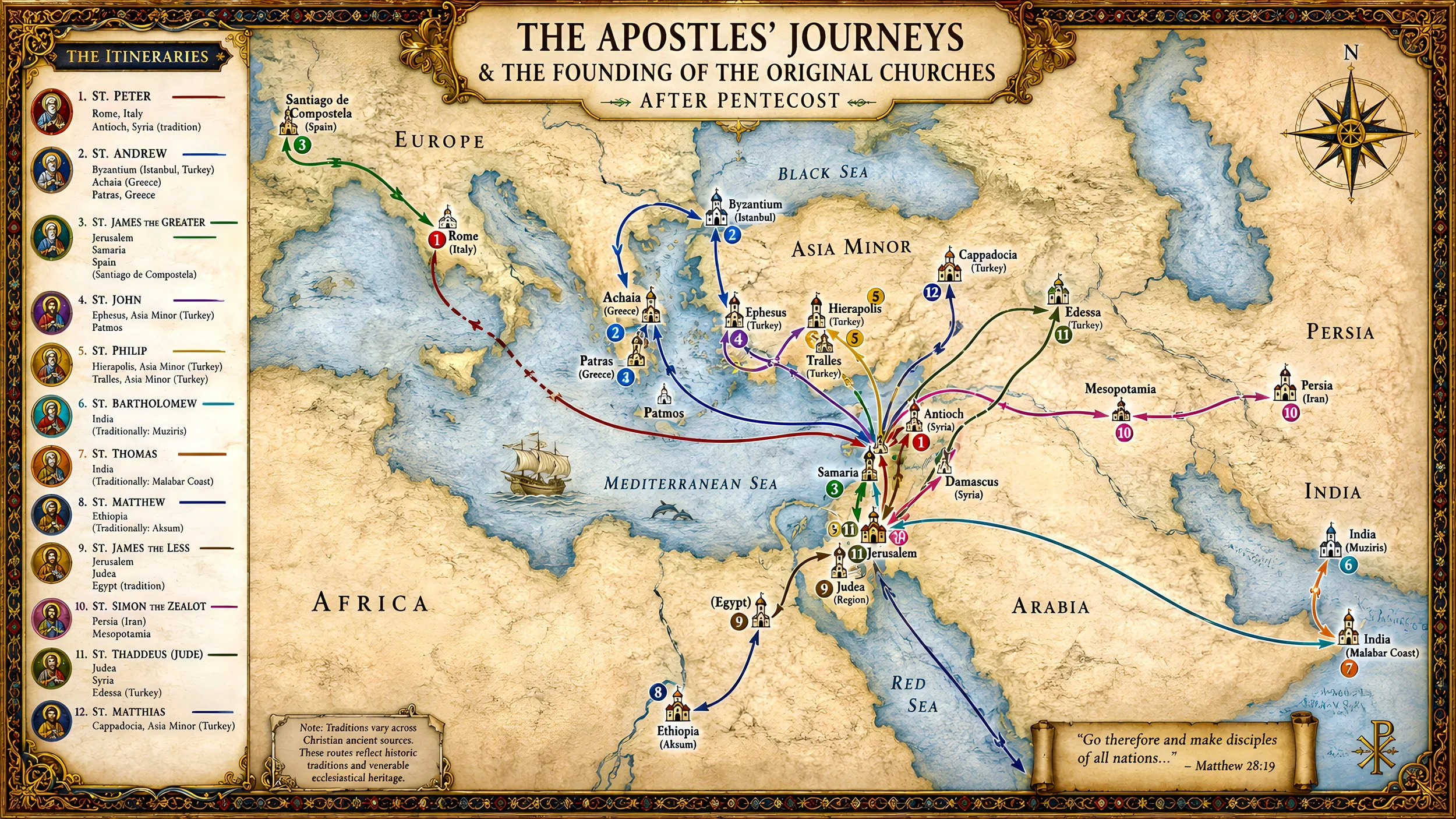
From the very beginning, the early Christian movement was plural and diverse. The Apostles did not establish one Church — they went in different directions and founded independent, autonomous communities. Peter and James led the Jerusalem church. Paul founded communities across Asia Minor and Greece that were, by his own account, frequently in tension with Jerusalem. John's communities in Ephesus had a distinctly different theological flavour. The church in Alexandria — traditionally associated with Mark — developed its own theological tradition. Rome's early community had no clear monarchical bishop (a ‘Pope’) for well over one hundred years after the crucifixion.
These were not branches of a single institution. They were independent communities that shared a common faith and maintained fellowship — sometimes tenuously, sometimes in open dispute. Paul's letters are full of conflict: with Judaizers, with rival apostles, with community members who disagreed on everything from meat offered to idols to the nature of the resurrection.
The idea of a single, unified Church governed by a clear hierarchy is a development of the second, third, and especially fourth centuries. It was not the original condition of Christianity. To present it as if early Christians were all flowing obediently through a single ecclesiastical pipeline is to impose a later reality onto an earlier, messier, and far more interesting truth.
Claim 3
"This Church... defended the doctrine of the Trinity, preserved the
Scriptures, and proclaimed the Gospel throughout the world"
These are real historical achievements, but the text uses them deceptively by attributing them to "this Church" — as if one unified body did all these things. In reality, these developments involved fierce internal conflict, competing factions, and councils whose authority was contested for decades or centuries.
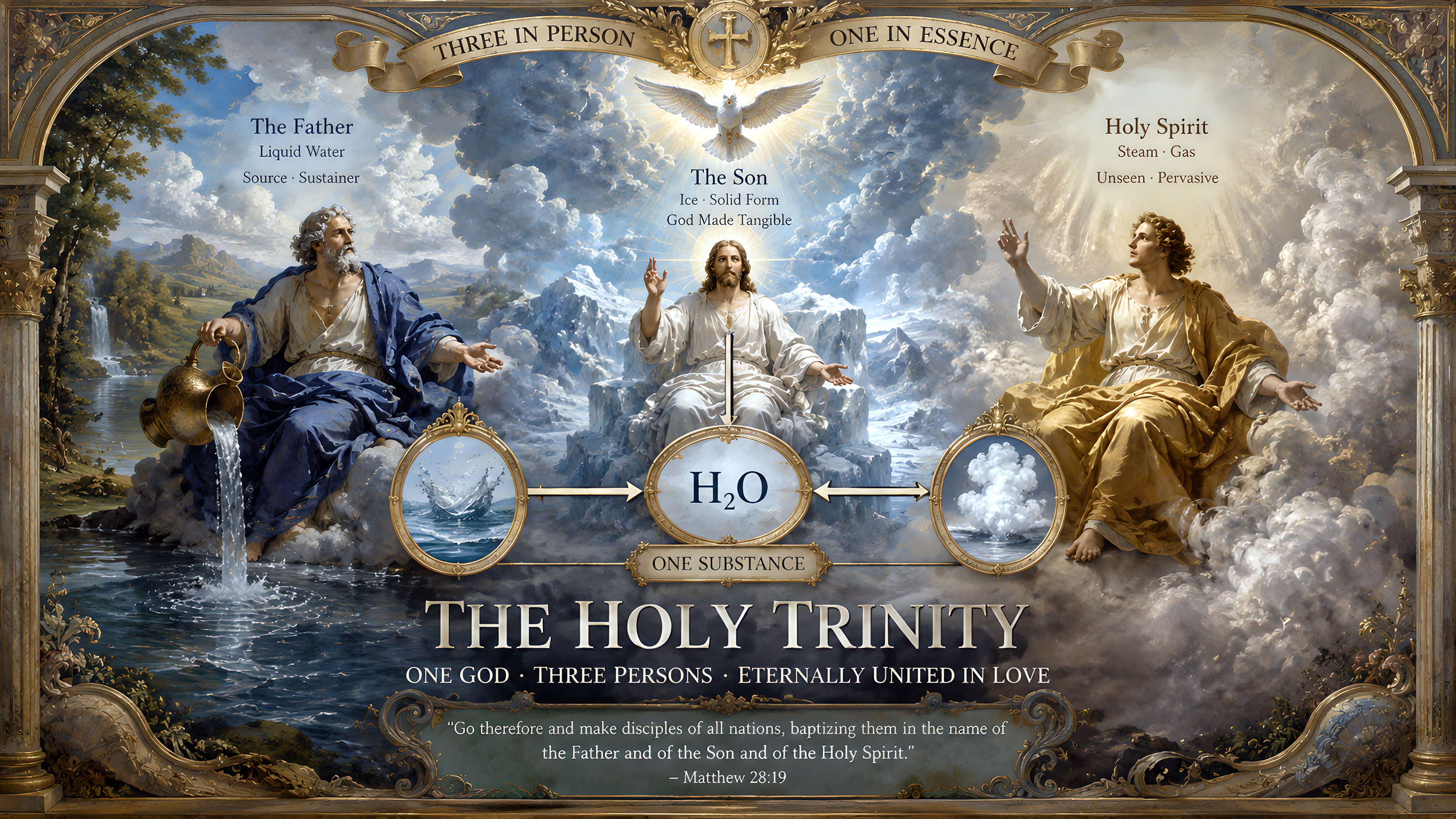
Take the doctrine of the Trinity. It was not a received apostolic teaching that the Church serenely preserved. It was a doctrine hammered out through intense theological controversy at the Council of Nicaea in 325 AD, more than three centuries after the crucifixion. Arianism — the belief that the Son was a created being subordinate to the Father — was enormously popular and had the support of emperors, bishops, and entire regional churches. The "heresy" nearly won. The Trinity as an orthodox formulation was a hard-fought conclusion, not a placid inheritance.
RECALL:
The doctrine of the Trinity was not a received apostolic teaching that the Church serenely preserved. It was a doctrine hammered out through intense theological debate at the Council of Nicaea in 325 AD, more than three centuries after the crucifixion.
As for preserving the Scriptures: the question of which books belonged in the New Testament canon was not settled quickly or cleanly. Different communities used different texts. The canon we know today was the product of debate, synodal decisions, and the slow accumulation of consensus — a process that ran into the fourth and fifth centuries. Jerome's Vulgate translation, produced in the late fourth century, was itself controversial. The Bible was not handed down intact from the Apostles; it was assembled by committees of fallible human beings working through disagreement.
The canon of Scripture was not handed down from the Apostles intact. It was assembled through centuries of debate, dispute, and hard-won consensus.
And proclaiming the Gospel throughout the world? This was done by many different Christian communities, including those that Rome would later declare heretical. The Nestorians spread Christianity into Persia, India, and as far as China. The Coptic church evangelised deep into Africa. The Armenian and Ethiopian churches established themselves independently of Rome and have maintained that independence ever since. To credit "the Church" — implying Rome — with global evangelism is to erase the extraordinary missionary work of churches that Rome excommunicated or condemned.
Claim 4
"History points to one continuous Church... founded by Jesus Christ Himself"
This is the central logical sleight of hand in the entire piece, and it deserves to be named clearly: it is a conclusion presented as if it follows naturally from what came before, but it does not. The argument has done nothing to demonstrate that any single institution today is the legitimate heir of the apostolic church. It has merely asserted that such an institution exists.
Consider the competitors the argument simply ignores:
The Eastern Orthodox Church makes an essentially identical claim to apostolic continuity. It holds that it is the original Church, that Rome was the one that schismed in 1054, and that the Papacy's claims to universal jurisdiction were an innovation that departed from genuine apostolic tradition. The Orthodox argument for continuity is, on historical grounds, at least as strong as the Catholic one — arguably stronger, since Constantinople, Antioch, Alexandria, and Jerusalem all predate Rome's claim to primacy.
RECALL:
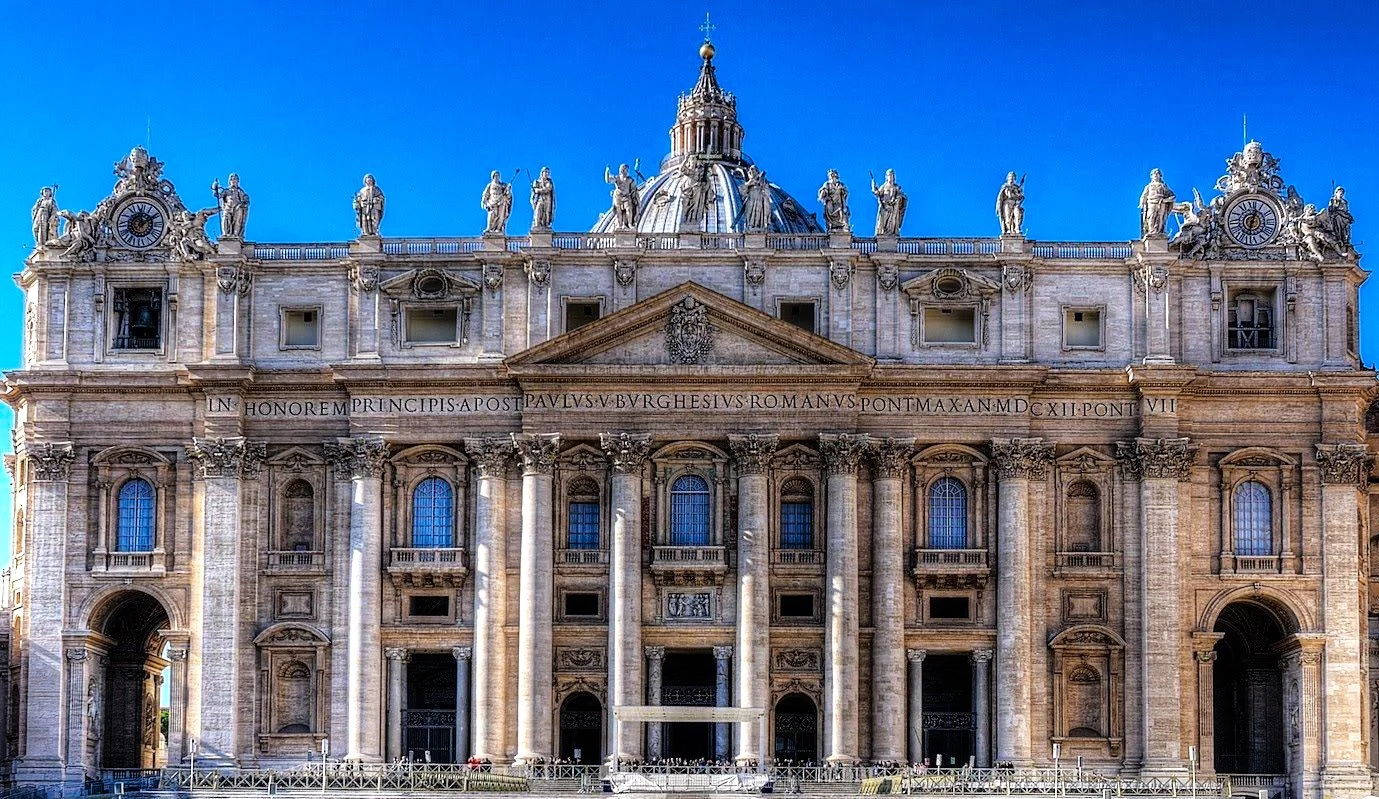
"Which Church today can trace its faith, worship, and authority back to that original apostolic Church?" It is a good question. But the honest answer is: several churches can make that claim. The question of which church is "the" church is a theological question, not a historical one. Dressing it up as history does not change that.
The Oriental Orthodox churches — Coptic, Ethiopian, Armenian, Syriac — separated from both Rome and Constantinople after the Council of Chalcedon in 451 AD. They regard themselves as the preservers of authentic apostolic faith. They are, by any historical measure, ancient churches with unbroken traditions stretching back to the apostolic era.
The text asks, "Which Church today can trace its faith, worship, and authority back to that original apostolic Church?" It is a good question. But the honest answer is: several churches can make that claim, and historians are not in a position to adjudicate between them on purely theological grounds. The question of which church is "the" church is a theological question, not a historical one. Dressing it up as history does not change that.
Claim 5
The Implicit Conclusion — Rome
The text never actually says "the Catholic Church." It doesn't have to. The entire rhetorical structure is designed to lead the reader to that conclusion while maintaining the appearance of neutral historical reasoning. This is apologetics, not history — and there is nothing wrong with apologetics as such, but it ought to be honest about what it is.
The Roman Catholic Church is a remarkable institution with a profound and complex history. It has produced saints, scholars, artists, and missionaries of extraordinary calibre. It has also produced inquisitions, crusades, political intrigues, and doctrinal innovations that would have been unrecognisable to the first Christians. It is not uniquely guilty of any of these things among religious institutions, but it is also not uniquely innocent.
RECALL:
The text never actually says "the Catholic Church." It doesn't have to. The entire rhetorical structure is designed to lead the reader to that conclusion while maintaining the appearance of neutral historical reasoning. This is apologetics, not history — and there is nothing wrong with apologetics as such, but it ought to be honest about what it is.
What it is not is the self-evidently singular continuation of a unified apostolic Church — because no such uniformly unified institution ever existed to continue. The early Church was plural, contested, geographically dispersed, and theologically diverse. What developed over centuries was a gradual, often violent, process of consolidation, boundary-drawing, and the suppression of alternative voices. The winners of those contests wrote the history. That is what winners always do.
Conclusion
Good Questions Deserve Honest Answers
The text asks a question worth taking seriously: is there a genuine continuity between the Christianity of the first century and the Christianity of today? That is a real and important question, and Christians across traditions have been wrestling with it for centuries.
But the question cannot be answered by flattening history into a straight line that conveniently ends at one particular institution's front door. It requires engaging honestly with the plurality of the early church, the contested nature of doctrinal development, the multiple traditions that claim apostolic roots, and the difference between theological conviction and historical fact.
"Before there were denominations, there was the Church" — this is true. But before there was the Church as we know any of its current forms, there were communities: arguing, travelling, writing letters, breaking bread, disagreeing, reconciling, and working out in fear and trembling what it meant to follow a crucified rabbi from Galilee. That story is far richer, far stranger, and far more honest than the tidy narrative this text would have us believe.
Anyone genuinely interested in apostolic Christianity owes it to themselves — and to history — to look at that full story rather than the sanitised version designed to lead them to a predetermined conclusion.