
Why the Catholic Priesthood Is Reserved to Men: A Reflection on Precedent, Mandate, and Faithfulness
In recent years, the question of whether women should be ordained as priests has become a topic of lively debate in many corners of the Church and society. Some see the issue through the lens of equality, others through the lens of cultural change, and still others through personal experience of gifted, faithful women who serve the Church in countless ways.
These conversations are often sincere and heartfelt. But for the Catholic Church — and for the Canons Regular of the Sacred Heart of Jesus — the question of priestly ordination is not ultimately about cultural preference, personal ability, or institutional reform. It is about fidelity to what we have received.
The Church does not invent the sacraments. She receives them.
And so the question becomes: What has Christ given us? What has the Apostolic Church handed on? What does the Deposit of Faith actually contain?
When we look honestly at Scripture, Tradition, and the continuous teaching of the Church, a clear picture emerges.
1. The Church Has Always Received a Male Priesthood
From the beginning of salvation history, the priesthood — the ministry of offering sacrifice on behalf of God’s people — has been entrusted to men.
In the Old Testament, women served as prophets, judges, leaders, and teachers. They were honoured and entrusted with real authority. But the sacrificial priesthood was always male. This was not because women were considered inferior — Scripture is full of holy and heroic women — but because God had established the priesthood in a particular way.
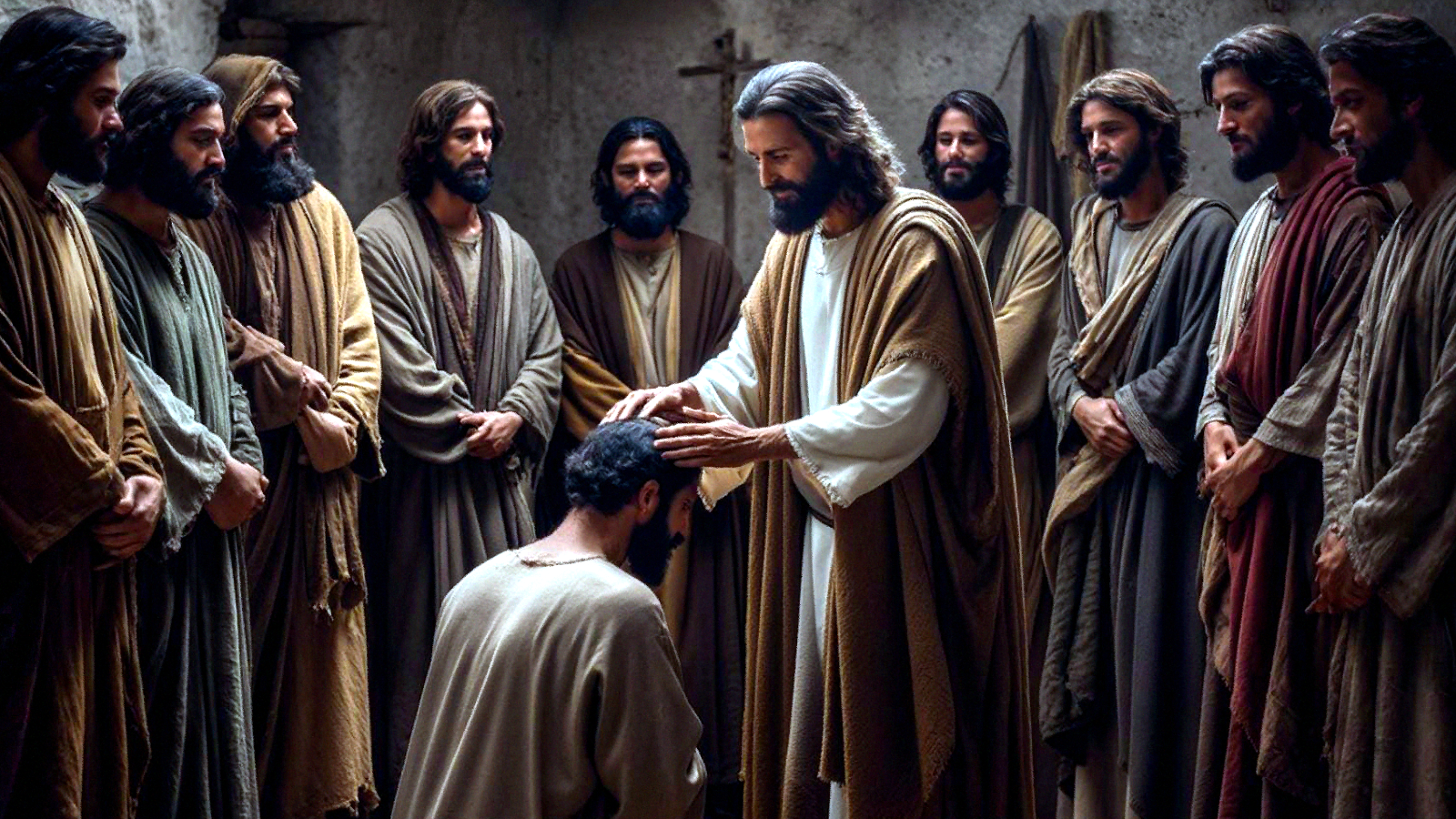
When Christ came, He fulfilled the Old Covenant rather than discarding it. And in doing so, He made a deliberate choice: He called twelve men to be His Apostles.
This was not because He was bound by cultural expectations. Jesus broke social norms constantly — speaking with women publicly, teaching them, welcoming them as disciples, and entrusting them with the first proclamation of the Resurrection. If He had wished to appoint women as Apostles, He would have done so.
But He did not.
And the early Church, guided by the Holy Spirit, continued His pattern without exception.
2. The Mandate of Christ at the Last Supper
One moment in the Gospel is especially important.
At the Last Supper, Jesus gathered the Twelve around Him. The Gospels are explicit about who was present. And in that intimate circle, He instituted the Eucharist and gave a command:
“Do this in memory of me.”
This was not a general instruction to everyone in the room. It was a specific mandate to the Apostles — the men He had chosen to carry His priestly ministry into the world.
Even if other disciples were present in the wider space, the mandate was directed to the Twelve. Presence is not the same as commission. Witnessing an act is not the same as being entrusted with it.
The Apostles understood this clearly. When they ordained presbyters and bishops, they chose men — not because of cultural pressure, but because they were passing on what they themselves had received from Christ.
3. The Church Cannot Change What Christ Has Established
This is the heart of the matter.
The Church is not free to redesign the sacraments. She is their guardian, not their author. She cannot change the essential elements of what Christ instituted.
This is why the Church teaches — not as a matter of policy, but as a matter of faith — that she has no authority to ordain women to the priesthood.
This teaching is not a judgment on the dignity, holiness, or capability of women. The Church is filled with extraordinary women whose gifts, leadership, and sanctity have shaped her life from the beginning. The question is not about worthiness. It is about sacramental identity.
The priest stands in persona Christi capitis — in the person of Christ the Head and Bridegroom of the Church. This nuptial symbolism is not a cultural metaphor but a sacramental reality woven into the very structure of salvation.
4. Faithfulness Is Not Stubbornness — It Is Love
In a world that prizes innovation, the Church’s fidelity can sometimes be misunderstood as resistance to change. But in truth, fidelity is an act of love.
We do not cling to the male priesthood because we fear change.
We cling to it because it is what Christ gave us.
The Church cannot abandon what she has received simply because the culture shifts. Her task is not to mirror the world but to remain rooted in the truth that sets us free.
5. A Final Word
The conversation about women and the Church is important. Women’s gifts are indispensable. Their leadership, insight, and holiness enrich every dimension of ecclesial life. The question of priestly ordination does not diminish this truth.
But the priesthood is not a prize, a position of power, or a platform for influence. It is a sacramental configuration to Christ the High Priest — a mystery we receive, not a structure we design.
For this reason, the Canons Regular of the Sacred Heart of Jesus reaffirm with clarity and charity:
the Church has no authority to ordain women to the ministerial priesthood.
This is not a barrier to women’s dignity.
It is an act of fidelity to Christ.
And fidelity, in the end, is the deepest form of love.
Read More: