

Ghostwriting, AI, and the inauthentic WORK MYTH: AN ACADEMIC REBUTTAL
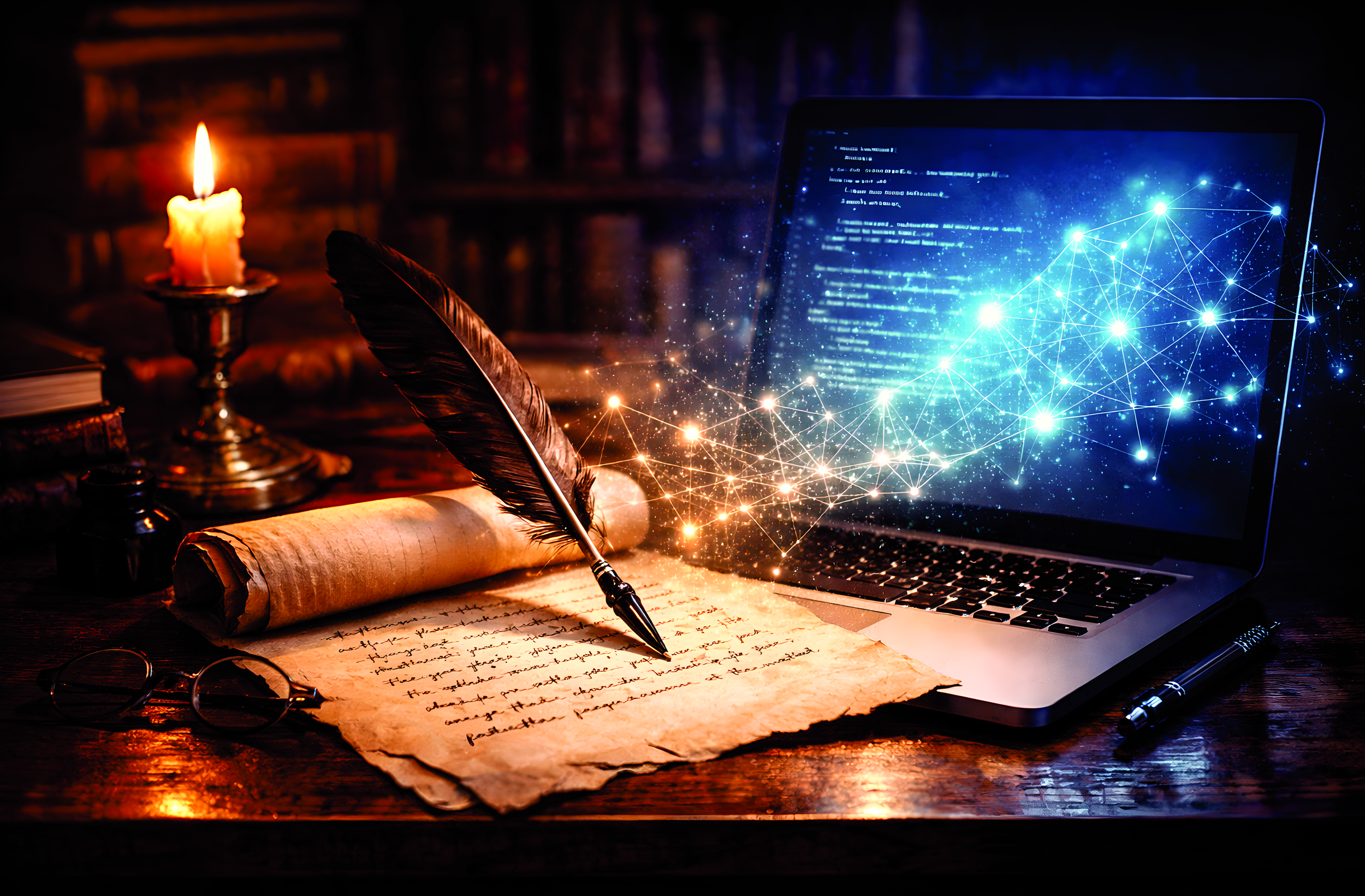
The current anxiety surrounding AI‑assisted writing is neither new nor particularly original. It is simply the latest iteration of a recurring cultural reflex: whenever a new intellectual tool emerges, a chorus rises to declare that “real work” is under threat. The same objections were levelled, almost verbatim, against electronic calculators in mathematics classrooms several decades ago. At the time, critics insisted that calculators would destroy numeracy, undermine genuine learning, and produce a generation incapable of performing even basic operations unaided. The rhetoric was dramatic, the predictions dire. And yet, once the panic subsided, calculators became not only accepted but indispensable, precisely because they allowed students and professionals to focus on conceptual understanding rather than mechanical repetition. The hysteria evaporated; the mathematics remained.
The present debate about AI and authorship suffers from the same historical amnesia. Assertions that AI‑assisted writing is “not genuine work” or that it is equivalent to ghostwriting collapse under even modest scrutiny. Ghostwriting is a practice in which one human being composes text in place of another, often contributing not only language but ideas, structure, and argumentation. It is, by design, an act of substitution. The named author delegates intellectual labour to an unseen collaborator, who may shape the very substance of the work. Responsibility becomes diffuse, and authorship becomes a negotiated fiction.
AI assistance is categorically different. It does not replace the author; it extends the author’s capacities. The human writer determines the ideas, the direction, the argument, the conceptual framework, and the evaluative judgement. The tool provides language, suggestions, and formulations that the author may accept, reject, reshape, or discard entirely. The locus of agency remains firmly with the human. To conflate this with ghostwriting is to misunderstand both practices. One substitutes for the author; the other amplifies the author’s own intellectual labour.
This distinction becomes even clearer when placed within the long history of writing and artistic technologies. The romantic image of the solitary creator, labouring alone with quill or brush, has never reflected the reality of intellectual or artistic production. Philosophers dictated to amanuenses. Theologians relied on secretaries. Statesmen employed scribes. Modern scholars depend on editors, research assistants, peer reviewers, and digital tools ranging from spell‑checkers to citation managers. None of these supports has ever been regarded as a threat to authentic authorship.
And in the arts, the pattern is even more striking. Johannes Vermeer almost certainly used a camera obscura to achieve the luminous precision of his interiors. If the use of tools in the creative process were “cheating,” *Girl with a Pearl Earring* would now be worth a penny rather than millions. Yet no serious critic argues that Vermeer’s genius is diminished by the presence of optical technology in his studio. The camera obscura did not choose his subjects, his palette, his symbolism, or the emotional register of his scenes. It did not decide where the light should fall or what story the painting should tell. It simply extended his eye, just as AI extends the writer’s hand. Tools do not diminish genius; they reveal it.
The real question, therefore, is not whether AI is “cheating,” but what constitutes genuine intellectual work. Authentic authorship has never been defined by the absence of tools. It is defined by the presence of thought: the originality of the ideas, the coherence of the argument, the integrity of the research, and the judgement exercised in shaping the final text. A calculator does not solve a mathematical problem unless the student understands the problem and can interpret the result. Likewise, AI does not produce scholarship unless the author provides the conceptual architecture and critically evaluates the output. Tools do not replace thinking. They reveal whether thinking is present.
Ethical use of AI in academic or pastoral writing requires transparency, critical engagement, and intellectual responsibility. When these conditions are met, AI assistance is not only legitimate but often beneficial. It frees the writer from mechanical phrasing and allows greater attention to conceptual depth, nuance, and clarity. To reject such tools on the grounds of “purity” is to mistake drudgery for virtue.
The claim that AI‑assisted writing is “not genuine work” is, ultimately, unsustainable. It confuses categories, ignores history, and indulges in a familiar but misguided technological panic. Ghostwriting replaces the author. AI extends the author. The distinction is decisive, and the conversation would be far more productive if it began there rather than in the fog of hysteria.